
🥖 Spanish Porras Recipe: Crispy Outside and Soft Inside
If you have ever walked into a traditional Spanish churrería in the morning, you probably know the smell: freshly fried dough, coffee and thick hot chocolate. Spanish porras are one of those simple breakfasts that are difficult to resist when they arrive at the table hot and freshly made.
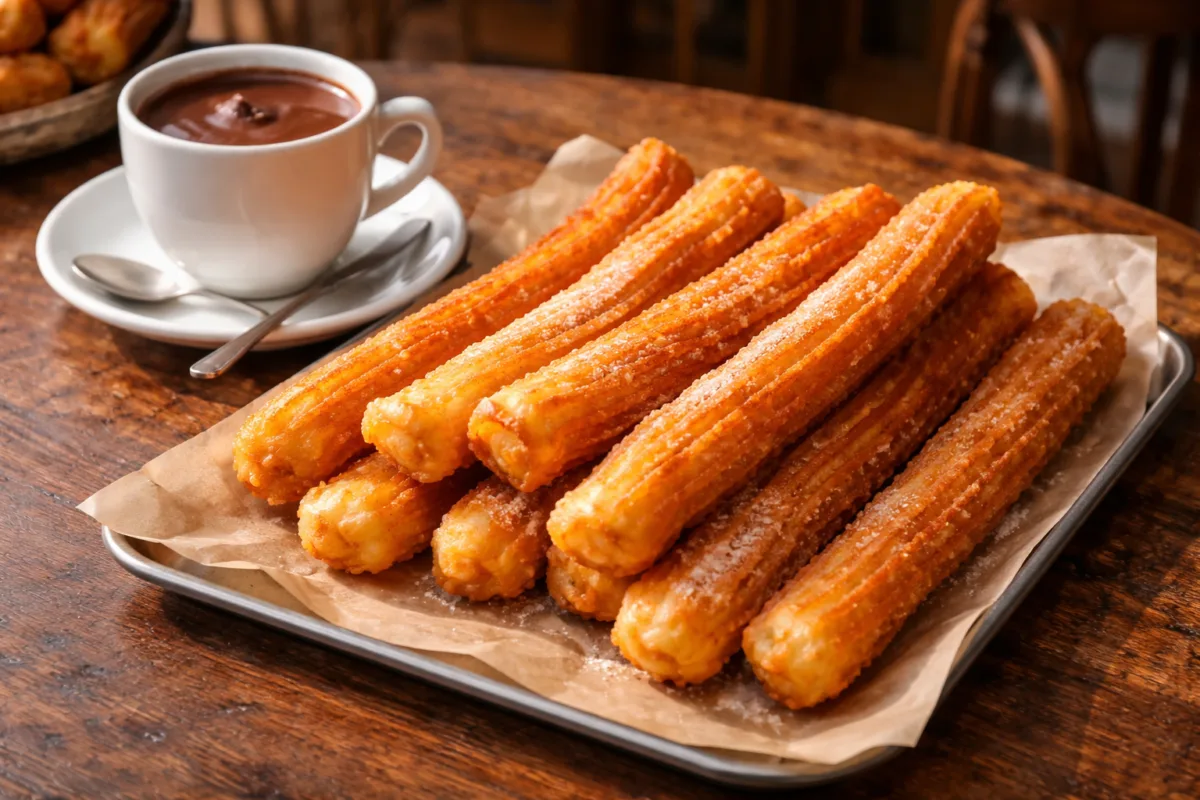
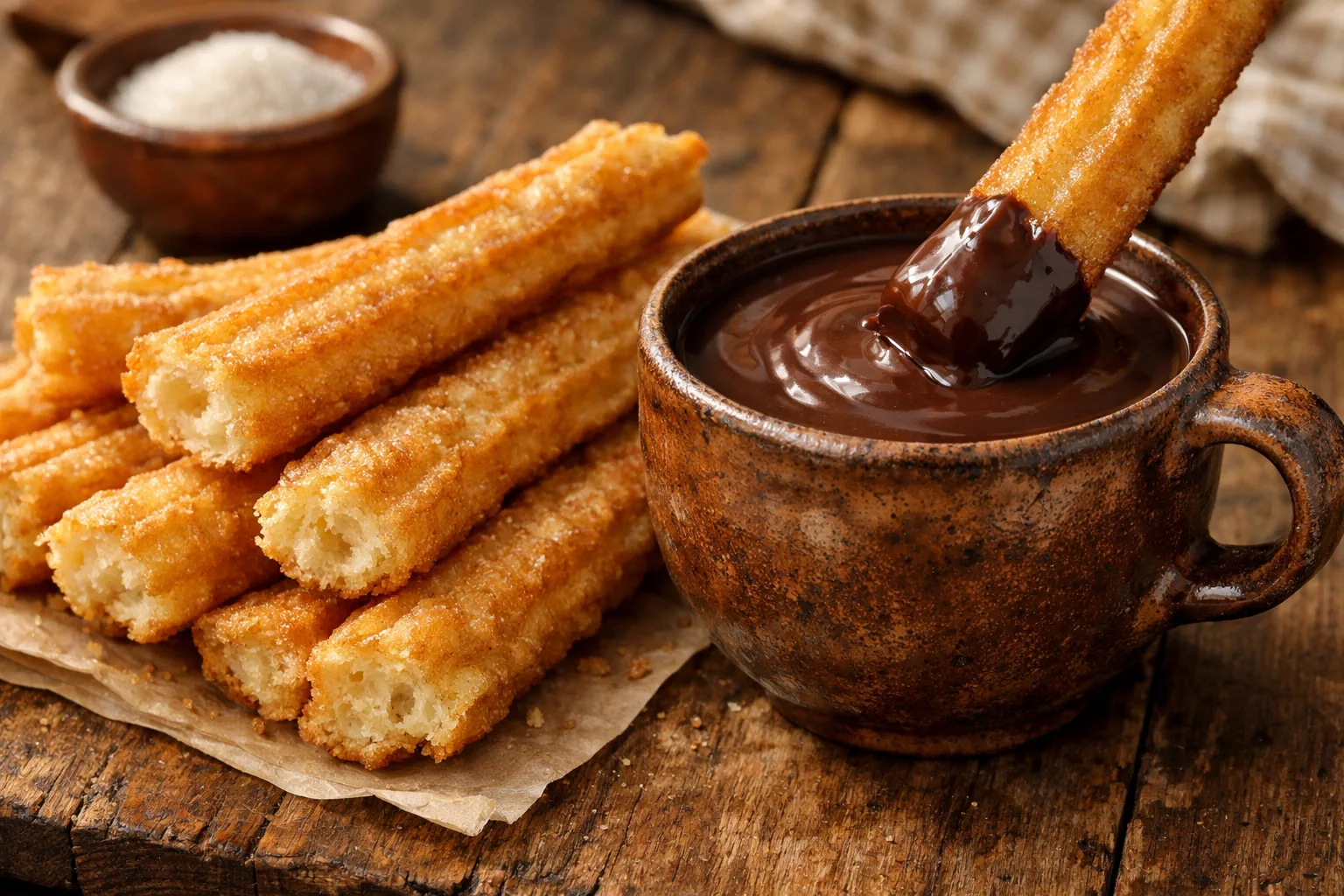
Porras are related to churros, but they are noticeably thicker. The outside should be golden and crisp while the center stays light, tender and slightly airy. That softer interior is exactly what makes them so good for dipping into a cup of Spanish hot chocolate.
Unlike many pastries, there is no butter, milk or eggs here. The dough is made mainly from flour and water, with a little raising agent helping to create the characteristic texture.
If you enjoy traditional Spanish breakfasts and desserts, you can also try this arroz con leche recipe.
⏱️ Preparation Time
| Prep Time | Cook Time | Total Time | Servings |
|---|---|---|---|
| 15 minutes | 20 minutes | 35 minutes | 4 people |
🛒 Ingredients for Spanish Porras
- 250 g all-purpose flour
- 250 ml water
- 1/2 teaspoon salt
- 1 teaspoon baking powder
- 1 tablespoon mild olive oil or sunflower oil
- Mild olive oil or sunflower oil, for frying
- Sugar for sprinkling, optional
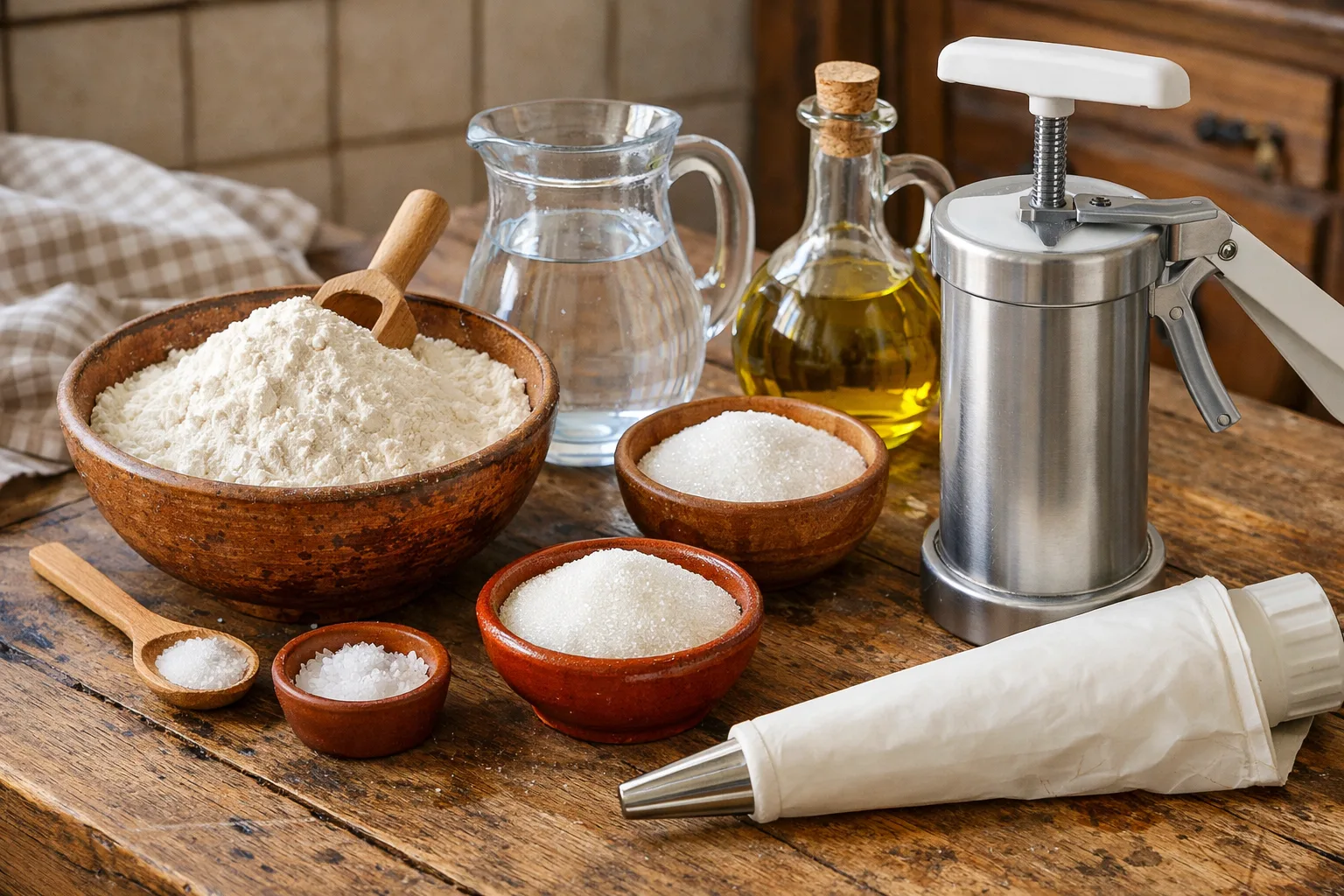
The ingredients are very simple, so the texture depends much more on the method than on adding anything complicated.
The dough should be thick enough to hold its shape when piped, but not dry or stiff. That balance is what gives porras their crisp outside and softer center.
👨🍳 How to Make Spanish Porras
1️⃣ Heat the water
Pour the water into a saucepan and add the salt and tablespoon of oil.
Heat it until very hot and just beginning to approach a boil, then remove it from the heat.
Using hot water helps hydrate the flour quickly and gives the dough the dense but tender texture we want.
2️⃣ Mix the flour and baking powder
Place the flour and baking powder in a large heatproof bowl and mix them together.
Pour in the hot water gradually while stirring firmly with a wooden spoon or sturdy spatula.
Continue mixing until there are no pockets of dry flour left.
The dough will be thick and sticky. That is normal.
3️⃣ Check the consistency
Let the mixture rest for a couple of minutes.
The dough should look smooth and cohesive and should hold its shape when lifted with the spoon.
If it seems unusually dry, add a very small splash of hot water. Do this carefully because adding too much water can make the dough difficult to fry properly.
Transfer the mixture to a sturdy piping bag fitted with a large star nozzle or, preferably, a churrera.
4️⃣ Heat the frying oil
Pour enough oil into a deep frying pan or saucepan for the porras to float freely.
Heat it to around 175–180°C (350–355°F).
This temperature matters.
If the oil is not hot enough, the dough absorbs oil and becomes heavy and greasy. If it is excessively hot, the outside browns before the center has time to cook.
5️⃣ Shape and fry the porras
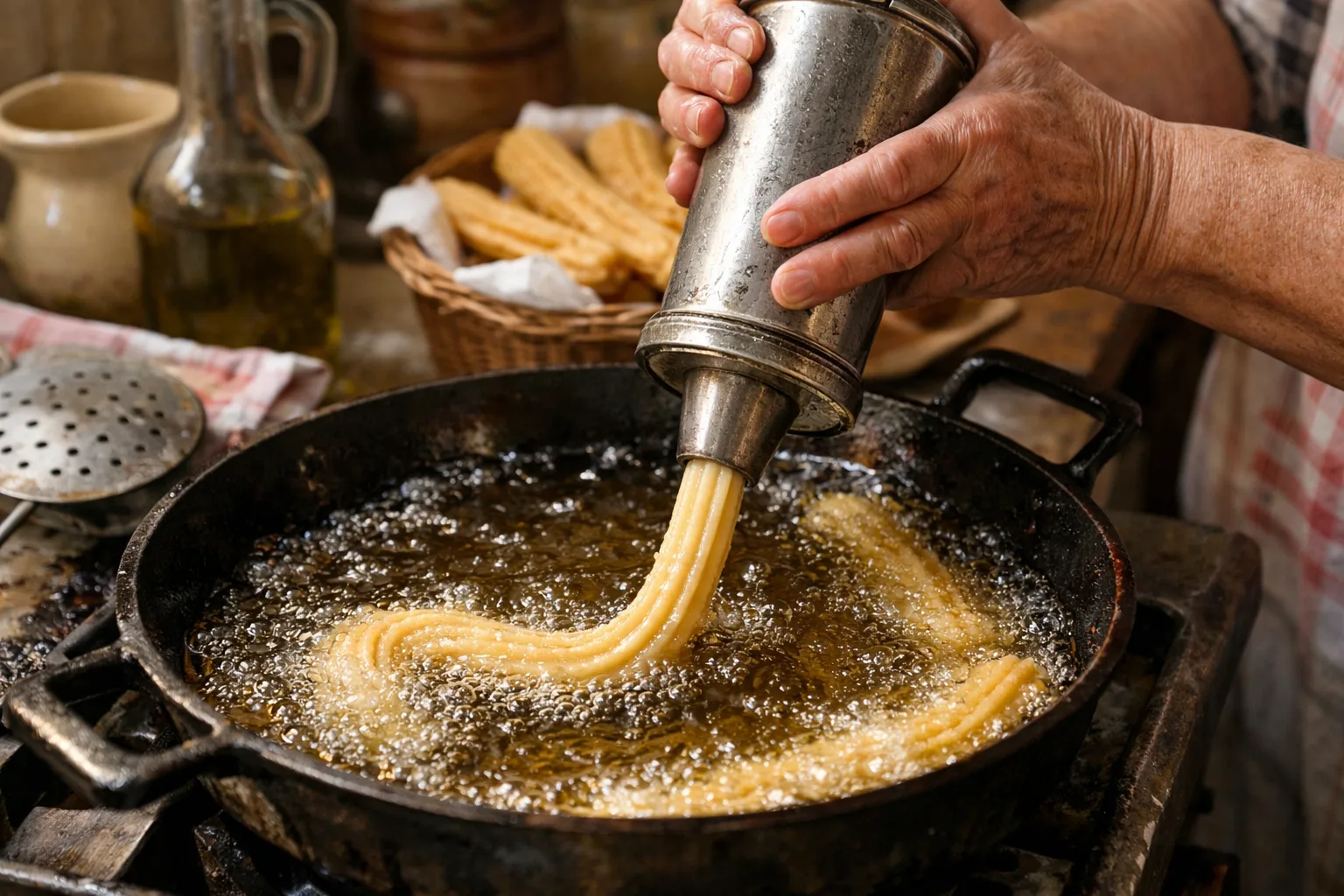
Carefully pipe thick strips or a large spiral into the hot oil, depending on the style you prefer.
Do not overcrowd the pan. Frying too many at once lowers the temperature of the oil.
Cook until the underside is golden, then carefully turn them so they brown evenly.
They should look crisp and deeply golden on the outside while remaining soft inside.
6️⃣ Drain them well
Lift the porras from the oil and place them on a plate lined with kitchen paper or on a wire rack.
Let the excess oil drain for a minute or two.
If you like them with sugar, sprinkle a little over the top while they are still warm.
7️⃣ Serve immediately
Porras are at their best straight after frying.
Serve them while still hot with thick Spanish hot chocolate, coffee or café con leche.
👀 How to Know When Porras Are Ready
Do not judge them only by color.
A good porra should have:
- A deep golden exterior that feels crisp when lifted from the oil.
- A lighter, airy interior rather than a dense or wet center.
- No greasy surface after draining for a minute.
If the outside becomes dark very quickly but the middle is still doughy, the oil is too hot.
⚠️ Common Problems When Making Porras
Why are my porras greasy?
The most common reason is oil that is not hot enough.
Try to keep the temperature around 175–180°C and avoid frying too many pieces at once.
Why are they raw in the middle?
They may be too thick or the oil may be too hot.
When the outside cooks too quickly, the center does not have enough time to set.
Why does the dough lose its shape?
The mixture is probably too loose.
Porras dough should be sticky but thick enough to hold the ridges made by the nozzle.
Why are they too dense?
Make sure the baking powder is fresh and that it is mixed evenly through the flour.
Do not make the dough excessively dry either, as this can produce heavy porras.
💡 Tips for Crispy, Fluffy Porras
- Use very hot water: it helps create the proper dough consistency.
- Keep the dough thick: it should hold its shape when piped.
- Control the oil temperature: around 175–180°C gives the best balance between a crisp exterior and cooked center.
- Fry in small batches: this prevents the oil temperature from dropping suddenly.
- Use a large nozzle: porras should be noticeably thicker than ordinary churros.
- Eat them fresh: this is one recipe that really is best within minutes of frying.
🥖 Porras vs Churros: What Is the Difference?
Porras and churros are close relatives, but they are not quite the same thing.
Traditional churros are usually thinner and have a firmer, crunchier texture. Porras are larger and thicker, and their dough normally includes a raising agent that gives the inside a softer and slightly more open texture.
This difference is also part of Madrid’s traditional food culture. According to the official Spain tourism guide to Madrid’s cuisine, churros are traditionally thinner, while porras are the larger version commonly enjoyed for breakfast.
In many Spanish churrerías, porras are made as a large spiral and cut into individual portions after frying.
Both are commonly eaten for breakfast or merienda and served with coffee or thick hot chocolate.
🧊 Can You Store Leftover Porras?
You can keep leftover porras for about a day in a covered container, but they lose their crisp texture fairly quickly.
If you need to reheat them, an oven or air fryer works much better than a microwave.
Heat them for a few minutes until the exterior becomes crisp again.
That said, freshly fried porras are considerably better, so I prefer making only the amount we are going to eat.
📊 Nutrition Information
| Calories | Protein | Fat | Carbohydrates |
|---|---|---|---|
| 290 kcal | 5 g | 14 g | 36 g |
Nutritional values are approximate because the amount of oil absorbed during frying can vary.
❓ FAQ About Spanish Porras
What are Spanish porras?
Porras are a traditional Spanish fried dough similar to churros but thicker and softer inside. They are commonly eaten for breakfast or as an afternoon snack with coffee or thick hot chocolate.
What is the difference between churros and porras?
Churros are normally thinner and crispier, while porras are thicker, more substantial and usually have a softer, airier interior.
Why do porras contain baking powder?
The raising agent helps create the slightly lighter interior that distinguishes porras from thinner traditional churros.
What temperature should the oil be?
Around 175–180°C is a good target. This allows the outside to become crisp while giving the center enough time to cook.
Can I make porras without a churrera?
Yes. A very strong piping bag fitted with a large star nozzle can work.
Avoid using a thin improvised plastic bag because this dough is thick and requires considerable pressure to pipe safely.
What do Spanish people eat with porras?
The classic combination is porras con chocolate: freshly fried porras served with thick Spanish hot chocolate.
Coffee and café con leche are also very common.
Can I prepare the dough in advance?
It is better to prepare and fry the dough fairly soon after mixing it. This gives a better texture and allows the raising agent to work properly.
✨ A Classic Spanish Churrería Breakfast
There is nothing particularly fancy about porras, and that is part of their charm.
Flour, water and a handful of basic ingredients turn into something completely different once the dough hits the hot oil: crisp on the outside, soft in the middle and made for dipping.
Serve them hot with a cup of chocolate or café con leche and you have one of Spain’s simplest and most traditional breakfasts.
Discover more from Spanish Grandma Recipes
Subscribe to get the latest posts sent to your email.