
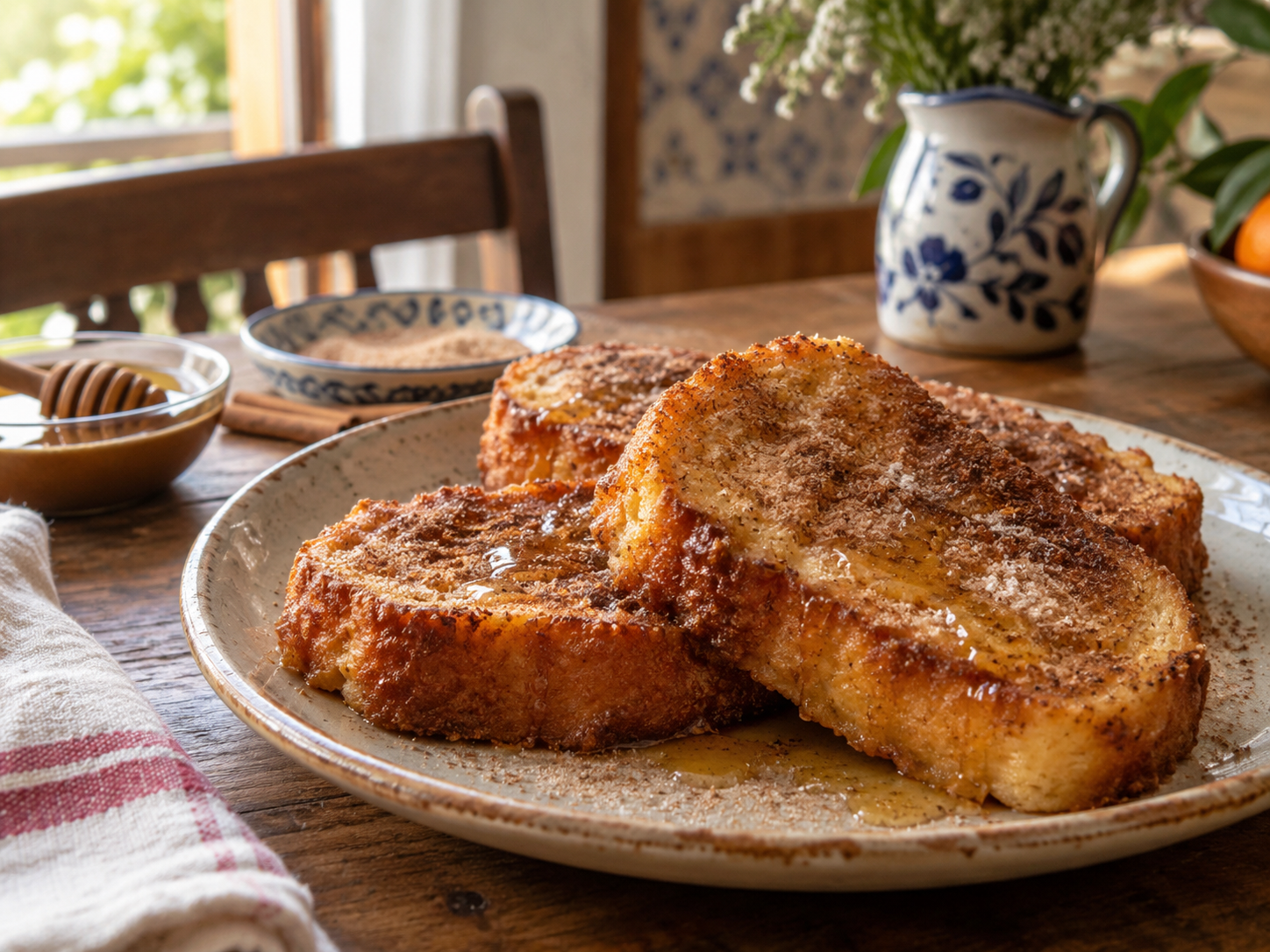

🍞 Spanish Torrijas Recipe: Traditional Spanish French Toast
If you love simple Spanish desserts made with everyday ingredients, torrijas are one of those recipes you have to try at least once.
They are often described as Spanish French toast, but the texture and preparation are quite different. The bread is soaked deeply in sweetened milk, coated in egg, fried until golden and then finished with cinnamon sugar, honey or syrup.
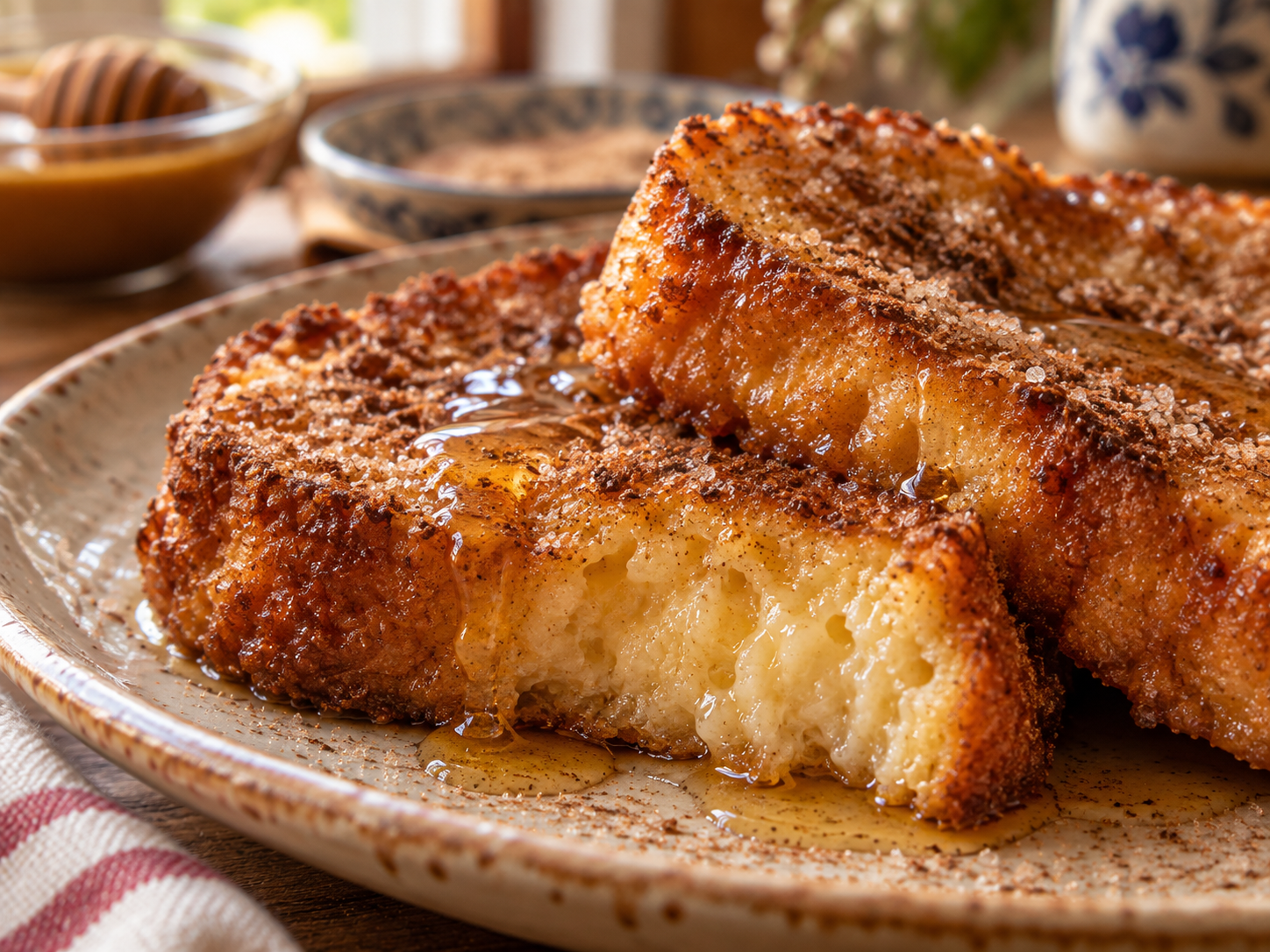
The result should be soft and almost custardy inside, with a lightly golden exterior.
Torrijas are especially traditional during Easter in Spain, although they are also perfect for breakfast, dessert or an afternoon snack.
They were originally a clever way to use up stale bread, and that is still one of the best things about this recipe: simple ingredients become something incredibly comforting.
⏱️ Cooking Times
| Stage | Time |
|---|---|
| Preparation time | 15 minutes |
| Resting time | 10 minutes |
| Cooking time | 15 minutes |
| Total time | 40 minutes |
| Servings | 4 people |
🛒 Ingredients for Spanish Torrijas
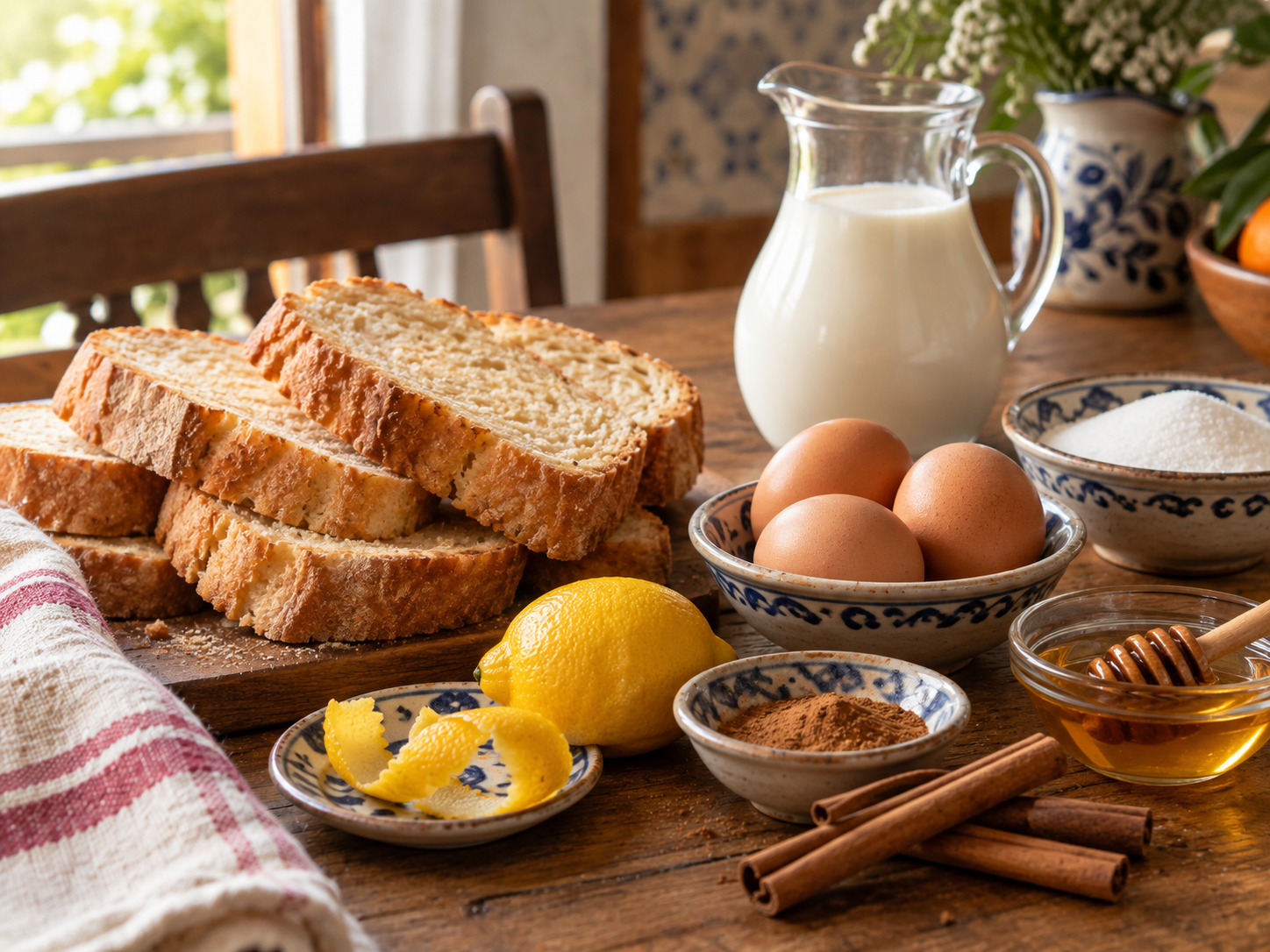
- 8 thick slices of day-old bread
- 750 ml whole milk
- 100 g sugar
- 1 cinnamon stick
- Peel of 1 lemon
- 3 large eggs
- Mild olive oil or sunflower oil, for frying
- 3 tablespoons sugar, for coating
- 1 teaspoon ground cinnamon
- Honey, optional, for serving
A slightly stale loaf works better than very fresh bread because it absorbs the milk without falling apart too easily.
👨🍳 How to Make Spanish Torrijas
1️⃣ Infuse the milk
Pour the milk into a saucepan.
Add the sugar, cinnamon stick and lemon peel.
Heat gently until the milk is hot but not boiling.
Remove from the heat and let it rest for around 10 minutes so the cinnamon and lemon flavor the milk.
2️⃣ Prepare the bread
Cut the bread into thick slices if it is not already sliced.
Around 2 to 3 cm thick works well.
Place the slices in a shallow dish in a single layer.
3️⃣ Soak the bread
Remove the cinnamon stick and lemon peel from the warm milk.
Pour the milk slowly over the bread.
Leave the slices for a few minutes, turning them carefully so both sides absorb the liquid.
The bread should feel heavy and moist but still hold together when lifted.
4️⃣ Coat with beaten egg
Beat the eggs in a wide bowl.
Lift each soaked slice carefully and allow any excess milk to drip away.
Dip it into the beaten egg, coating both sides.
Handle the bread gently because it will now be very soft.
5️⃣ Fry until golden
Heat a generous layer of oil in a frying pan over medium heat.
When hot, add the torrijas in small batches.
Fry for around 1 to 2 minutes per side, or until golden.
Do not overcrowd the pan.
6️⃣ Drain well
Transfer the fried torrijas to a plate lined with kitchen paper or a wire rack.
Let the excess oil drain for a minute or two.
7️⃣ Finish with cinnamon sugar
Mix the extra sugar with the ground cinnamon.
Sprinkle it over the torrijas while they are still warm.
You can also drizzle them with honey for a richer, more traditional finish.
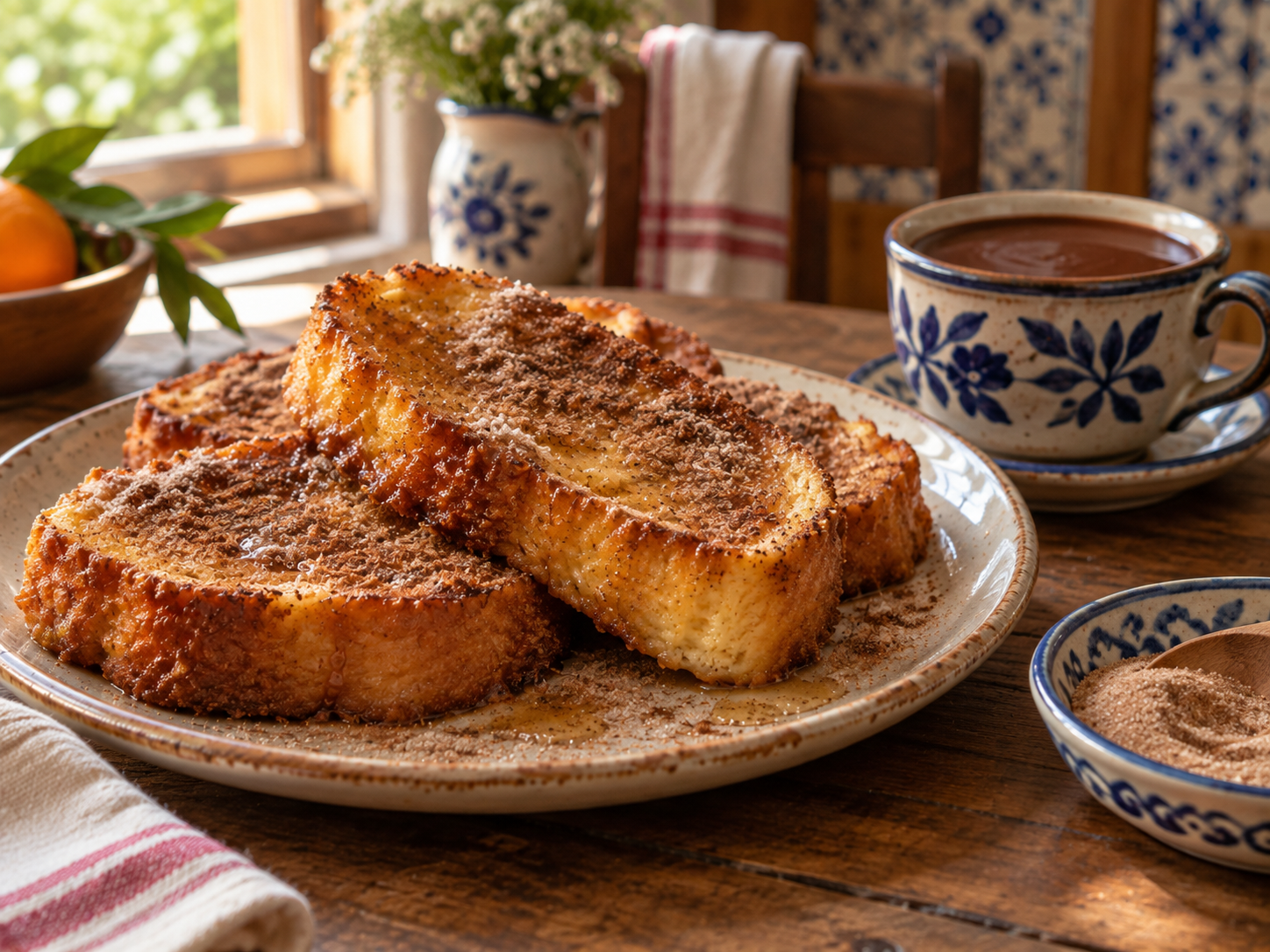
👀 How to Know When Torrijas Are Right
A good torrija should be:
- Golden on the outside
- Very soft and moist inside
- Easy to cut with a fork
- Sweet but not cloying
- Well soaked without falling apart
The center should never be dry like ordinary toast.
🇪🇸 Torrijas in Spanish Tradition
Torrijas are strongly associated with Easter and Holy Week in Spain.
Spain’s official tourism site describes them as one of the country’s most traditional Easter sweets and highlights the classic method of soaking stale bread in milk before frying it in olive oil.
You can also see an official version here:
Torrijas from Madrid on Spain.info.
That recipe uses milk, eggs, olive oil, sugar and honey, which shows how simple the traditional base really is.
⚠️ Common Mistakes
The bread falls apart
The bread may be too fresh, sliced too thinly or soaked for too long.
Use sturdy day-old bread and handle it carefully.
The torrijas are dry inside
They did not absorb enough milk.
The bread should be well soaked before dipping it in egg.
They taste greasy
The frying oil may not have been hot enough.
Use medium heat and fry in small batches.
The outside burns too quickly
The heat is too high.
Lower it slightly so the outside browns gradually while the center stays tender.
✨ Tips for Better Spanish Torrijas
- Use stale bread: it absorbs milk better without collapsing.
- Infuse the milk: cinnamon and lemon give the traditional aroma.
- Do not rush the soaking: the inside should become soft and moist.
- Fry in small batches: this keeps the oil temperature stable.
- Serve warm or at room temperature: both are delicious.
- Try honey: it gives the torrijas an especially traditional finish.
🍯 Cinnamon Sugar or Honey?
Both are traditional ways to finish torrijas.
Cinnamon sugar gives them a drier, lightly crisp surface.
Honey makes them softer, sweeter and more syrupy.
You can even use a little of both.
🧊 Storage
Torrijas are best on the day they are made, but you can keep them covered in the refrigerator for up to 2 days.
Bring them to room temperature before serving or warm them very gently.
They will become softer after chilling, which many people actually enjoy.
🥄 Nutritional Information
| Nutritional value | Approximate amount per serving |
|---|---|
| Calories | 360 kcal |
| Protein | 10 g |
| Fat | 14 g |
| Carbohydrates | 48 g |
| Fiber | 2 g |
| Sodium | 280 mg |
Nutritional values are approximate and depend on the bread, amount of oil absorbed and toppings used.
❓ FAQ About Spanish Torrijas
Are torrijas the same as French toast?
They are similar, but not exactly the same.
Spanish torrijas are usually soaked much more deeply in flavored milk and traditionally fried in oil.
What bread is best for torrijas?
A dense white loaf or day-old bread works best.
It should be sturdy enough to absorb plenty of milk without breaking apart.
Why are torrijas eaten at Easter?
They have become strongly associated with Holy Week in Spain and are one of the country’s most recognizable seasonal sweets. :contentReference[oaicite:3]{index=3}
Can I make torrijas ahead of time?
Yes.
You can prepare them several hours in advance and serve them at room temperature.
Can torrijas be baked instead of fried?
Yes, but the traditional Spanish method is frying.
Baking will give you a lighter but slightly different texture.
Are torrijas eaten for breakfast?
Yes.
Although strongly associated with Easter desserts, they are also enjoyed as breakfast or an afternoon snack.
🍞 One of Spain’s Most Comforting Traditional Sweets
Torrijas are a perfect example of Spanish home cooking: simple ingredients, very little waste and plenty of flavor.
Bread, milk, egg and a little cinnamon become something soft, aromatic and deeply comforting.
Serve them warm with cinnamon sugar or honey and you have one of the easiest traditional Spanish treats to make at home.
Discover more from Spanish Grandma Recipes
Subscribe to get the latest posts sent to your email.