Crema catalana is one of Spain’s classic desserts: a smooth milk custard scented with lemon and cinnamon and finished with a thin layer of caramelized sugar that cracks under the spoon.
It comes from Catalonia and, although it is often compared with crème brûlée, the two desserts are prepared differently. Crema catalana is traditionally thickened on the stovetop rather than baked in a water bath, giving it a lighter texture and a distinctive citrus-and-cinnamon aroma.
The recipe itself is simple, but temperature matters. The milk needs time to absorb the aromatics, and the custard should thicken gently without ever boiling aggressively.
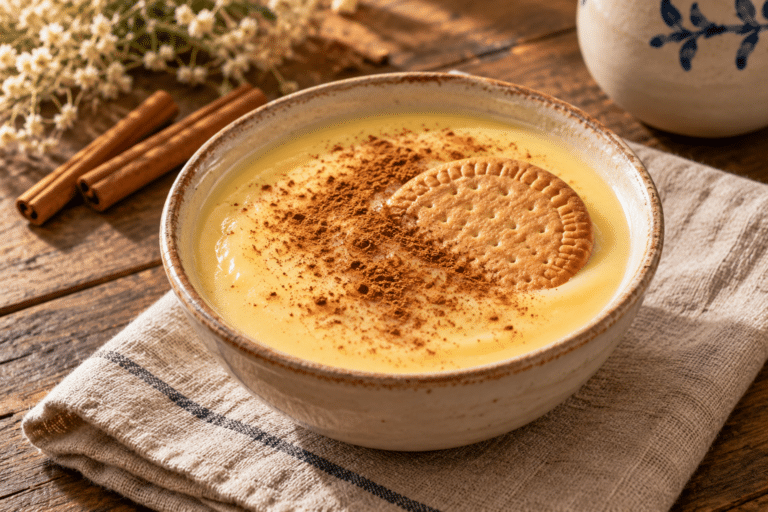
If you enjoy traditional Spanish desserts, you may also like this Spanish Arroz con Leche or these Spanish Churros.
What to expect: Silky chilled custard under a thin, freshly caramelized sugar crust.
Jump to ingredients and method ↓
🇪🇸 What Is Crema Catalana?
Crema catalana is a traditional Catalan custard dessert made mainly with milk, egg yolks, sugar and starch.
It is commonly flavored with citrus peel and cinnamon and served with caramelized sugar on top.
Spain’s official tourism website lists crema catalana as a traditional dessert from Catalonia and prepares its version with milk, egg yolks, sugar, starch and lemon zest.
Traditional Crema Catalana on Spain.info
⏱️ Time and Servings
| Stage | Time |
|---|---|
| Preparation | 15 minutes |
| Cooking | 15 minutes |
| Infusing | 10 minutes |
| Chilling | At least 2 hours |
| Total time | About 2 hours 40 minutes, plus time to cool before chilling |
| Servings | 6 |
If you need to convert grams, tablespoons, milliliters or temperatures while cooking, see our Cooking Measurement Conversion Chart.
🍲 Equipment You Will Need
- Saucepan and whisk
- Fine sieve
- Shallow heatproof ramekins
- Kitchen torch for the sugar topping
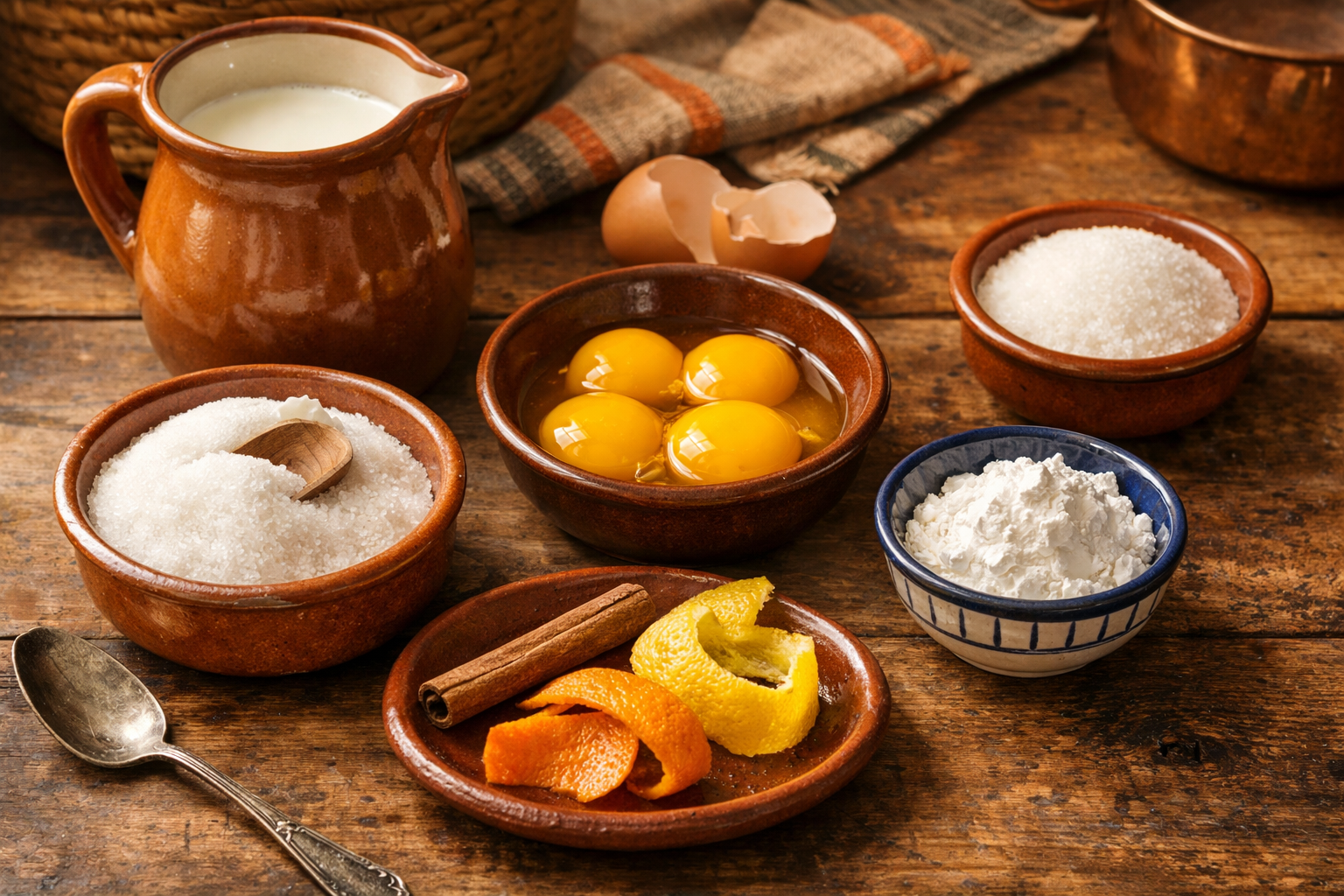
🛒 Ingredients for 6
- 1 litre whole milk
- 6 egg yolks
- 150 g white sugar
- 25 g cornstarch (cornflour in the UK)
- 1 cinnamon stick
- Peel of 1/2 lemon
- Peel of 1/2 orange, optional
- 1 small pinch of salt
- About 6 teaspoons extra white sugar for caramelizing (1 teaspoon per ramekin)
One small detail matters: when peeling the lemon, try to take only the yellow part of the skin. Too much of the white pith can add bitterness to the custard.
👨🍳 How to Make Crema Catalana
1️⃣ Infuse the milk
Pour most of the milk into a saucepan, keeping about 100 ml aside for later.
Add the cinnamon stick and lemon peel. Add orange peel too if you want a slightly more pronounced citrus aroma.
Heat gently until the milk is steaming and almost reaches a simmer.
Do not let it boil hard.
Remove from the heat, cover and leave it to infuse for around 10 minutes.
2️⃣ Mix the cornstarch
Add the cornstarch to the 100 ml of cold milk you reserved earlier.
Whisk until completely smooth.
Doing this with cold milk makes it much easier to avoid lumps later.
3️⃣ Whisk the egg yolks and sugar
Place the egg yolks and sugar in a bowl.
Whisk until the mixture becomes smooth and slightly lighter in color.
You do not need to beat lots of air into it.
4️⃣ Add the cornstarch mixture
Pour the milk and cornstarch mixture into the yolks.
Whisk again until everything is smooth.
5️⃣ Temper the eggs
Remove the cinnamon stick and citrus peel from the warm milk.
Slowly pour some of the infused milk into the egg mixture while whisking continuously.
Add the rest gradually.
This gently raises the temperature of the yolks and reduces the risk of scrambling them.
6️⃣ Cook the custard slowly
Pour everything back into the saucepan.
Cook over low to medium-low heat, stirring constantly with a spatula or wooden spoon.
Pay special attention to the bottom and corners of the saucepan.
After several minutes, the mixture will begin to thicken.
7️⃣ Know when the custard is ready
The crema catalana is ready when it is thick enough to coat the back of a spoon.
Run your finger through the custard on the spoon. If the line stays clearly separated instead of immediately running back together, it is ready.
Do not keep boiling it once it has thickened.
8️⃣ Pour into shallow dishes
Divide the hot custard between individual shallow ramekins or traditional earthenware dishes.
Crema catalana is particularly good in shallow dishes because you get a larger area of caramelized sugar with every serving.
9️⃣ Cool and refrigerate
Allow the dishes to cool slightly.
Cover and refrigerate for at least 2 hours, although 4 hours gives an even better set.
🔟 Caramelize the sugar just before serving
Take the chilled custards from the refrigerator.
Sprinkle a thin, even layer of white sugar over each one.
Use a kitchen torch to melt the sugar until it becomes golden and crisp.
Traditionally, a heated metal iron can also be used.
Let the caramel cool for about a minute before serving.
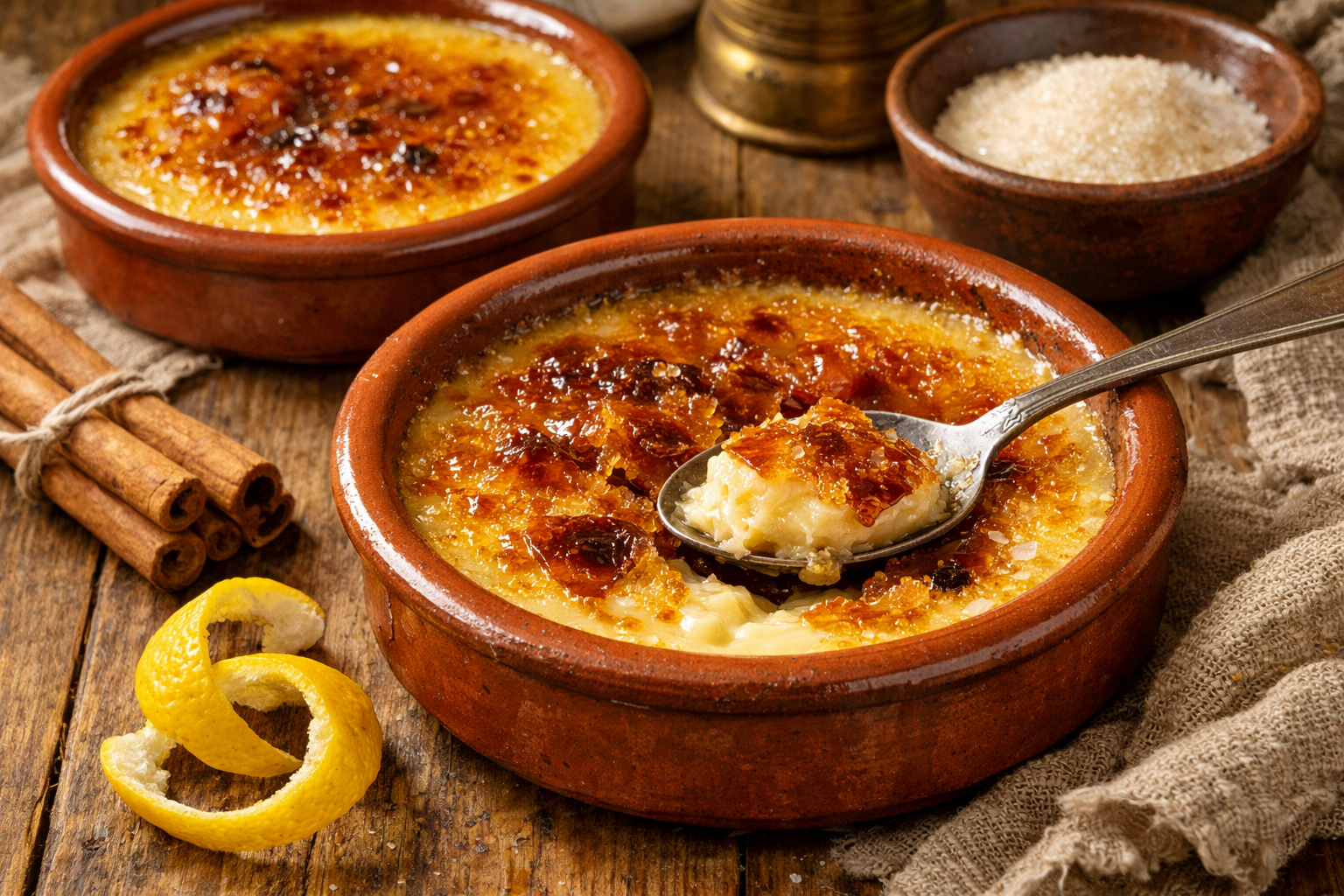
👀 How to Know Crema Catalana Is Ready
The custard should be:
- Thick enough to coat a spoon but still creamy.
- Completely smooth, without visible egg pieces.
- Soft rather than gelatinous after chilling.
- Cold underneath with a freshly caramelized crisp top.
The caramel layer should break with a spoon while the custard underneath remains silky.
🔥 Crema Catalana vs Crème Brûlée
They look similar because both have creamy custard underneath a caramelized sugar topping, but there are important differences.
Crema catalana is generally:
- Made primarily with milk.
- Thickened with starch.
- Cooked directly on the stovetop.
- Flavored with lemon and cinnamon.
Crème brûlée is usually:
- Richer because it commonly uses cream.
- Set mainly with egg yolks.
- Baked slowly, often in a water bath.
- Usually flavored with vanilla.
So while the final appearance is similar, the texture and aroma are noticeably different.
✨ Tips for the Best Crema Catalana
- Infuse the milk slowly: give the cinnamon and citrus time to release their flavor.
- Dissolve the cornstarch in cold milk: this helps prevent lumps.
- Keep the heat gentle: rushing the custard can scramble the yolks.
- Use shallow dishes: more surface means more caramelized topping.
- Chill completely: the custard should be cold before you caramelize it.
- Burn the sugar at the last minute: that keeps the top crisp.
🔄 Ingredient Notes and Swaps
Vanilla can replace the cinnamon for a different flavor. Keep the starch quantity unchanged so the custard sets as described.
Can You Make Crema Catalana Without a Torch?
Yes, although a kitchen torch gives you the most control.
You can place the chilled custards briefly under a very hot broiler.
Keep them as close to the heat as safely possible and watch them constantly.
The downside is that the broiler can warm the custard while the sugar caramelizes.
If you use this method, make sure the custard is thoroughly chilled first.
⚠️ Common Problems and Easy Fixes
The custard has lumps
The heat was probably too high or the mixture was not stirred continuously.
Remove it from the heat immediately.
If the lumps are minor, passing the custard through a fine sieve can sometimes save it.
The custard is too runny
It may not have cooked long enough for the starch to thicken properly.
Return it to gentle heat and continue stirring.
The custard is too thick
It was probably cooked for too long after thickening.
Remember that it will become firmer as it chills.
The custard tastes bitter
You may have included too much white pith from the lemon or orange peel.
Use only the colored outer part of the skin.
The caramel becomes soft
This happens naturally if crema catalana sits too long after caramelizing.
Always burn the sugar just before serving.
🍽️ What to Serve With It
Serve the custard cold, caramelizing the sugar shortly before it reaches the table.
❄️ Storage and Serving
Yes.
In fact, it is an excellent make-ahead dessert.
Prepare and refrigerate the custard up to 24 hours in advance.
Do not add and caramelize the sugar until shortly before serving.
That way you keep the contrast between cold creamy custard and crisp caramel.
🥄 Approximate Nutrition
| Nutritional value | Approximate amount per serving |
|---|---|
| Calories | 260 kcal |
| Protein | 7 g |
| Fat | 9 g |
| Carbohydrates | 38 g |
| Sugar | 30 g |
| Sodium | 80 mg |
Nutritional values are approximate and vary depending on the amount of caramelizing sugar used.
❓ Frequently Asked Questions
What is crema catalana made of?
Traditional crema catalana is made with milk, egg yolks, sugar and starch, with citrus peel commonly used for flavor.
Many home versions also include cinnamon.
Is crema catalana the same as crème brûlée?
No.
Crema catalana is usually made with milk and starch and cooked on the stovetop, while crème brûlée is generally richer and baked with cream.
What does crema catalana taste like?
It has a creamy, milky custard flavor with gentle notes of lemon and cinnamon and a sweet toasted caramel topping.
Why is my crema catalana not setting?
The custard may not have reached the temperature needed for the cornstarch to thicken.
Cook it gently while stirring until it clearly coats the spoon.
Can I prepare crema catalana the day before?
Yes.
Prepare the custard the day before and refrigerate it.
Caramelize the sugar immediately before serving.
Do you eat crema catalana hot or cold?
The custard is traditionally served chilled or cool, while the sugar topping is caramelized shortly before serving.
Can I use vanilla instead of cinnamon?
You can, but lemon and cinnamon give the dessert a more characteristic Catalan flavor.
How long does crema catalana keep?
Without the caramelized topping, it can be kept covered in the refrigerator for around 2 days.
Crema catalana does not need complicated ingredients to feel special.
The contrast is what makes it memorable: cool, silky custard underneath and a thin layer of freshly caramelized sugar on top.
Infuse the milk properly, keep the heat low while thickening the custard and leave the sugar until the last minute.
Those three details make all the difference.
Recipe prepared for Spanish Grandma Recipes.
Discover more from Spanish Grandma Recipes
Subscribe to get the latest posts sent to your email.