This recipe uses batons rather than rounds, a short milk soak and a flour-cornstarch coating. You do not need a thick batter. A thermometer, a roomy pan and small batches make more difference than adding extra flour or frying the vegetables twice.
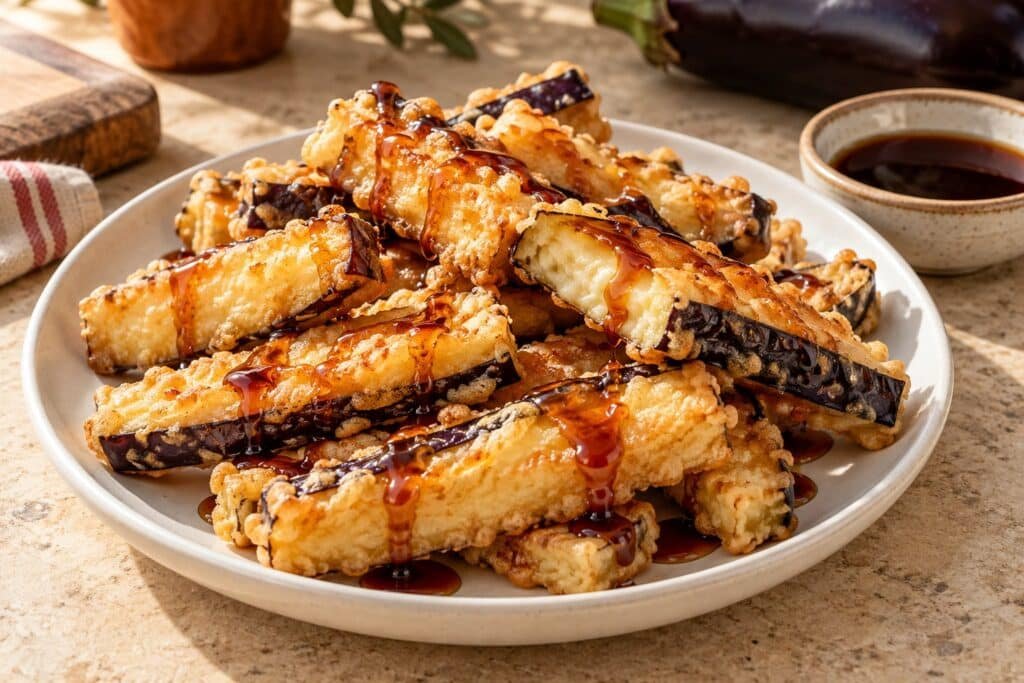
What to expect: Four tapas portions of golden eggplant batons with a creamy interior. Allow 65 minutes, including a 30-minute soak, and plan to eat them as soon as the last batch is ready.
Jump to ingredients and method ↓
🍆 Cane Syrup or Honey?
The word miel means honey, but this tapa is often served with miel de caña, a dark syrup made from sugarcane. It has a deeper, slightly bitter sweetness that works particularly well with fried eggplant. Ordinary floral honey is a useful substitute, although the flavor changes.
The dish appears in Andalusian cooking, and there are plenty of household variations in the shape and coating. This is a straightforward home version with milk in the soak, so it is vegetarian rather than vegan. For another vegetable tapa with a different texture, try Padrón peppers.
⏱️ Time and Servings
| Stage | Time |
|---|---|
| Preparation | 15 minutes |
| Cooking | 20 minutes |
| Milk soak | 30 minutes |
| Total time | 65 minutes |
| Servings | 4 |
🍲 Equipment You Will Need
- A heavy saucepan or deep skillet, leaving plenty of empty space above the oil
- A frying thermometer and slotted spoon
- A colander, two bowls and clean kitchen towels
- A wire rack set over a tray
🛒 Ingredients for 4 Servings
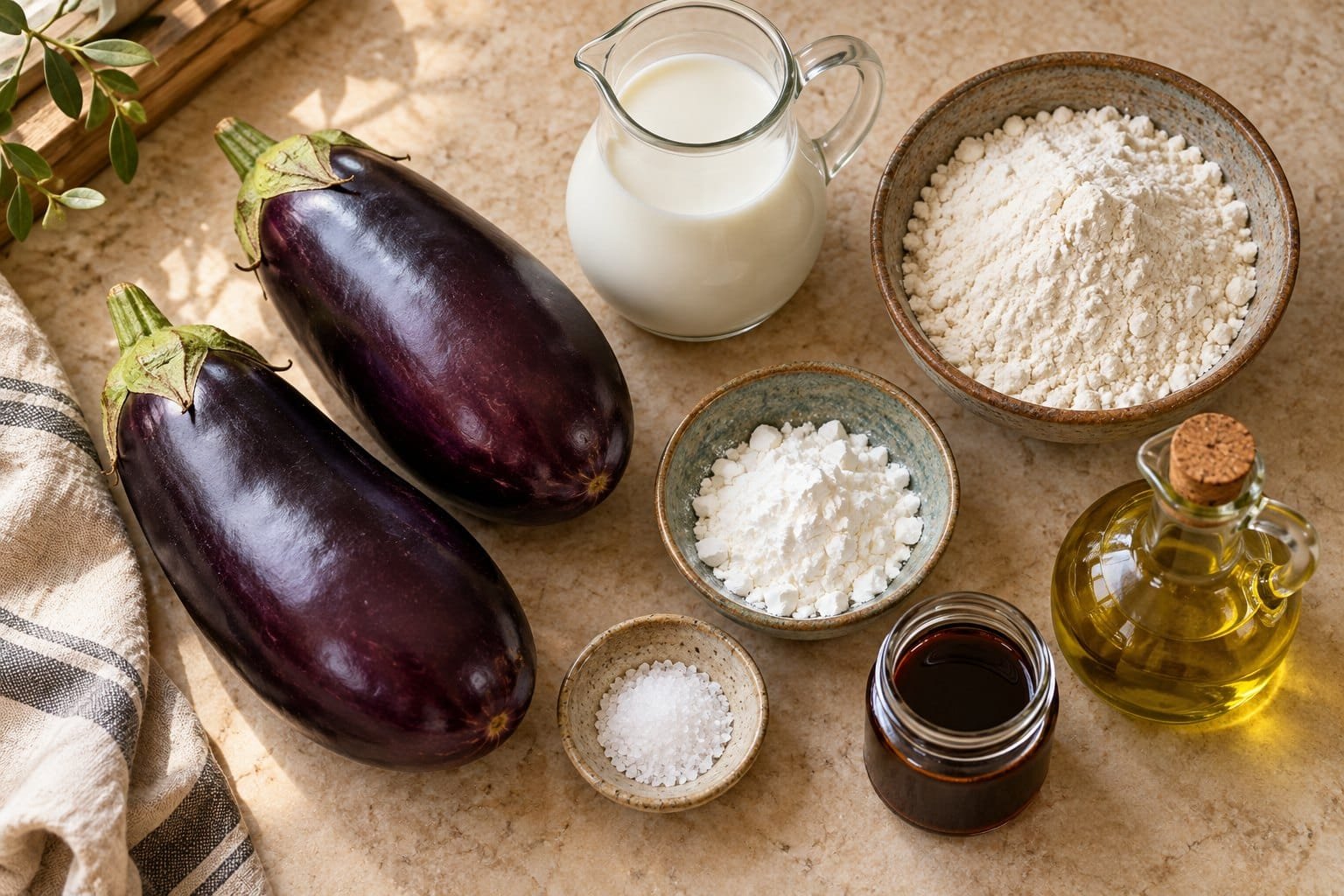
- 2 medium eggplants, about 600 g total
- 400 ml whole milk, for soaking
- 80 g all-purpose flour
- 40 g cornstarch (cornflour in the UK)
- ½ teaspoon fine salt, plus a little for finishing
- 600 ml olive oil or sunflower oil for frying, or enough for a 3 cm depth in your pan
- 3 tablespoons (45 ml) sugarcane syrup, for serving
Eggplant: choose firm, shiny vegetables without soft patches. Keep the skin on; it helps the batons hold their shape. Cut pieces about 1 cm thick and 6 cm long so the center cooks before the coating becomes dark.
The milk soak: it is a preparation choice for this version, not a guarantee against oil absorption. Drain well and dry the surface before coating. Pour the used milk away rather than saving it for another recipe.
Coating: cornstarch lightens the flour coating. It is not the same as cornmeal or polenta. Measure by weight where possible; see our ingredient measurement charts for help with kitchen units.
Syrup: look for a product labeled miel de caña or cane syrup. Strong blackstrap molasses can overwhelm the eggplant; if that is all you have, use much less and taste a little on a cooked baton first.
👨🍳 How to Make Berenjenas con Miel
1️⃣ Cut and soak the eggplant
Trim the ends and cut the eggplants into batons approximately 1 cm thick. Put them in a bowl, pour over the milk and turn to coat. Cover and refrigerate for 30 minutes, turning once so the upper pieces also contact the milk. There is no need for a separate salt soak.
2️⃣ Drain and dry thoroughly
Drain the eggplant in a colander and discard the milk. Spread the batons on clean towels and pat the surfaces dry. They should feel slightly damp rather than dripping. Mix the flour, cornstarch and ½ teaspoon salt in a separate wide bowl, breaking up any lumps.
3️⃣ Heat the oil safely
Pour oil into a heavy pan to a depth of about 3 cm, keeping the pan less than half full. Heat to 175°C / 350°F. Set the rack and tray nearby and keep the syrup ready. Keep water away from the hot oil and do not leave the pan unattended.
4️⃣ Coat a small batch
Toss only as many batons as will fit loosely in the pan through the flour mixture. Lift them out and shake off loose flour. The coating should be thin and even. Do not coat the entire batch far ahead: moisture from the eggplant will make the flour sticky while it waits.
5️⃣ Fry until golden and tender
Lower the coated batons carefully into the oil and fry for 3 to 5 minutes, turning gently, until pale golden and tender inside. Keep the oil around 170 to 180°C / 340 to 355°F. Lift onto the rack and repeat with the remaining eggplant, allowing the oil to recover between batches.
6️⃣ Season and add the syrup
Sprinkle the hot eggplant lightly with salt. Arrange on a wide serving plate and drizzle with the cane syrup just before eating, or offer the syrup on the side. Avoid a deep pile, which traps steam. Serve immediately while the outer coating is still crisp.

🌡️ Why the Oil Temperature Matters
A crowded pan loses heat quickly. The coating then takes longer to set, and the eggplant can absorb more oil before it colors. Frying fewer pieces at a time gives the heat a chance to recover. If the coating darkens in a minute while the middle is firm, the oil is too hot.
A wire rack lets steam escape underneath the batons. Paper towels are useful for a brief drain, but leaving the food piled on damp paper softens the crust. If you need to hold the first batch, keep it uncovered on a rack in a low oven around 100°C / 210°F for a few minutes. Add syrup only when serving.
🔄 Ingredient Swaps and Variations
- No cane syrup: use mild honey, starting with 2 tablespoons. A little goes a long way on hot eggplant.
- No cornstarch: use 120 g flour in total. The crust will be a little heavier, so shake away the excess particularly well.
- Dairy-free preparation: replace the milk with unsweetened plant milk and check its ingredients. Serve with cane syrup rather than honey if you want a vegan variation.
- Air fryer or oven: these instructions are written for oil frying. A dry flour coating can remain powdery without enough oil, so expect to use a different coating and method for those appliances.
⚠️ Common Problems and Easy Fixes
- Greasy eggplant: the oil was too cool or the pan too crowded. Use a thermometer and allow recovery time between batches.
- Coating falls off: the pieces were wet or sat coated for too long. Pat dry and flour one batch at a time.
- Dark crust, firm center: reduce the heat and cut the next batch into thinner, even batons.
- Crisp pieces become soft: they were stacked, covered or drizzled too early. Spread them out and add the syrup at the table.
🍽️ What to Serve With It
Serve as part of a tapas meal with salmorejo and croquetas. The eggplant is richest when hot, so arrange the other dishes first and fry this one last.
For a lighter plate, accompany it with sliced tomatoes dressed simply with olive oil and salt. Keep the syrup drizzle narrow and uneven rather than soaking every baton. Offering extra syrup separately lets each person choose the sweetness.
❄️ Storage and Reheating
The texture is best immediately after frying. If you have leftovers, refrigerate within 2 hours and use within 2 days. Keep the syrup separate. Reheat on a rack in a hot oven until hot throughout; the coating will be less crisp than when freshly fried.
Do not refrigerate batons already coated in raw flour for a later frying session. Instead, keep prepared eggplant chilled and dry, and add the coating just before cooking. Freeze leftovers only if you accept a softer interior and crust.
🥄 Approximate Nutrition
| Per serving: one quarter of the fried eggplant | Estimate |
|---|---|
| Calories | 300 kcal |
| Protein | 5 g |
| Carbohydrates | 44 g |
| Fat | 12 g |
| Fiber | 5 g |
An approximate estimate including the syrup, some coating and about 10 g absorbed frying oil per serving. Actual oil and flour absorption vary considerably; most of the soaking milk is discarded.
❓ Frequently Asked Questions
Can I use ordinary honey?
Yes. Choose a mild one and drizzle sparingly. Cane syrup has a darker, more bittersweet flavor, so the finished tapa will taste slightly different with honey.
Must I peel the eggplant?
No. The thin purple skin helps keep the batons together and gives a pleasant contrast to the soft flesh. Remove only bruised patches, if any.
Does eggplant need salting first?
This method uses a refrigerated milk soak and no separate salting stage. Modern firm eggplants are often mild; badly overripe vegetables are a less reliable choice regardless of soaking.
Can I cook it before guests arrive?
Have everything cut, soaked and dried, but fry close to serving time. A short hold on a warm rack is possible; hours of storage will soften the coating.
How much frying oil should I count as eaten?
Only part of the oil in the pan is absorbed. That amount depends on temperature, batch size and draining, which is why the nutrition estimate is approximate rather than a precise measurement.
Recipe written for Spanish Grandma Recipes. By José María. The images are original AI-generated illustrations of the dish and ingredients.
Discover more from Spanish Grandma Recipes
Subscribe to get the latest posts sent to your email.