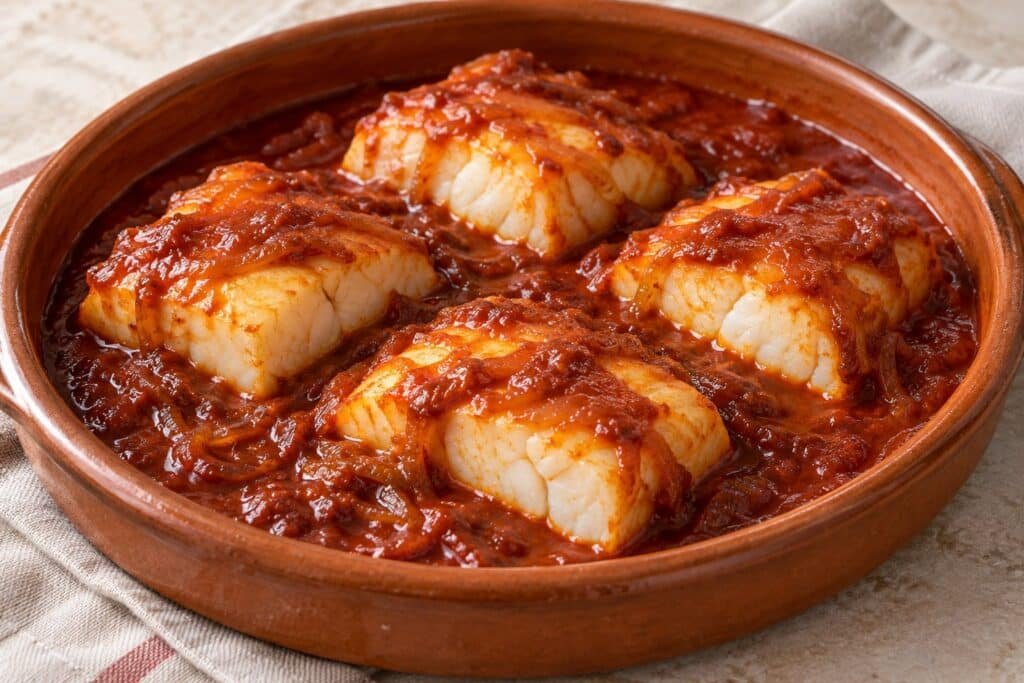
This home version starts with cod sold already desalted and ready to cook. That makes the timing practical without pretending dry salt cod can go straight into the pan. Most of the cooking time belongs to the onions; their slow softening is what gives the sauce its rounded flavor.
What to expect: Four cod portions with a smooth, thick pepper-and-onion sauce. Allow 80 minutes with ready-desalted fish, including a five-minute rest before serving.
Jump to ingredients and method ↓
🫑 What Is Vizcaína Sauce?
Vizcaína is associated with Basque cooking and the flavor of choricero peppers. Spain’s official tourism recipe for Biscayan-style cod is one example of the regional dish. Versions differ between cooks, including whether to add tomato or bread; the sauce here uses neither.
This is different from a quick cod-in-tomato dish. Plenty of onion gives sweetness and body, while choricero paste provides the pepper flavor. Avoid replacing the paste with a very hot red chili sauce, even if the color looks similar.
⏱️ Time and Servings
| Stage | Time |
|---|---|
| Preparation | 15 minutes |
| Cooking | 60 minutes |
| Resting | 5 minutes |
| Total time | 80 minutes |
| Servings | 4 |
The total assumes ready-desalted cod. If starting with dry salt cod, its separate desalting stage is not included; follow the supplier’s refrigerated preparation instructions.
🍲 Equipment You Will Need
- A wide heavy saucepan or shallow casserole with a lid
- A stick blender or countertop blender suitable for warm sauce
- A fine sieve, optional for a very smooth finish
- A broad fish spatula and food thermometer
🛒 Ingredients for 4 Servings
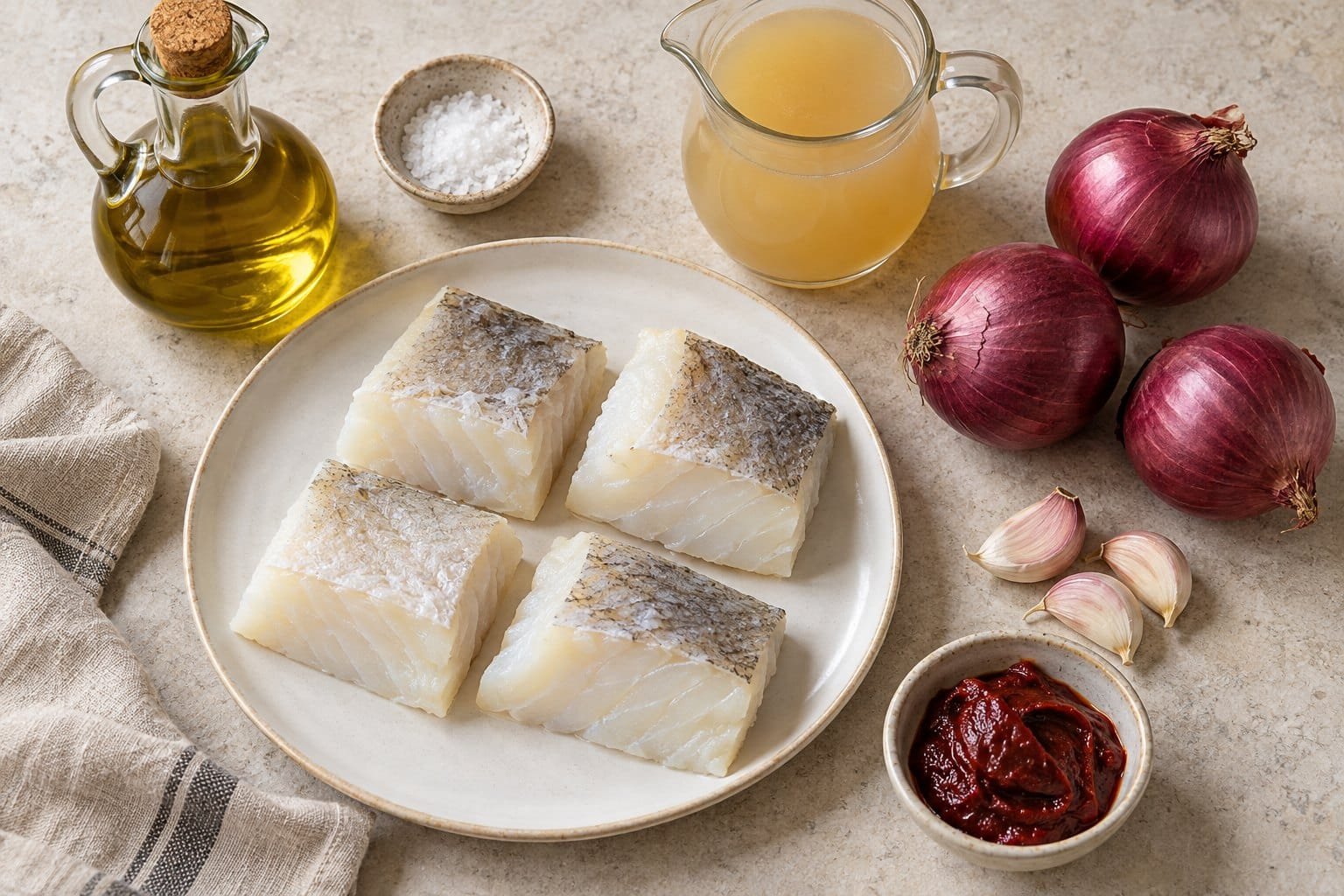
- 4 ready-desalted cod loin portions, about 180 to 200 g each
- 500 g red onions, thinly sliced
- 3 garlic cloves, sliced
- 3 tablespoons (45 ml) olive oil
- 3 tablespoons (about 45 g) choricero pepper paste
- 350 ml mild low-salt fish stock, plus a little water if needed
- Fine salt, only if needed after tasting
Desalted cod: check the packaging carefully. Salt cod that still needs soaking is not ready for this recipe. Buy prepared desalted loins or follow the supplier’s instructions in the refrigerator, allowing additional time outside the recipe total.
Fresh cod: it can be used as a clearly stated variation. The flavor is milder and it may need a small amount of salt. Keep the portions thick and of similar size so they cook evenly.
Onions: slice thinly to help them soften. Red onions give a darker sauce, though ordinary yellow onions work. The aim is deep sweetness and softness, not a blackened or burnt edge.
Choricero paste: use the pepper flesh sold for Spanish cooking. Some jars are more concentrated than others, so begin with 3 tablespoons and taste the cooked sauce before adding more.
👨🍳 How to Make Bacalao a la Vizcaína
1️⃣ Check and dry the cod
Read the label to confirm the fish is desalted and ready to cook. Pat the portions dry and check for bones. Do not add salt yet. Keep the cod covered in the refrigerator while making the sauce; a cool, dry surface is easier to handle than fish left on a warm counter.
2️⃣ Soften the onions patiently
Heat the olive oil in the saucepan over medium-low heat. Add the sliced onions and cook for about 30 to 35 minutes, stirring regularly, until very soft and lightly browned. If they catch on the base, add a tablespoon of water and lower the heat. Add the garlic for the final 3 minutes.
3️⃣ Cook the pepper base
Stir the choricero paste into the soft onions and cook gently for 2 minutes. Pour in the fish stock, scraping up the soft onion residue from the base. Bring to a gentle simmer and cook for 10 minutes. The onions should now be soft enough to blend without leaving hard pieces.
4️⃣ Blend and adjust the sauce
Take the pan off the heat and blend the sauce carefully until smooth. If using a countertop blender, follow its hot-liquid instructions and never seal steaming liquid in an unsuitable container. Pass through a sieve if desired. Return to the pan and add a little water if too thick to flow around the fish.
5️⃣ Poach the cod in the sauce
Bring the sauce back to a very gentle simmer. Place the cod in one layer, skin side down if present, and cover. Cook for about 8 to 12 minutes according to thickness, until the center reaches 63°C / 145°F and the flesh separates into opaque flakes. Spoon sauce over the top without flipping repeatedly.
6️⃣ Taste and rest briefly
Turn off the heat and rest for 5 minutes. Taste the sauce now that the cod has released some seasoning; add salt only if needed. Lift the loins carefully onto plates and spoon the sauce around them. Keep any extra sauce warm over very low heat while serving.
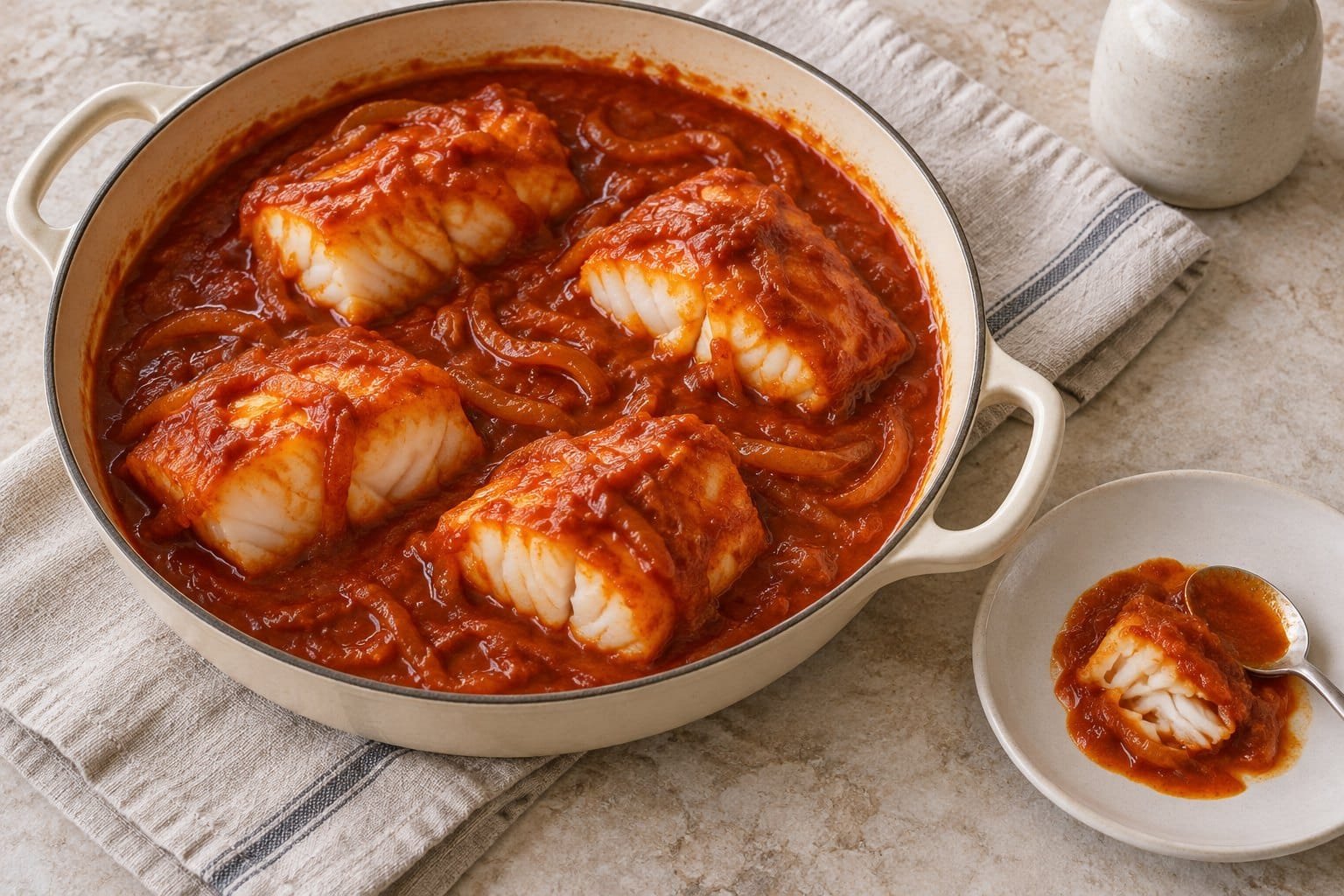
🧅 How to Build a Smooth Sauce Without Cream
Soft onions provide most of the body. If the sauce is blended before the onions are tender, it can remain grainy even after several minutes with the blender. Let the onions collapse first, then simmer with stock before blending.
A thick sauce needs enough moisture to surround the cod. If it sits in a dense mound, loosen it before adding the fish; otherwise it may scorch underneath. A sauce that pours in a broad ribbon from a spoon is a useful target. Reduce a thin sauce alone rather than overcooking the cod while you wait.
🔄 Ingredient Swaps and Variations
- Yellow onions: use the same weight. The finished sauce may be lighter in color, which is not a problem.
- Fresh unsalted cod: use the same portions and season lightly. Explain to diners that the flavor differs from cured, desalted fish.
- No choricero paste: roasted red pepper purée with a little sweet paprika makes a useful pepper sauce, but it is a different variation rather than an identical replacement.
- No fish stock: use water or mild vegetable stock. Keep salt low until the fish has cooked in the sauce.
⚠️ Common Problems and Easy Fixes
- Overly salty sauce: the cod or stock contributed more salt than expected. Use ready-desalted fish and low-salt stock; added water alone can also make the sauce too thin.
- Bitter flavor: scorched onions or burned pepper paste cannot be repaired by adding sugar. Keep the base on gentle heat.
- Grainy texture: cook the onions longer before blending and use a sieve if necessary.
- Dry cod: reduce the cooking time and check the thickest point. Keep the sauce at a gentle simmer.
🍽️ What to Serve With It
Serve with boiled potatoes or a little crusty bread to catch the sauce. A green salad or escalivada adds a vegetable side without making the plate too heavy.
For another Spanish fish dish with a different sauce, try Galician-style octopus on another occasion. Keep this cod plate simple so the pepper sauce remains the focus.
❄️ Storage and Reheating
Refrigerate cooked cod and sauce promptly in a shallow covered container and use within 2 days. Reheat gently with a splash of water until hot throughout, handling the fish as little as possible.
The sauce can be made a day ahead, chilled, then reheated before adding freshly prepared cod. This gives a better fish texture than reheating the whole dish. Freeze extra sauce separately if needed; label it clearly so it is not mistaken for a plain tomato sauce.
🥄 Approximate Nutrition
| Per serving: one cod loin with sauce | Estimate |
|---|---|
| Calories | 325 kcal |
| Protein | 37 g |
| Carbohydrates | 16 g |
| Fat | 13 g |
| Fiber | 3 g |
Approximate amounts per portion, excluding potatoes or bread. Salt content varies especially widely with the cod and stock, so no precise sodium figure is given.
❓ Frequently Asked Questions
Can I put dry salt cod straight into the sauce?
No. It must be desalted first according to its supplier’s instructions. This recipe starts with cod already prepared for cooking.
Is there tomato in this version?
No. Its red color comes from choricero peppers, and the onions give body and sweetness. Other household versions may include tomato.
Can I make the sauce ahead?
Yes. Cook, blend and refrigerate it, then bring it back to a gentle simmer before adding the fish. Loosen with water if it has thickened.
Do I need cream or flour?
Neither is required here. Properly softened onions thicken the blended sauce.
Why wait before adding salt?
Desalted cod still varies in saltiness. Tasting after the fish has cooked helps avoid oversalting the sauce.
Recipe written for Spanish Grandma Recipes. By José María. The images are original AI-generated illustrations of the dish and ingredients.
Discover more from Spanish Grandma Recipes
Subscribe to get the latest posts sent to your email.