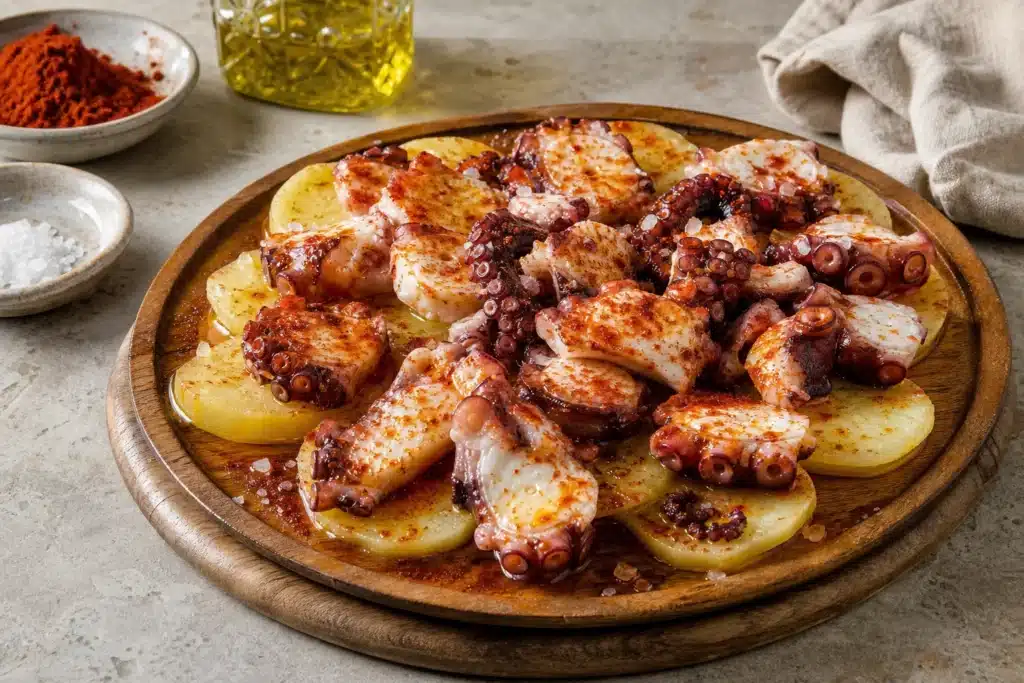
Pulpo a la gallega recipe, also known as pulpo á feira, is one of the most iconic seafood dishes in Spain. It combines tender slices of octopus with boiled potatoes, good olive oil, flaky salt, and sweet or smoked paprika for a dish that is simple but deeply flavorful.
This recipe comes from Galicia in northwestern Spain, a region famous for its Atlantic seafood traditions. It is often served at fairs, festivals, and family gatherings, usually on a wooden plate that helps keep the presentation rustic and true to its origins.
What makes this dish special is the contrast between textures and the balance of seasoning. The octopus should be soft but not mushy, the potatoes should be creamy, and the paprika and olive oil should coat everything without overpowering the natural flavor of the seafood.
If you enjoy classic Spanish tapas and seafood-forward dishes, you may also like our Gambas al Ajillo Recipe, Patatas Bravas Recipe or Arroz Negro Recipe.
What to expect: Tender octopus slices on potatoes, finished with paprika, olive oil and salt.
Jump to ingredients and method ↓
⏱️ Time and Servings
| Stage | Time |
|---|---|
| Preparation | 15 minutes |
| Cooking | 45-60 minutes |
| Resting time | 10 minutes |
| Total time | 70-85 minutes |
| Servings | 4 servings |
Times are estimates. For planning, allow the longer end of each time range and check the texture described in the method before serving.
🍲 Equipment You Will Need
- Large stockpot
- Separate saucepan for potatoes
- Kitchen scissors or a sharp knife
- Slotted spoon and serving platter
🛒 Ingredients for 4 servings
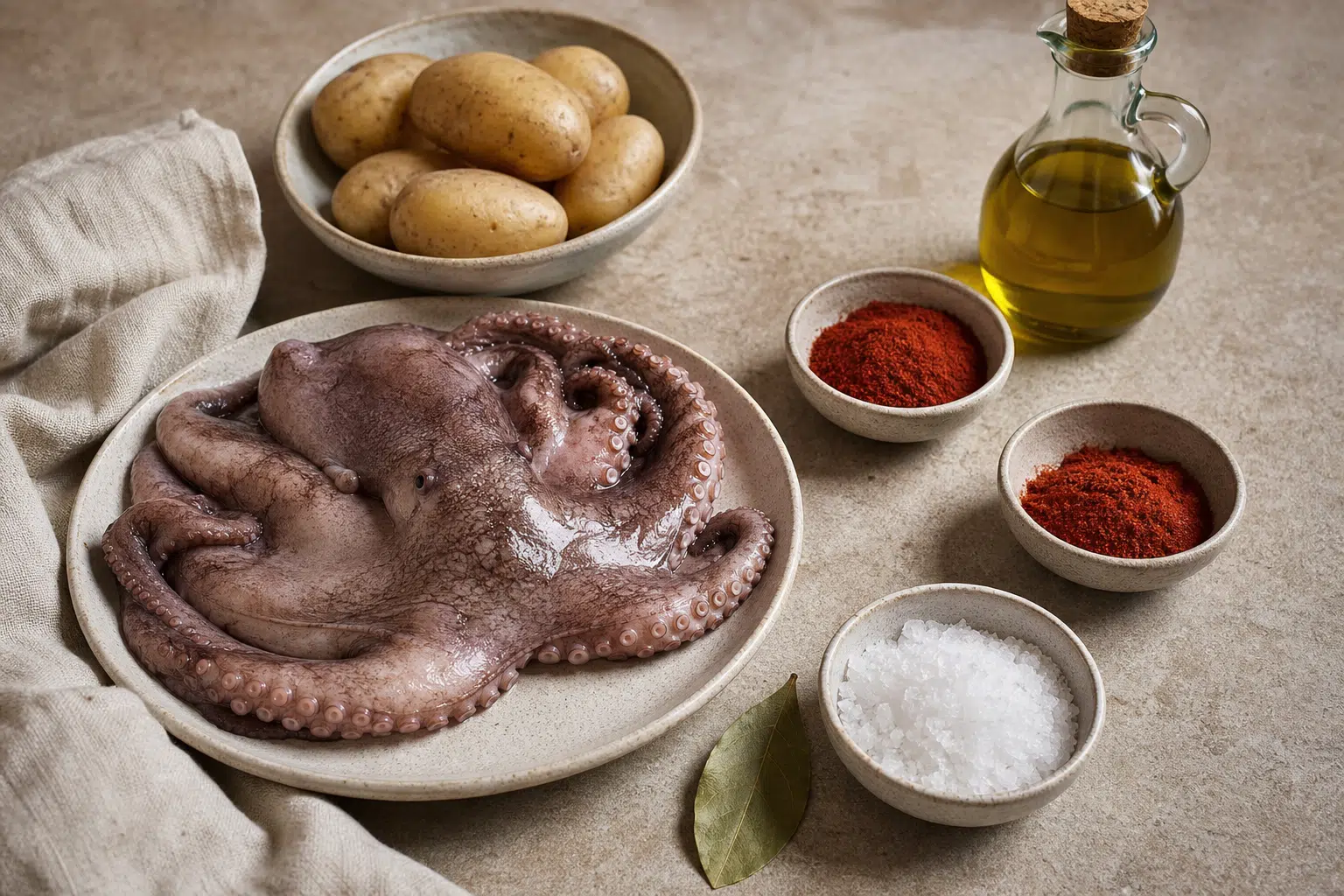
- 1 whole octopus, 1.5-1.8 kg, fresh or previously frozen and thawed
- 700 g potatoes, preferably waxy or all-purpose
- 60 ml extra virgin olive oil
- 10 g sweet paprika
- 2 g hot paprika, optional
- 8 g flaky sea salt
- 2 liters water, approximately, for cooking
- 1 bay leaf, optional
If you need to convert grams or other kitchen measures, you can use our kitchen measurement conversion chart.
👨🍳 How to Make Pulpo a la Gallega
1️⃣ Prepare the octopus
If the octopus was frozen, thaw it fully in the fridge before cooking. Freezing helps tenderize the flesh, which is why many cooks prefer it even when fresh octopus is available.
Rinse it well under cold water and check that the beak and any remaining innards have been removed. Pat it lightly dry so it is easier to handle.
2️⃣ Heat the cooking water
Bring a large pot of water to a steady boil. You do not need to salt the water heavily because the final seasoning is added at the end.
If you like, add a bay leaf for a subtle aromatic note. Keep the boil lively but not violently rolling.
3️⃣ Scare the octopus
Hold the octopus by the head and dip it into the boiling water for a few seconds, then lift it out. Repeat this dipping process three times.
This traditional step helps the tentacles curl neatly and can improve the final texture. After the third dip, lower the octopus fully into the pot.
4️⃣ Simmer until tender
Reduce the heat so the octopus cooks at a gentle simmer rather than a hard boil. Cook for about 35 to 45 minutes for a medium octopus, checking tenderness with the tip of a knife.
The knife should slide into the thickest part of a tentacle with slight resistance. Once tender, turn off the heat and let the octopus rest in the cooking water for 10 minutes.
5️⃣ Cook the potatoes
While the octopus rests, peel the potatoes and cut them into thick rounds or large chunks. Cook them in salted water or, for more flavor, in some of the octopus cooking liquid.
Simmer until they are just tender and creamy inside. They should hold their shape well enough to support the sliced octopus when plated.
6️⃣ Slice the octopus
Lift the octopus from the pot and let excess liquid drain away. Separate the tentacles if needed and trim the head into bite-size pieces.
Using kitchen scissors or a sharp knife, cut the tentacles into slices about 1 cm thick. Try to keep the pieces even so the dish looks balanced and cooks evenly in the residual heat.
7️⃣ Assemble the dish
Arrange the warm potato slices on a plate or wooden board in a single layer. Place the sliced octopus on top so every serving gets both tender tentacle and potato.
Drizzle generously with extra virgin olive oil. Sprinkle with flaky salt, sweet paprika, and a little hot paprika if you want a gentle kick.
8️⃣ Serve warm
Serve the dish while still warm, not piping hot. This is when the olive oil stays fragrant and the paprika blooms over the surface.
Bring it to the table immediately so the octopus stays tender and the potatoes do not dry out. A simple presentation is part of the charm of this dish.
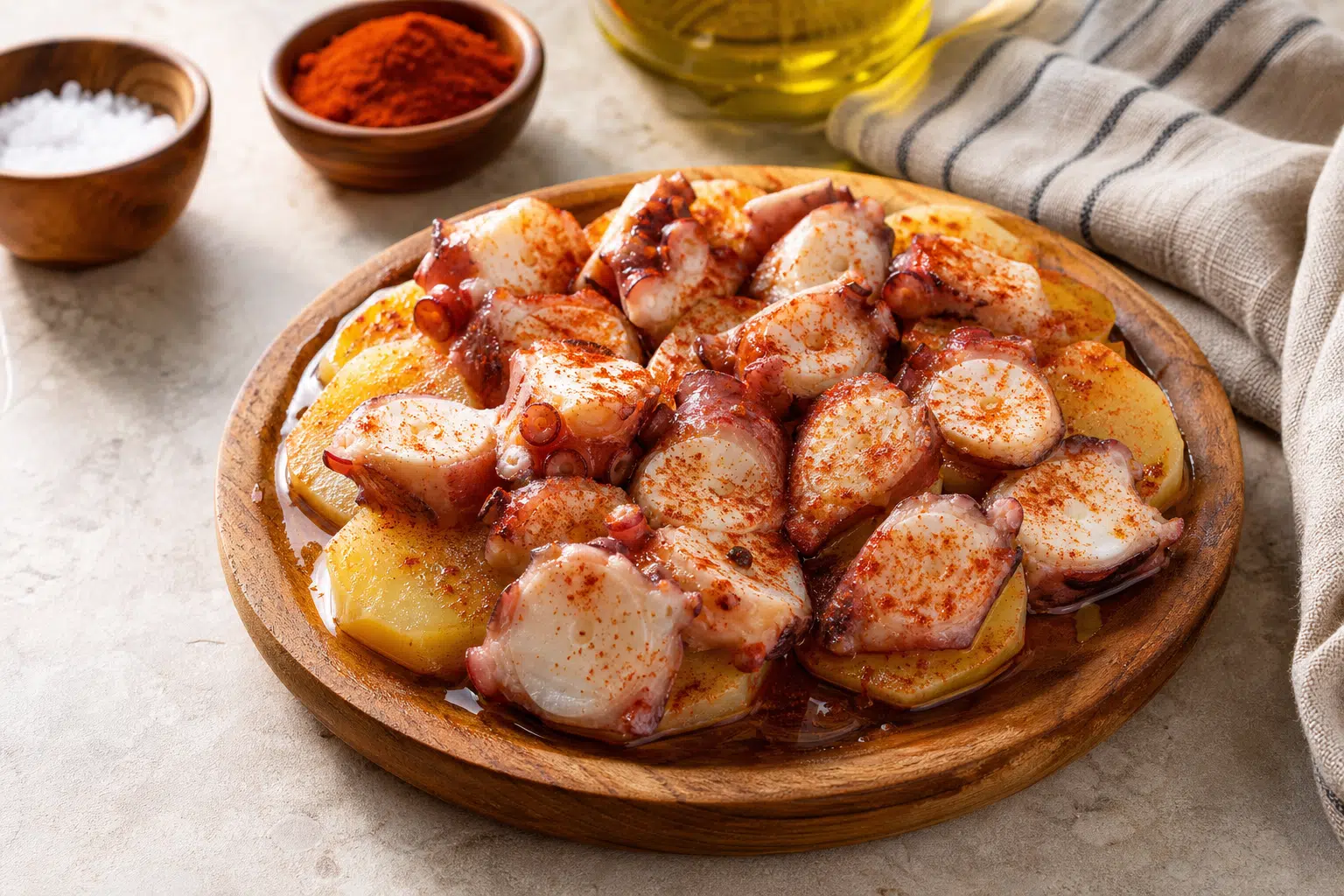
🪵 The Traditional Wooden Plate
One of the most recognizable details of pulpo a la gallega is that it is often served on a wooden plate. The wood absorbs a little excess moisture and helps keep the seasoning from pooling too much around the potatoes.
You do not need a wooden plate to make the dish well, but it does give a more traditional look and feel. If using one, serve the octopus as soon as it is seasoned so the board stays clean and attractive.
🌶️ Paprika Matters
Paprika is not just a garnish here. It is one of the main flavors, so choose a good Spanish paprika with a fresh aroma and a bright color.
Sweet paprika gives the dish its classic warm earthiness, while a small amount of hot paprika adds depth. Smoked paprika can also be used, but it should not dominate the seafood.
🌊 Galicia and Pulpo á Feira
In Galicia, this dish is strongly tied to fairs and festive food stalls, which is why it is also called pulpo á feira. It is a humble preparation that depends on good ingredients rather than a long list of seasonings.
That direct style is part of its appeal. Octopus, potatoes, olive oil, salt, and paprika come together in a way that feels both rustic and elegant.
👀 How to Know When Pulpo a la gallega Is Ready
- Tender tentacles: A knife should slide into the thickest part with only light resistance.
- Curled shape: The tentacles should be nicely curled and look plump rather than tight and stiff.
- Creamy potatoes: The potato slices should be fully cooked inside but still hold together on the plate.
- Glossy finish: The olive oil and paprika should coat the surface evenly without looking dry.
A simple test is to slice one end of a tentacle and taste it before plating. If it feels tender and juicy, the dish is ready to season and serve.
✨ Tips for a Better Pulpo a la gallega
- Use frozen octopus: It often becomes more tender because the freezing process helps break down the fibers.
- Choose medium potatoes: They cook more evenly and are easier to slice neatly for serving.
- Season at the end: Adding paprika, salt, and oil just before serving keeps the flavors bright and clean.
- Use scissors for slicing: Kitchen scissors make it easier to cut neat octopus rounds without tearing.
- Warm the serving plate: A slightly warm plate helps keep the octopus and potatoes at the right temperature longer.
- Do not drown it in oil: Be generous, but let the octopus remain the main flavor.
🔄 Ingredient Notes and Swaps
Pre-cooked octopus shortens the process: warm it gently and follow its packaging instructions. Choose sweet or hot paprika to suit your taste.
⚠️ Common Problems and Easy Fixes
- Overcooking the octopus: Cooking too long can turn the flesh dry after it first becomes tender.
- Boiling too aggressively: A hard boil can roughen the texture and cause uneven cooking.
- Undercooking the potatoes: Firm potatoes make the dish feel unfinished and do not absorb the oil and paprika well.
- Using stale paprika: Old paprika tastes flat and dusty instead of fragrant and vivid.
- Skipping the resting time: Letting the octopus sit briefly in its cooking liquid helps it relax and stay juicy.
- Seasoning too early: If the dish sits too long after seasoning, the paprika can become damp and the presentation loses its freshness.
🍽️ What to Serve With It
Serve warm on a platter with bread for the olive oil and paprika dressing.
❄️ Storage and Reheating
Pulpo a la gallega is best eaten freshly made, while the octopus is warm and the potatoes are still moist. If needed, store leftovers in an airtight container in the fridge for up to 2 days.
For the best texture, keep the octopus and potatoes together and reheat them gently. A microwave on low power or a covered pan over low heat works well, but avoid overheating or the octopus may toughen.
Freezing is possible, especially if the octopus was not previously frozen after cooking, but the potatoes can become grainy. If you plan to freeze anything, freeze only the cooked octopus and boil fresh potatoes when serving.
🥄 Approximate Nutrition
| Nutritional value | Approximate amount per serving |
|---|---|
| Calories | 360 kcal |
| Protein | 29 g |
| Fat | 15 g |
| Carbohydrates | 24 g |
| Fiber | 3 g |
| Sodium | 620 mg |
Nutritional values are approximate and will vary depending on the ingredients used.
❓ Frequently Asked Questions
Can I use pre-cooked octopus?
Yes, you can. It makes the recipe faster, but warm it gently so it does not become rubbery.
Is sweet or hot paprika more traditional?
Sweet paprika is the most common base. A little hot paprika is often added according to taste.
Do I have to serve it on a wooden board?
No, a regular plate works perfectly well. The wooden board is traditional, but it is not essential.
Can I make it ahead?
You can cook the octopus ahead and reheat it gently before serving. For the best result, season it only at the last moment.
Why do people dip the octopus three times first?
This traditional technique helps curl the tentacles and is believed to improve the texture and appearance.
What should I serve with Pulpo a la gallega?
It works well as a tapa, starter, or light main dish with bread and a simple salad. It also fits nicely into a larger spread of Spanish small plates.
Pulpo a la gallega shows how a few carefully handled ingredients can create a dish with real character. Its tenderness, gentle paprika warmth, and silky olive oil make it memorable without being complicated.
The key is patience with the octopus and restraint with the seasoning. Cook it until just tender, pair it with creamy potatoes, and let the classic Galician flavors do the rest.
Recipe prepared for Spanish Grandma Recipes.
Discover more from Spanish Grandma Recipes
Subscribe to get the latest posts sent to your email.