Calamares a la andaluza are squid rings and tentacles dusted with flour and fried until lightly golden. The coating is thin enough for the squid to remain the main attraction, with lemon served alongside rather than poured over the entire platter.
Good results depend on three things: dry squid, a light coating and hot oil that recovers between small batches. There is no egg batter here, and no need for a thick breadcrumb crust.
What to expect: Four tapas portions with a delicate crisp coating. Fry shortly before serving; these lose their crunch while waiting under a cover.
Jump to ingredients and method ↓
🦑 Rings, Tentacles and a Light Coating
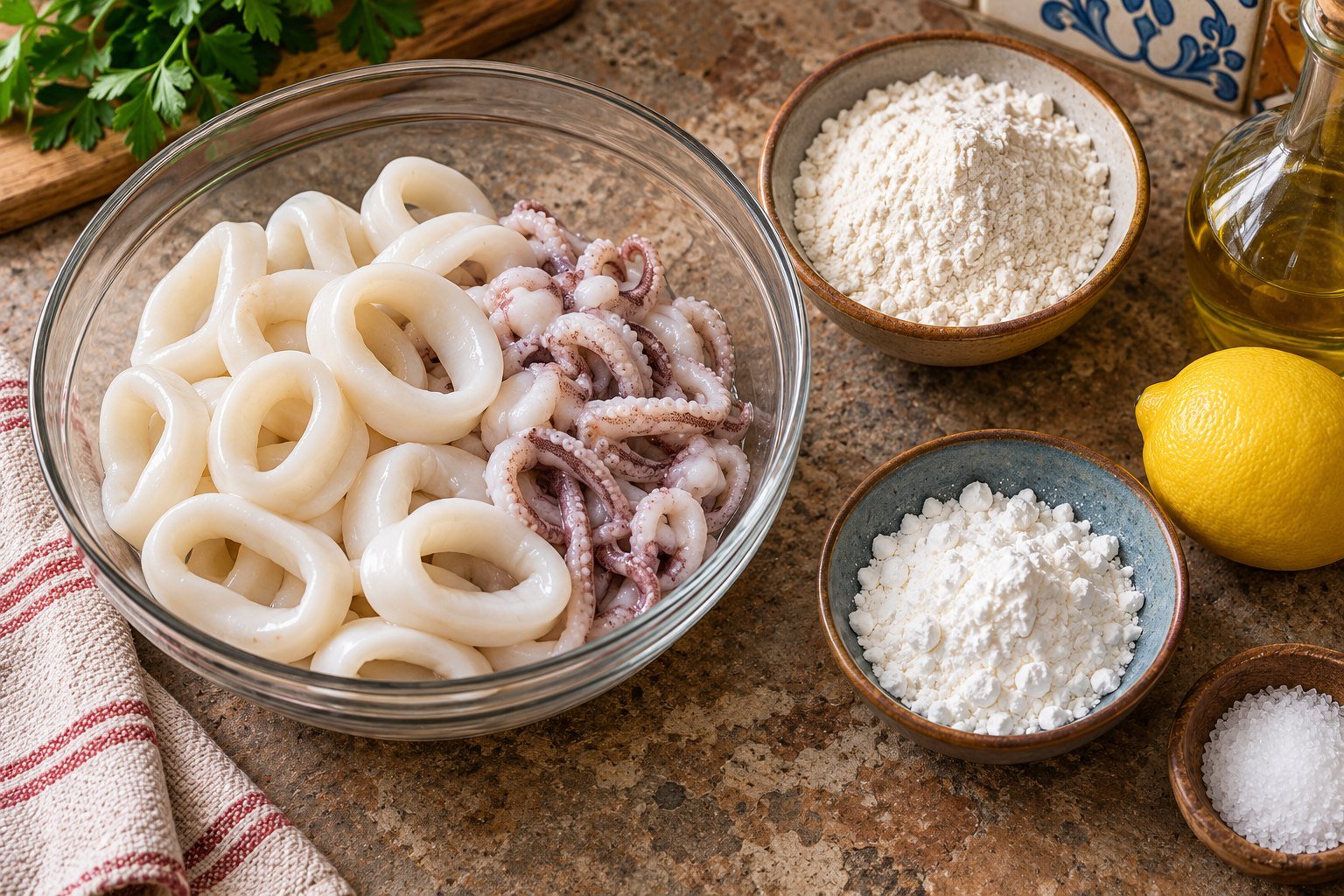
Buy cleaned squid so you can focus on frying. Small to medium tubes give tender rings, while the tentacles add texture. The 600 g quantity below is the cleaned edible weight, not the weight of whole unprepared squid.
Unlike a thick battered squid dish, this preparation uses a dry flour coating. A little cornstarch helps keep it light in a home kitchen; plain wheat flour alone is also an option. For a seafood meal without frying, try seafood fideuà.
⏱️ Time and Servings
| Stage | Time |
|---|---|
| Preparation | 20 minutes |
| Cooking | 10 minutes |
| Total time | 30 minutes |
| Servings | 4 |
The cooking estimate covers several small batches. Heating the oil may add a few minutes depending on your hob and pan.
🍲 Equipment You Will Need
- A deep heavy saucepan, filled no more than one third with oil
- A frying thermometer and slotted spoon
- A bowl or shallow tray for the flour
- A wire rack over a baking tray and kitchen paper
🛒 Ingredients for 4 Servings
- 600 g (1 lb 5 oz) cleaned squid tubes and tentacles
- 100 g plain all-purpose flour
- 40 g cornstarch
- ½ teaspoon fine salt, plus a little to finish if needed
- About 750 ml sunflower or refined olive oil, enough for 4 cm depth in a suitable pan
- 1 lemon, cut into wedges
Frozen squid: thaw fully in the refrigerator, drain and dry very well. Follow the packaging if it gives special thawing instructions.
Coating: the flour mixture is more than will stick to the squid. That extra space makes it easier to toss and separate the pieces. Discard flour that has touched raw seafood.
Oil depth: choose a tall pan that leaves ample empty space above the oil. If 750 ml fills your pan too high, use a larger suitable pan or reduce the batch size.
👨🍳 How to Make Calamares a la Andaluza
1️⃣ Cut and dry the squid
Slice the cleaned tubes into rings about 1 cm wide. Leave small tentacle clusters intact and halve large ones. Spread on kitchen paper and pat dry from both sides. Keep refrigerated while you organize the remaining equipment.
2️⃣ Heat the oil and set up the rack
Heat the oil to 180°C / 355°F. Put a wire rack over a tray beside the hob, away from the hot pan. Mix the flour, cornstarch and salt in a shallow bowl. Have the lemon ready before frying begins.
3️⃣ Coat only the first batch
Toss roughly one quarter of the squid in the flour mixture. Separate the rings with your fingers or a fork, then shake off loose flour in a sieve. The coating should look thin and dry, with no heavy clumps. Coat the next batch only when its turn comes.
4️⃣ Fry in small batches
Lower the squid carefully into the oil, keeping hands away from splashes. Fry for about 1½ to 2½ minutes, separating pieces with the slotted spoon, until lightly golden and the flesh is opaque and cooked through. Thicker pieces may take longer. Keep the oil between about 175 and 180°C; avoid chasing a dark-brown crust.
5️⃣ Drain and repeat
Lift the squid onto the rack in a single layer. Let the oil return to 180°C before adding the next batch. Skim out loose crumbs between batches so they do not burn. Taste a cooked piece and add a little salt only if needed.
6️⃣ Serve straight away
Transfer to a warm platter and serve with lemon wedges. Squeeze lemon over individual portions at the table so the rest of the coating stays crisp. Do not cover the platter or stack the squid in a deep bowl.

🔥 Why the First Batch Matters
Use a small first batch to check the heat and coating. If it becomes dark almost instantly, lower the heat slightly. If the coating stays pale and oily, let the oil recover before continuing and add fewer pieces.
Squid can become rubbery when held in the pan too long. A thin coating helps it turn golden quickly. Drying the squid thoroughly also reduces splashing and prevents a paste-like layer beneath the flour.
🔄 Ingredient Swaps and Variations
- All wheat flour: replace cornstarch with another 40 g plain flour for a slightly different crust.
- Gluten-free option: use rice flour in place of wheat flour and check all ingredients and frying equipment for cross-contact.
- Only tubes: use 600 g cleaned tubes if tentacles are unavailable.
- Lemon-free serving: offer a small bowl of sauce separately; coating the whole batch in sauce softens it quickly.
⚠️ Common Problems and Easy Fixes
- Coating falls off: the squid was wet or sat in flour too long. Dry again and coat immediately before frying.
- Greasy rings: the oil cooled too far when the batch went in. Use fewer pieces and a thermometer.
- Rubbery squid: pieces were too thick or cooked too long. Cut evenly and aim for a light-golden finish.
- Dark specks: loose flour burned in the oil. Skim it out between batches.
🍽️ What to Serve With It
Serve with salmorejo and a simple green salad. For a tapas spread, add Padrón peppers and bread.
Plan the table before frying. Squid is a dish to bring out as soon as each batch is ready, so it helps if drinks and cold dishes are already served.
❄️ Storage and Reheating
Freshly fried is best. Refrigerate any leftovers within 2 hours in a covered container and use within 2 days. Reheat on a rack in a hot oven until thoroughly hot; the texture will be firmer than when fresh.
Do not refry leftovers repeatedly or keep raw flour-coated squid standing on the counter. Prepare only the amount you can cook and serve promptly.
🥄 Approximate Nutrition
| Per serving: one quarter of the fried squid | Estimate |
|---|---|
| Calories | 325 kcal |
| Protein | 25 g |
| Carbohydrates | 28 g |
| Fat | 12 g |
| Fiber | 1 g |
A rough estimate assuming about 80 g of coating and 40 g of frying oil are retained across the batch. Actual absorption varies; most flour and frying oil are not eaten.
❓ Frequently Asked Questions
Do I need to soak squid in milk?
No. This method starts with cleaned, well-dried squid. A milk soak adds another drying step and is not necessary for the coating.
Can I use an air fryer?
A dry flour coating behaves differently without immersion in oil and can remain powdery. These timings are specifically for deep-frying.
Can I use pre-cut frozen rings?
Yes, once completely thawed and thoroughly dried. Check that they are squid rather than a processed seafood product, which may require different cooking instructions.
Why not flour the whole batch first?
Moisture gradually turns the coating sticky. Dusting each portion just before frying helps it stay light and separate.
Should I add egg?
No. Egg would create a different coating. The small amount of moisture left on properly dried squid is enough for a thin flour layer to adhere.
Recipe written for Spanish Grandma Recipes. By José María. The images are original AI-generated illustrations of the dish and ingredients.
Discover more from Spanish Grandma Recipes
Subscribe to get the latest posts sent to your email.