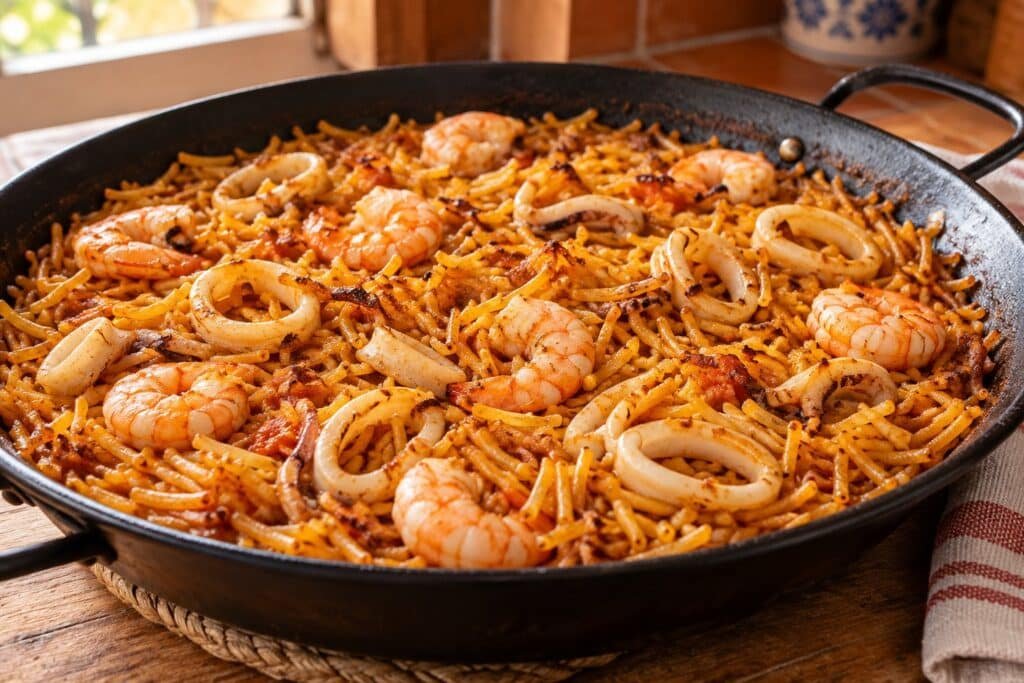
The recipe below uses peeled shrimp and cleaned squid to keep preparation manageable. Toast the noodles briefly, reduce the tomato and keep a little hot stock in reserve. Those three details give you control when pasta brands and home burners behave differently.
What to expect: Four main-course portions of short, tender noodles with cooked shrimp and squid. Allow about 55 minutes, including five minutes for the finished pan to rest.
Jump to ingredients and method ↓
🍤 Fideuà Uses Noodles Instead of Rice
Visit València describes fideuà as a dish typical of the Valencian coast, made with noodles rather than rice. This seafood version follows that general idea without claiming there is only one permitted noodle size or combination of shellfish.
If you are looking for rice, try arroz a banda or arroz negro. Rice and noodles absorb stock differently, so do not swap them into this method gram for gram and keep the same cooking time.
⏱️ Time and Servings
| Stage | Time |
|---|---|
| Preparation | 20 minutes |
| Cooking | 30 minutes |
| Resting | 5 minutes |
| Total time | 55 minutes |
| Servings | 4 |
🍲 Equipment You Will Need
- A shallow 30 to 32 cm paella pan or wide sauté pan
- A burner large enough to heat the base evenly
- A small saucepan for keeping stock hot
- Tongs, a wooden spoon and a kitchen timer
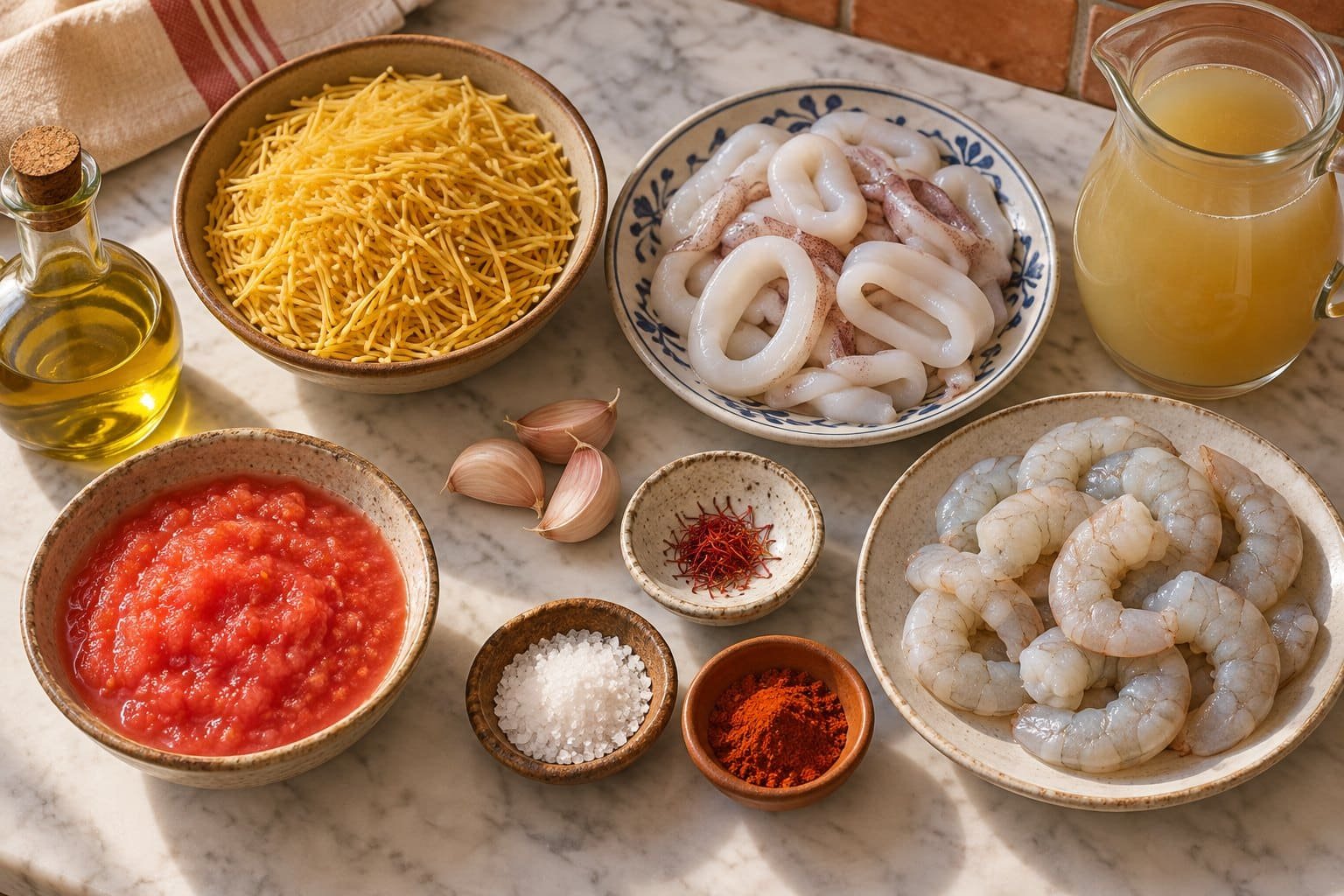
🛒 Ingredients for 4 Servings
- 320 g short fideuà noodles or thin fideos, about 2 to 3 cm long
- 300 g cleaned squid, cut into rings and small pieces
- 300 g raw peeled shrimp, deveined
- 150 g ripe tomato, grated, or canned crushed tomatoes
- 2 garlic cloves, finely chopped
- 3 tablespoons (45 ml) olive oil, divided
- 800 ml low-salt fish stock, plus up to 150 ml extra if needed
- A small pinch of saffron threads
- ½ teaspoon sweet Spanish paprika
- ½ teaspoon fine salt, then adjust to the stock
Noodles: choose short thin wheat noodles with a packet cooking time near 8 to 10 minutes. Very thick hollow fideuà noodles need a different amount of stock and longer cooking. Broken thin spaghetti is a practical substitute, although it will not behave exactly like every Spanish fideo.
Seafood: thaw frozen squid and shrimp completely in the refrigerator, then pat dry. Wet squid releases enough water to interfere with browning. Keep raw seafood chilled until its turn in the pan.
Stock: the stated amount is a starting point for the pan and noodles described. A wide pan, strong heat or a longer-cooking pasta can need more. Have the extra hot stock ready rather than adding cold liquid late.
Pan and portions: the noodles should form a shallow layer. Doubling the quantity in the same pan makes the center wet while the edges overcook. Use two pans for a double batch.
👨🍳 How to Make Seafood Fideuà
1️⃣ Warm the stock and prepare seafood
Heat the fish stock in a saucepan, add the saffron and keep just below a simmer. Pat the squid and shrimp dry. Set a clean plate beside the stove for the briefly cooked seafood. Measure the noodles, tomato and paprika before starting so the pan does not wait while you look for ingredients.
2️⃣ Sear the seafood briefly
Heat 1 tablespoon oil in the wide pan over medium-high heat. Add the squid and cook for 3 to 4 minutes, until its surface is opaque and excess liquid has mostly evaporated. Transfer to the plate. Add the shrimp and sear for about 30 seconds on each side, then remove; they will finish cooking later.
3️⃣ Toast the noodles
Reduce the heat to medium and add the remaining 2 tablespoons oil. Add the dry noodles and stir for 2 to 3 minutes, until lightly golden in places. Keep them moving so the thin tips do not burn. Add the garlic and cook for about 30 seconds, just until fragrant.
4️⃣ Cook the tomato base
Stir in the grated or crushed tomato and cook for 5 to 6 minutes, until thickened and no longer watery. Take the pan briefly off the heat and stir in the paprika. Return the squid and any collected juices to the pan. Spread the noodles and squid into an even shallow layer.
5️⃣ Add stock and cook the noodles
Pour in the 800 ml hot saffron stock and bring to a steady simmer. Cook uncovered for about 8 to 10 minutes, following the noodle packet as a guide. Rotate the pan if necessary for even heat. If the pan dries before the noodles are tender, add a little reserved hot stock around the edges.
6️⃣ Finish the shrimp and rest
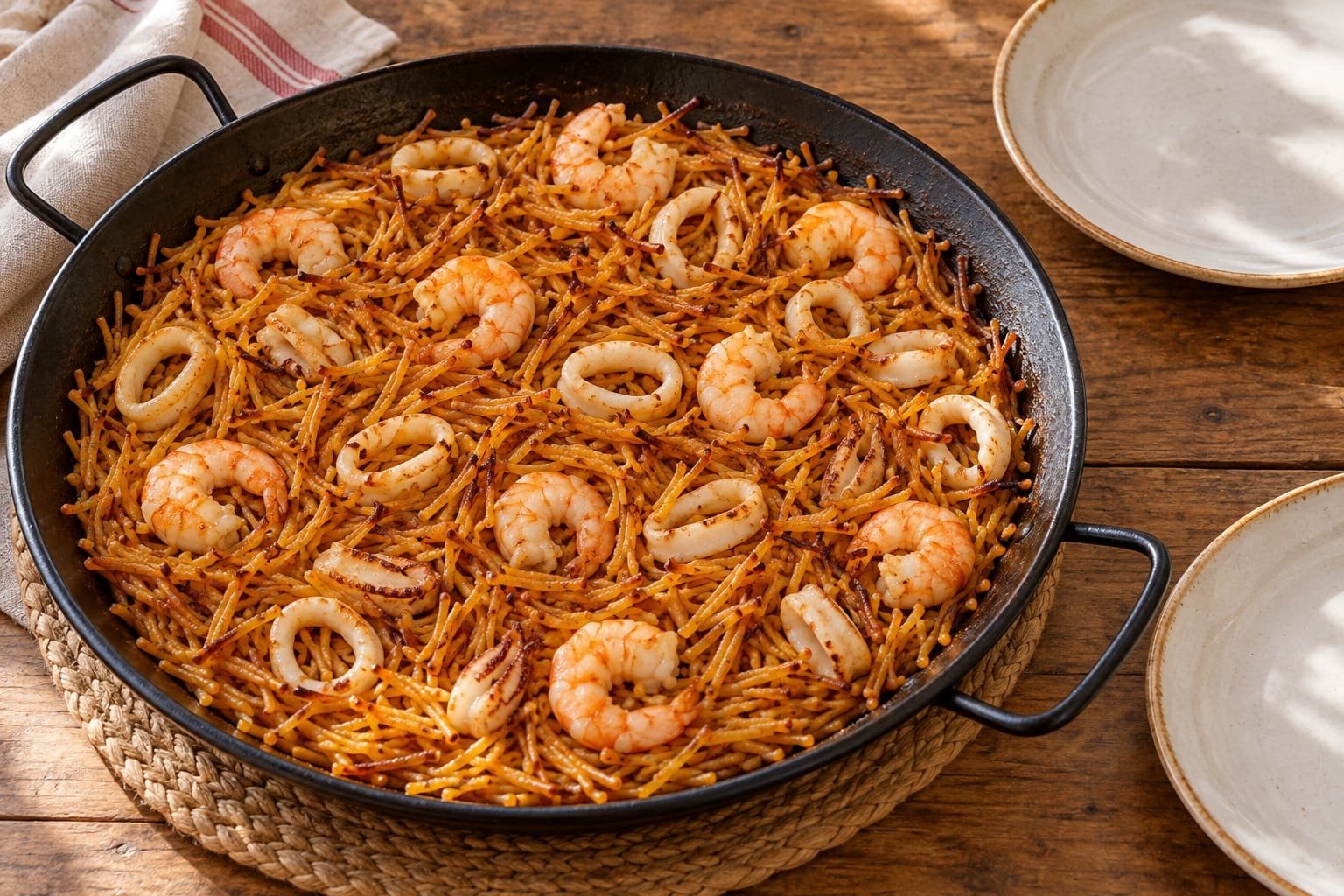
Return the shrimp for the final 3 to 4 minutes, cooking until opaque and firm throughout. The squid should also be fully cooked and the noodles tender with almost no free liquid. Turn off the heat and rest uncovered for 5 minutes. Taste a small portion, adjust salt only if needed and serve from the pan.
🍜 Controlling the Stock Without Making Soggy Noodles
The target is cooked pasta with very little liquid left between the strands. Look across the surface near the end: small bubbling gaps are fine, but a visible layer of broth means the pan still needs a little evaporation. If the pasta is already tender, increase the heat only briefly and watch closely.
Do not pour in all the reserve stock automatically. Add small splashes only when the noodles are still firm and the pan is becoming dry. Gentle leveling at the beginning is enough; constant stirring can break the noodles and encourage a softer, stickier finish.
🔄 Ingredient Swaps and Variations
- Broken spaghetti: break thin spaghetti into short pieces and check its packet time. Keep extra stock ready because thickness varies between brands.
- Only shrimp: omit the squid and use about 500 g shrimp. Add them toward the end so they do not spend the whole noodle-cooking time in the pan.
- No saffron: leave it out. The tomato and paprika still give color, although the aroma will be simpler. A large spoonful of turmeric is not an equivalent replacement.
- Vegetable version: use vegetable stock and separately sautéed mushrooms or peppers. This becomes a vegetable noodle dish with different flavor and nutrition.
⚠️ Common Problems and Easy Fixes
- Hard noodles and a dry pan: add a little hot stock and continue cooking. Check the pasta rather than relying only on the timer.
- Soft noodles in excess broth: too much liquid or too deep a layer is likely. Use a wider pan next time and hold back the reserve stock.
- Rubbery shrimp: they cooked too long. Sear briefly, remove and return near the end.
- Burnt garlic or noodle tips: lower the heat while toasting and have the tomato ready to go into the pan promptly.
🍽️ What to Serve With It
Bring the pan to the table on a heatproof trivet and divide into four portions. A green salad or sliced tomatoes are enough beside it. If serving garlic mayonnaise, use a commercial or pasteurized-egg product and offer only a little on the side.
For a starter, a small bowl of ajoblanco gives a cool contrast. Avoid a second large rice or pasta dish; the noodles and seafood make this the center of the meal.
❄️ Storage and Reheating
Refrigerate leftovers promptly in shallow containers and use within 2 days. Reheat a small portion with a splash of water until hot throughout. The noodles will soften further, and reheating the shrimp repeatedly makes them tough.
For the best texture, prepare the ingredients ahead but cook the pan close to serving. Keep raw seafood chilled and separate from salad ingredients. Freezing the complete dish is possible, but the pasta and seafood textures are less pleasant after thawing.
🥄 Approximate Nutrition
| Per serving: one quarter of the pan | Estimate |
|---|---|
| Calories | 525 kcal |
| Protein | 40 g |
| Carbohydrates | 62 g |
| Fat | 13 g |
| Fiber | 4 g |
Approximate amounts per quarter-pan portion, excluding mayonnaise or other sauces. Noodle brand and seafood size affect the figures.
❓ Frequently Asked Questions
Can I use rice instead of noodles?
Not with the same liquid and timing. Choose a rice-specific recipe such as arroz a banda so the method matches the ingredient.
Does fideuà need mussels?
No. This version uses squid and peeled shrimp. Other combinations exist, but there is no need to add shell-on seafood for the dish to work.
Should I stir after adding the stock?
Level the ingredients at the start, then mostly leave them alone. Rotate the pan if your burner heats one side more strongly.
Do the noodles have to stand upright?
Some toasted tips may lift as the pan dries, but every strand does not need to stand up. Tender noodles and a balanced amount of stock matter more.
Can I make it in a deep saucepan?
A deep pan changes evaporation and creates a much thicker layer. A shallow wide pan is the more reliable choice for these quantities.
Recipe written for Spanish Grandma Recipes. By José María. The images are original AI-generated illustrations of the dish and ingredients.
Discover more from Spanish Grandma Recipes
Subscribe to get the latest posts sent to your email.