This guide explains what to look for in US grocery stores and UK supermarkets, when a substitution works and when it changes the dish too much.
🔎 The quick comparison
| Feature | Spanish chorizo | Mexican chorizo |
|---|---|---|
| Typical seasoning | Paprika, garlic and salt | Chillies, spices and often vinegar |
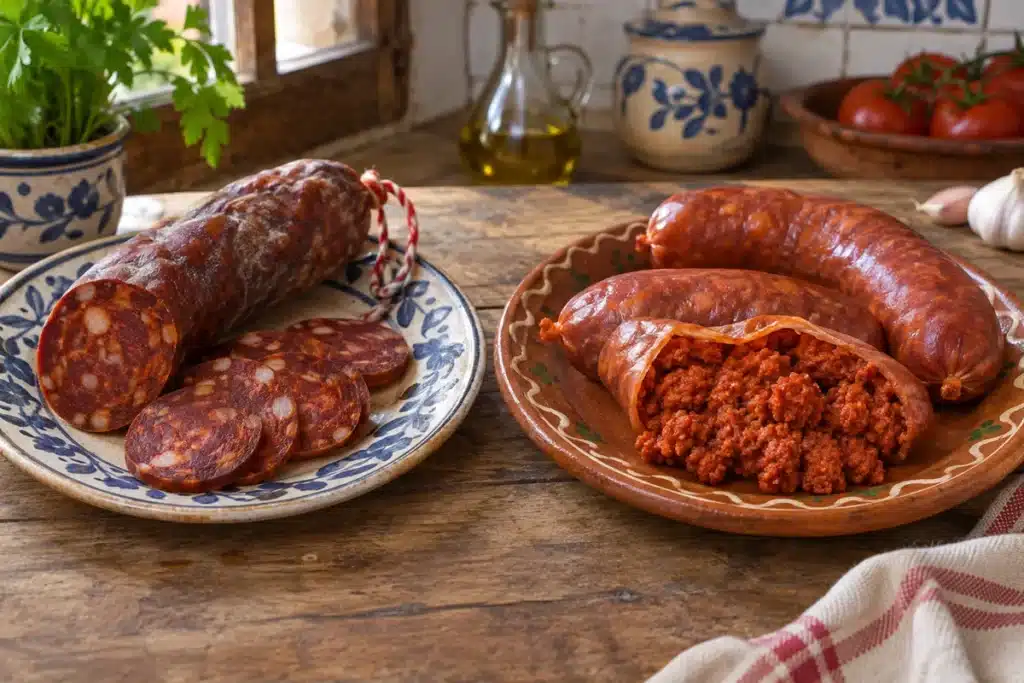
| Common retail form | Firm cured sausage, or softer cooking chorizo | Fresh sausage or loose seasoned meat |
| Texture in a dish | Cured varieties hold their shape in slices or cubes | Fresh varieties break into small crumbles |
| Before serving | Check whether the package says ready to eat or requires cooking | Fresh varieties must be cooked |
| Typical uses | Tapas, lentils, beans and potato stews | Eggs, tacos, potatoes and fillings |
🇪🇸 What makes Spanish chorizo different?
Paprika and garlic are central to the flavour of Spanish chorizo. Some versions are smoky and some are not; some are mild and others are hot. A red colour does not tell you how spicy the sausage will be. Look for dulce for a milder style and picante for heat, then check the producer’s description.
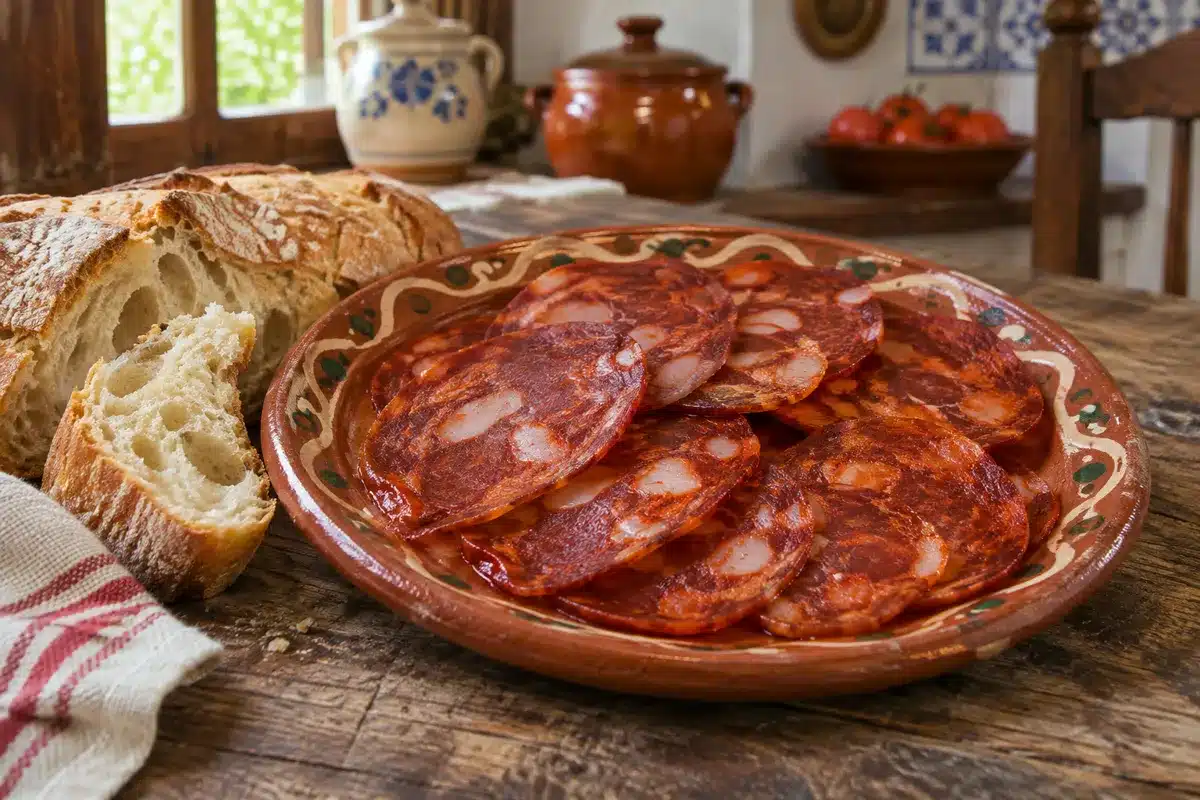
Cured chorizo is firm enough to slice neatly. It adds little pockets of pork and paprika flavour to a stew, or can be served as a tapa when labelled ready to eat. Fresh Spanish chorizo and some semi-cured cooking products need cooking. Do not assume that every Spanish sausage is safe to slice straight onto a serving board.
🌶️ What is Mexican chorizo?
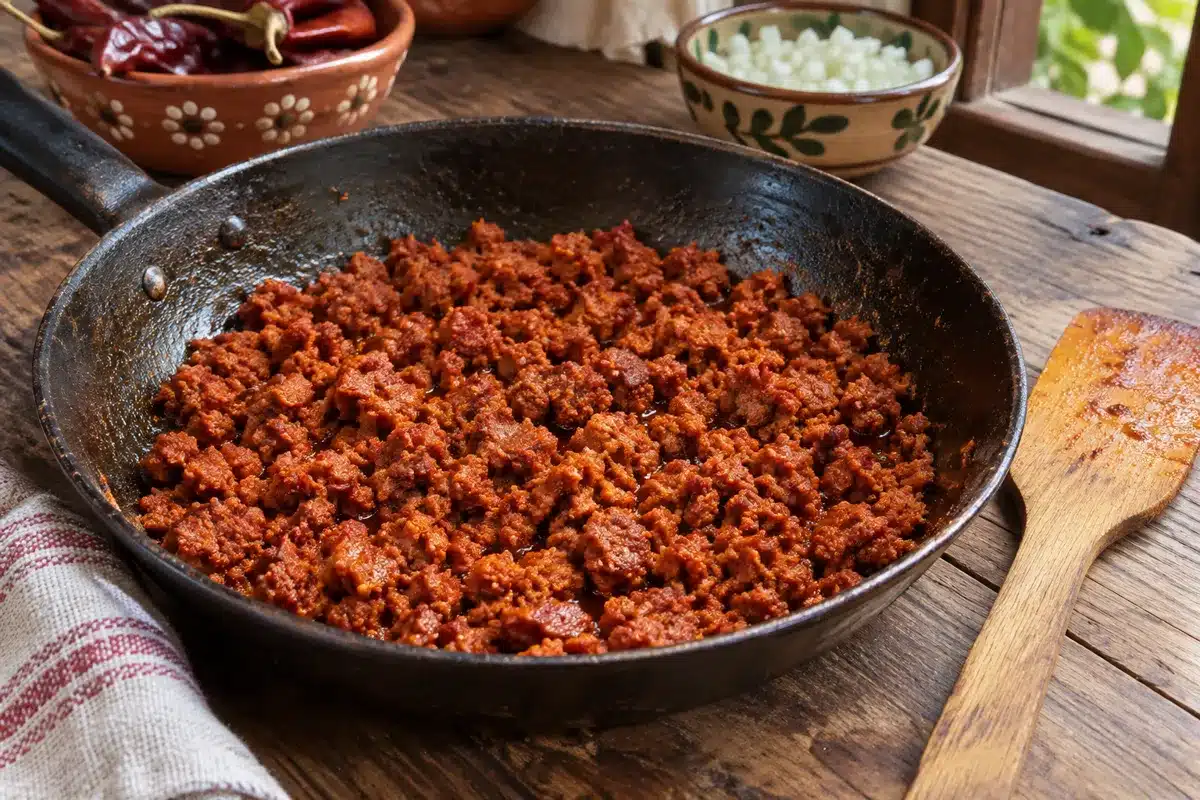
The Mexican chorizo commonly sold fresh is soft, highly seasoned meat. Pork is common, but you may also see beef, poultry or plant-based versions. Its seasoning and texture vary by producer. It often gives a dish a chilli-led flavour and a tangier finish than Spanish cured chorizo.
Fresh chorizo is useful when you want small pieces dispersed throughout eggs, potatoes or a filling. It does not provide the same firm rounds you expect in a Spanish potato stew. Follow the package’s cooking instructions and any temperature guidance for the meat used; colour alone is not a reliable test of doneness.
🛒 How to choose it in the US or UK
- Read the storage and cooking instructions first. “Keep refrigerated” and “cook before eating” matter more than where the package sits.
- Match the form to the recipe. A recipe that asks for slices usually needs a sausage that can hold that shape.
- Check the seasoning. Sweet, hot and smoked are separate qualities. A mild product can still be smoky.
- Check the casing. Remove any non-edible casing as directed by the manufacturer.
- Buy for the amount you need. Follow the opened-pack storage instructions rather than applying a generic shelf-life rule.
🔄 Can you substitute one for the other?
Sometimes, but treat it as an adaptation. If you use fresh Mexican chorizo instead of cured Spanish chorizo, the sausage will crumble and its seasoning may change the whole sauce. Cook it as directed before combining it with ingredients that need less time, and reassess salt and heat before adding extra seasoning.
In the opposite direction, diced cured chorizo brings chewy pieces to a dish designed around loose fresh meat. Cut it smaller, warm it gently and avoid frying thin slices until hard. Neither substitution is a way to reproduce the original texture exactly.
For a meat-free Spanish-style stew, cooked beans or sautéed mushrooms with a little paprika can provide body and savoury flavour. They do not replicate chorizo, but they offer a coherent alternative. Add paprika briefly over gentle heat, then add liquid before it scorches.
🍲 Which type suits these Spanish recipes?
- Patatas a la Riojana: follow the recipe’s specified chorizo type so the slices and potatoes finish together.
- Spanish lentil stew: a paprika-led Spanish chorizo suits the flavour of the broth.
- Spanish migas: small pieces distribute flavour through the toasted bread.
For the rest of your shopping list, use our Spanish pantry guide.
❓ Frequently asked questions
Is all Spanish chorizo smoked?
No. Smoking and the paprika used vary. Read the label if you specifically want a smoky flavour.
Can I eat chorizo without cooking it?
Only when that particular product is sold as ready to eat. Fresh and cooking chorizos need cooking; the name alone does not establish this.
Does a darker red colour mean more heat?
No. Colour depends on ingredients and processing. Use the heat description on the label.
Should chorizo go in every Spanish rice dish?
No. Spanish rice dishes have distinct ingredients and traditions. Follow the individual recipe instead of adding chorizo automatically.
📚 Further reading
For Spanish production styles, see the Consorcio del Chorizo Español and Interporc’s guide to meats in Spain. For an overview of both styles, see Bon Appétit’s chorizo guide.
Image created with AI for illustration.
Discover more from Spanish Grandma Recipes
Subscribe to get the latest posts sent to your email.