
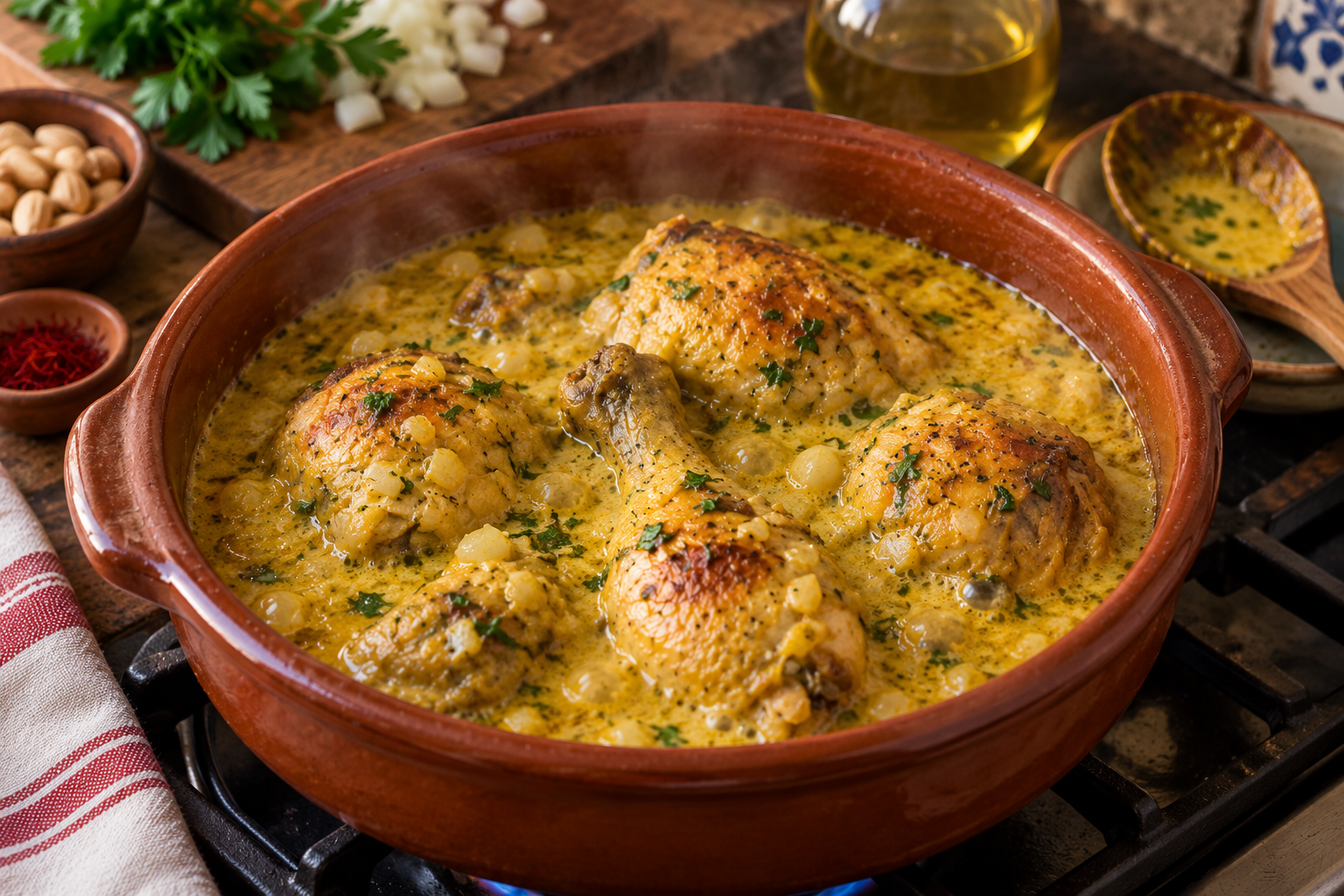

🍗 Spanish Chicken Pepitoria Recipe: Traditional Pollo en Pepitoria
If you want to discover one of the most traditional and elegant Spanish chicken dishes, this Spanish chicken pepitoria recipe is a wonderful place to start. Known in Spain as pollo en pepitoria, this old-fashioned recipe is made with tender chicken simmered in a rich sauce of almonds, garlic, saffron, white wine, and egg yolk.
What makes this dish special is the sauce. It is not tomato-based like many Spanish stews. Instead, the almonds and egg yolk give it a creamy texture without using cream, while the saffron and wine add warmth and depth.
It is the kind of recipe that feels deeply homemade but also a little more refined than an everyday stew.
If you enjoy traditional Spanish chicken dishes, you may also like this pollo al ajillo recipe or this comforting Spanish chicken stew.
⏱️ Cooking Times
| Stage | Time |
|---|---|
| Preparation time | 20 minutes |
| Cooking time | 45 minutes |
| Total time | 1 hour 5 minutes |
| Servings | 4 people |
🛒 Ingredients for Spanish Chicken Pepitoria
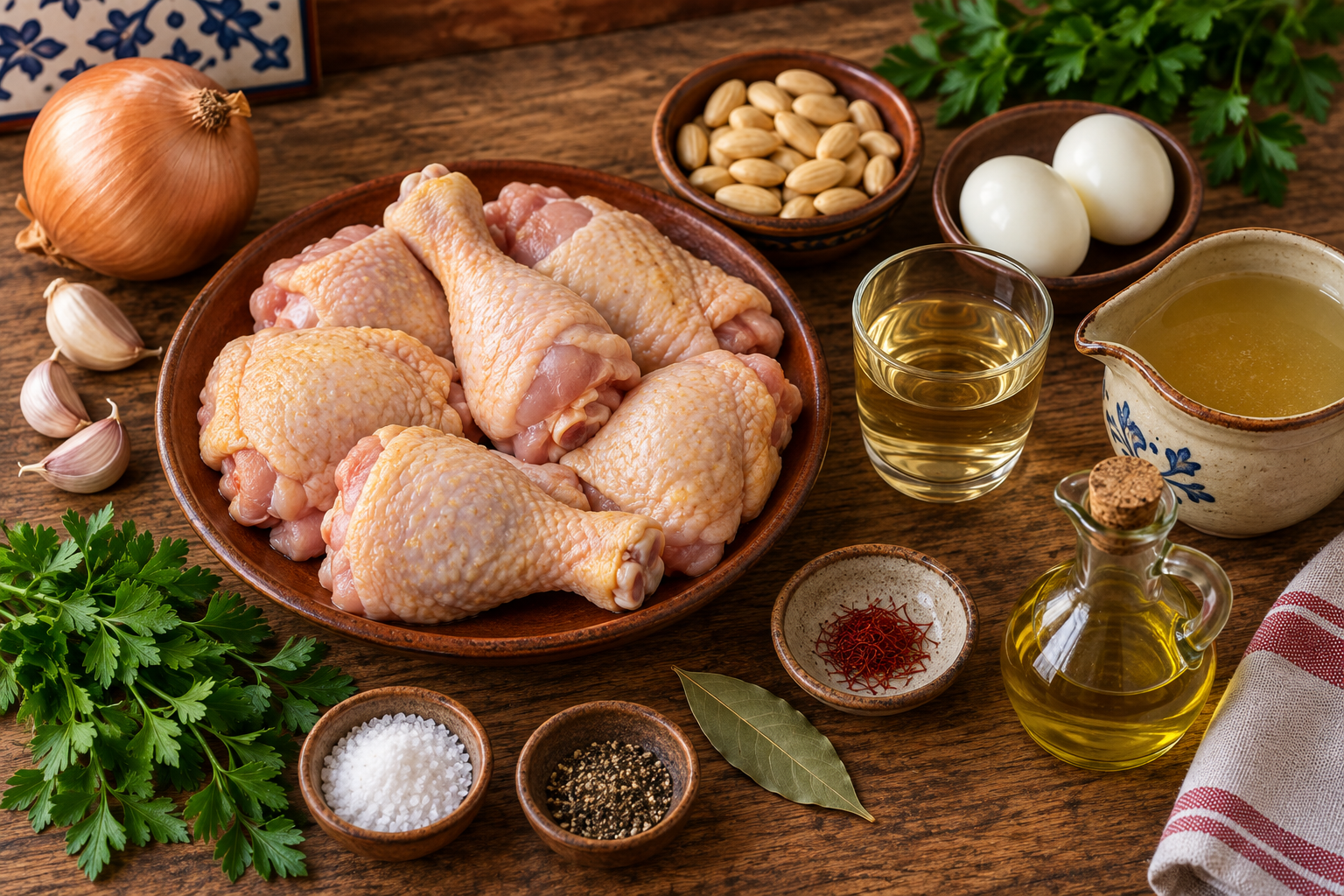
- 1 kg chicken thighs and drumsticks, preferably bone-in
- 2 hard-boiled eggs
- 50 g blanched almonds
- 1 large onion, finely chopped
- 3 garlic cloves
- 150 ml dry white wine
- 500 ml chicken stock
- 3 tablespoons extra virgin olive oil
- A small pinch of saffron threads
- 1 bay leaf
- 1 tablespoon chopped fresh parsley
- Salt, to taste
- Freshly ground black pepper, to taste
The almonds are one of the key ingredients here, so use plain unsalted almonds. Toasting them lightly before grinding brings out much more flavor.
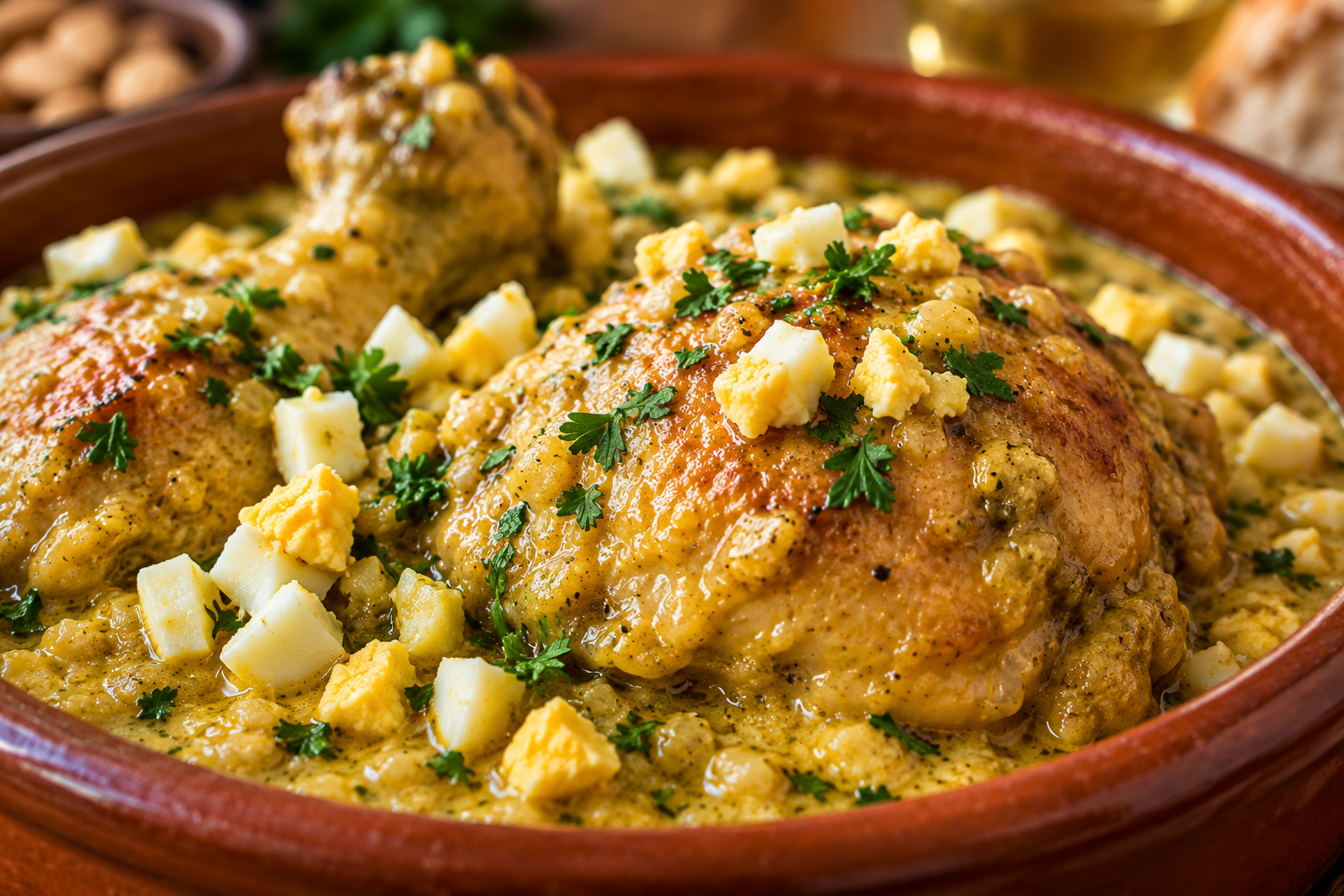
The hard-boiled egg yolks are also important. They help thicken the sauce and give pepitoria its characteristic richness.
👨🍳 How to Make Spanish Chicken Pepitoria
1️⃣ Brown the chicken
Pat the chicken pieces dry and season them with salt and black pepper.
Heat the olive oil in a wide casserole over medium-high heat.
Add the chicken and brown it well on all sides.
You do not need to cook it through at this point. We are simply building flavor.
Once golden, remove the chicken and reserve it on a plate.
2️⃣ Cook the onion slowly
Lower the heat slightly and add the chopped onion to the same casserole.
Cook for around 8 to 10 minutes until soft and lightly golden.
Do not rush this part. A properly softened onion gives the sauce a much rounder flavor.
3️⃣ Toast the almonds and garlic
In a small frying pan, toast the almonds and garlic cloves gently until lightly golden.
Keep an eye on them because almonds can go from toasted to burnt very quickly.
Remove from the heat and let them cool slightly.
4️⃣ Prepare the pepitoria paste
Peel the hard-boiled eggs and separate the yolks from the whites.
Place the toasted almonds, garlic, egg yolks, saffron, and a little parsley into a mortar or small food processor.
Crush everything until you have a thick paste.
Add a small ladle of chicken stock and mix again.
The result should be creamy but still slightly textured.
5️⃣ Add the white wine
Return to the casserole with the onion and pour in the white wine.
Let it bubble for 2 to 3 minutes so the alcohol evaporates and the flavor concentrates.
6️⃣ Return the chicken to the casserole
Put the browned chicken pieces back into the pan.
Add the bay leaf and pour in the chicken stock.
The liquid should come roughly halfway up the chicken.
Bring everything to a gentle simmer.
7️⃣ Add the almond and egg mixture
Stir the pepitoria paste into the casserole.
Mix gently so it dissolves into the broth without breaking the chicken pieces.
The sauce will begin to thicken as it cooks.
8️⃣ Simmer until tender
Cover partially and cook over low heat for around 30 minutes.
Turn the chicken once or twice during cooking.
The sauce should simmer gently, not boil aggressively.
If it becomes too thick before the chicken is tender, add a small splash of hot stock.
9️⃣ Finish the sauce
When the chicken is tender, remove the lid and simmer for another 5 minutes if the sauce needs reducing.
Taste and adjust the salt and pepper.
The final sauce should be creamy and rich enough to coat the chicken.
🔟 Add the egg whites and parsley
Finely chop the cooked egg whites and sprinkle them over the finished dish together with fresh parsley.
Let the chicken rest for around 5 to 10 minutes before serving.
👀 How to Know When Chicken Pepitoria Is Ready
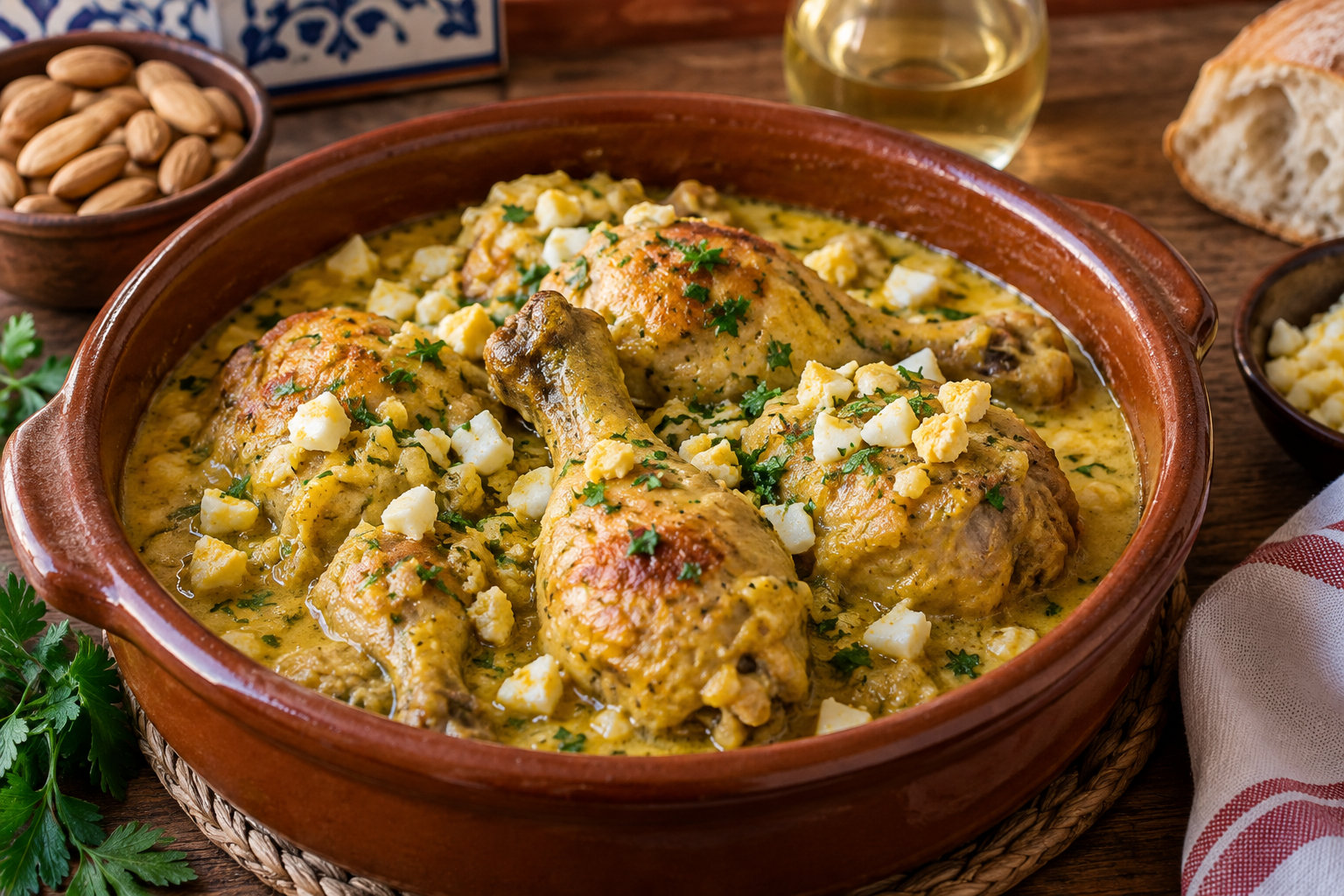
- The chicken should be tender: the meat should begin to pull away easily from the bone.
- The sauce should coat a spoon: creamy and thick, but not dry.
- The almonds should be integrated: you should taste their richness without large crunchy pieces.
- The saffron aroma should be noticeable: warm and fragrant, never overpowering.
🇪🇸 What Is Pepitoria?
Pepitoria is a traditional Spanish cooking style in which poultry is simmered in a sauce thickened with ground nuts and egg yolk.
Regional versions vary considerably, and older recipes may use chicken, hen, hazelnuts, almonds, ham, or different aromatic ingredients.
For another traditional reference, you can see the official Chicken Pepitoria recipe from Spain.info, which presents a Castilla y León version using chicken, garlic, toasted nuts and egg yolks.
⚠️ Common Mistakes
The sauce is too thick
Pepitoria thickens quickly because of the almonds and egg yolk.
Add a splash of hot chicken stock and stir gently until the sauce loosens.
The sauce is too thin
Cook uncovered for another 5 to 10 minutes.
Avoid adding flour. The almond and egg mixture should provide enough natural thickening.
The almonds taste bitter
They were probably toasted too strongly.
You only want them lightly golden.
The chicken is dry
The heat was probably too high or the chicken cooked too long.
Bone-in thighs and drumsticks are much more forgiving than chicken breast.
✨ Tips for the Best Chicken Pepitoria
- Use bone-in chicken: it gives the sauce more flavor.
- Toast the almonds gently: this makes a huge difference.
- Use real saffron if possible: only a small amount is needed.
- Cook slowly: pepitoria is much better with a gentle simmer.
- Let it rest: the sauce thickens slightly and the flavors settle.
🍽️ What to Serve with Chicken Pepitoria
This dish is excellent with roasted or boiled potatoes, white rice, or simply a good piece of crusty bread.
Because the sauce is rich, I usually prefer a simple side that does not compete with it.
For a larger Spanish-style meal, you could serve a small portion after a light starter such as gazpacho or alongside a simple salad.
🧊 Storage and Reheating
Chicken pepitoria keeps very well and often tastes even better the next day.
Allow it to cool completely and store it in an airtight container in the refrigerator for up to 3 days.
Reheat slowly over low heat.
If the sauce has thickened too much in the fridge, add a small splash of stock or water while reheating.
🥄 Nutritional Information
| Nutritional value | Approximate amount per serving |
|---|---|
| Calories | 510 kcal |
| Protein | 42 g |
| Fat | 31 g |
| Carbohydrates | 9 g |
| Fiber | 2 g |
| Sodium | 460 mg |
Nutritional values are approximate and depend on the chicken pieces, stock, and amount of oil used.
❓ FAQ About Spanish Chicken Pepitoria
What is chicken pepitoria made from?
Chicken pepitoria is usually made with chicken, onion, garlic, white wine, stock, nuts such as almonds, egg yolk, saffron, and parsley.
Why are egg yolks used in pepitoria?
The egg yolks help thicken the sauce and give it the rich, creamy texture that makes pepitoria distinctive.
Can I make chicken pepitoria without saffron?
Yes. The dish will still work, although saffron adds a traditional aroma and subtle color.
Can I use chicken breast?
You can, but thighs and drumsticks are better for slow cooking because they stay juicier.
Can I make chicken pepitoria ahead of time?
Yes. It is actually an excellent make-ahead dish because the sauce develops even more flavor after resting.
Can chicken pepitoria be frozen?
Yes, although the sauce may thicken slightly after freezing. Reheat slowly and add a little stock if needed.
🍗 A Traditional Spanish Chicken Dish Worth Discovering
Spanish chicken pepitoria is very different from tomato-based chicken stews or garlic chicken.
The combination of almonds, egg yolk, saffron, and wine creates a sauce that feels rich and comforting without being heavy.
It is one of those traditional recipes that deserves to be better known outside Spain, and once you make it properly, it is easy to understand why it has survived for generations.
Discover more from Spanish Grandma Recipes
Subscribe to get the latest posts sent to your email.