

🍅 Pisto Manchego Recipe: Traditional Spanish Vegetable Stew
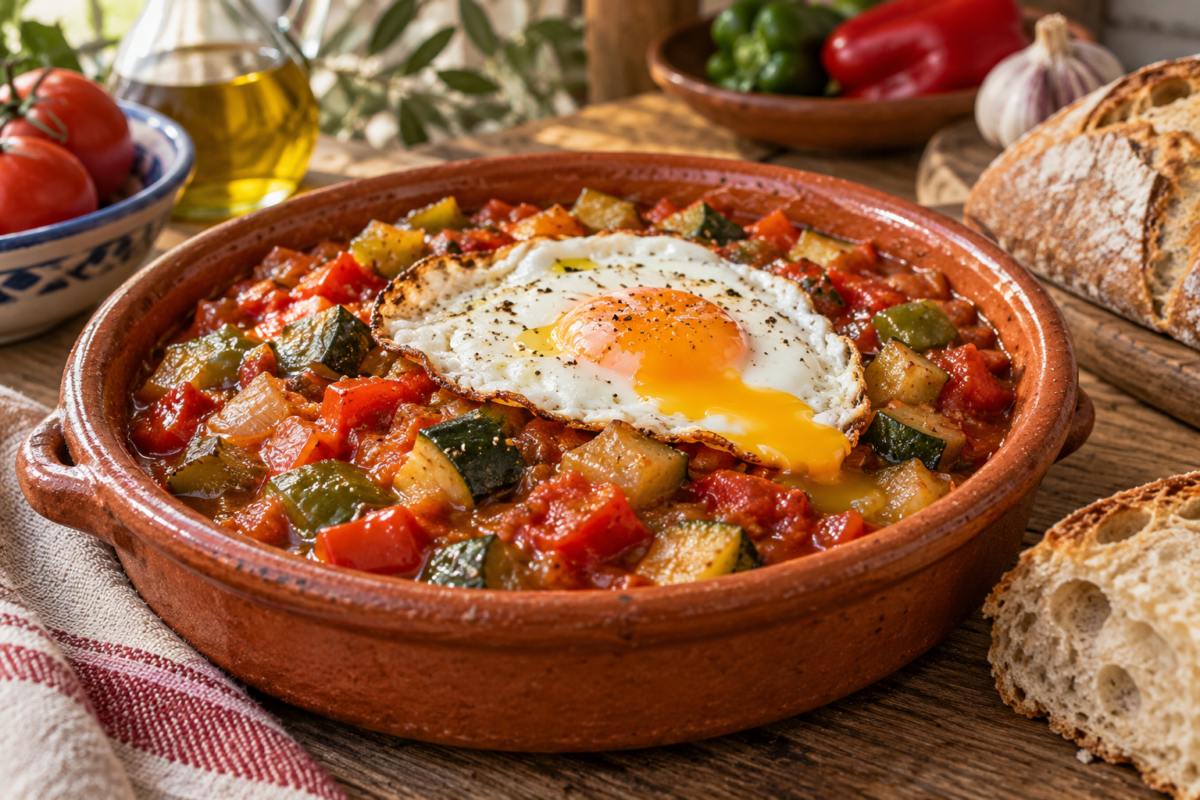
If you want a Spanish vegetable dish that tastes of real home cooking, pisto manchego is a great place to start. This traditional recipe from Castilla-La Mancha slowly cooks tomatoes, peppers, zucchini and onion in olive oil until the vegetables become soft, sweet and full of flavor.
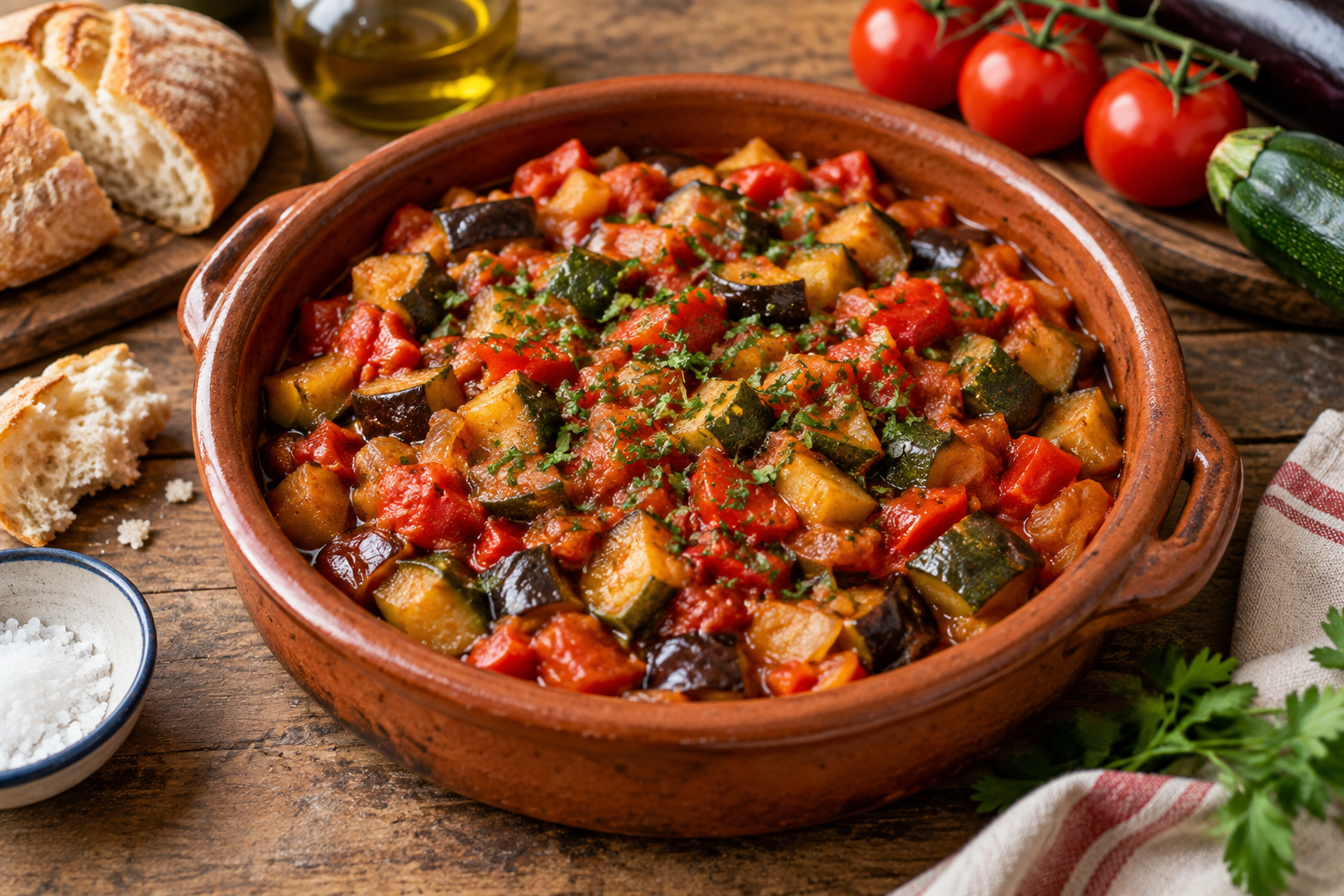
It is often compared with ratatouille, but pisto has its own character. The vegetables are cut fairly small, cooked patiently and allowed to come together into a thick, rustic mixture rather than staying completely separate.
The best versions are not watery and they are not rushed. The tomato should lose its raw acidity, the peppers should be tender and the zucchini should almost melt into the sauce without disappearing completely.
Pisto is naturally vegetarian when made without ham, and it works equally well as a main dish, side dish or tapa. In many Spanish homes it is also served with a fried egg on top and plenty of bread for the sauce.
If you enjoy simple vegetable-based Spanish food, this is exactly the kind of recipe worth learning.
⏱️ Cooking Times
| Stage | Time |
|---|---|
| Preparation time | 15 minutes |
| Cooking time | 40 minutes |
| Total time | 55 minutes |
| Servings | 4 people |
🛒 Ingredients for Pisto Manchego
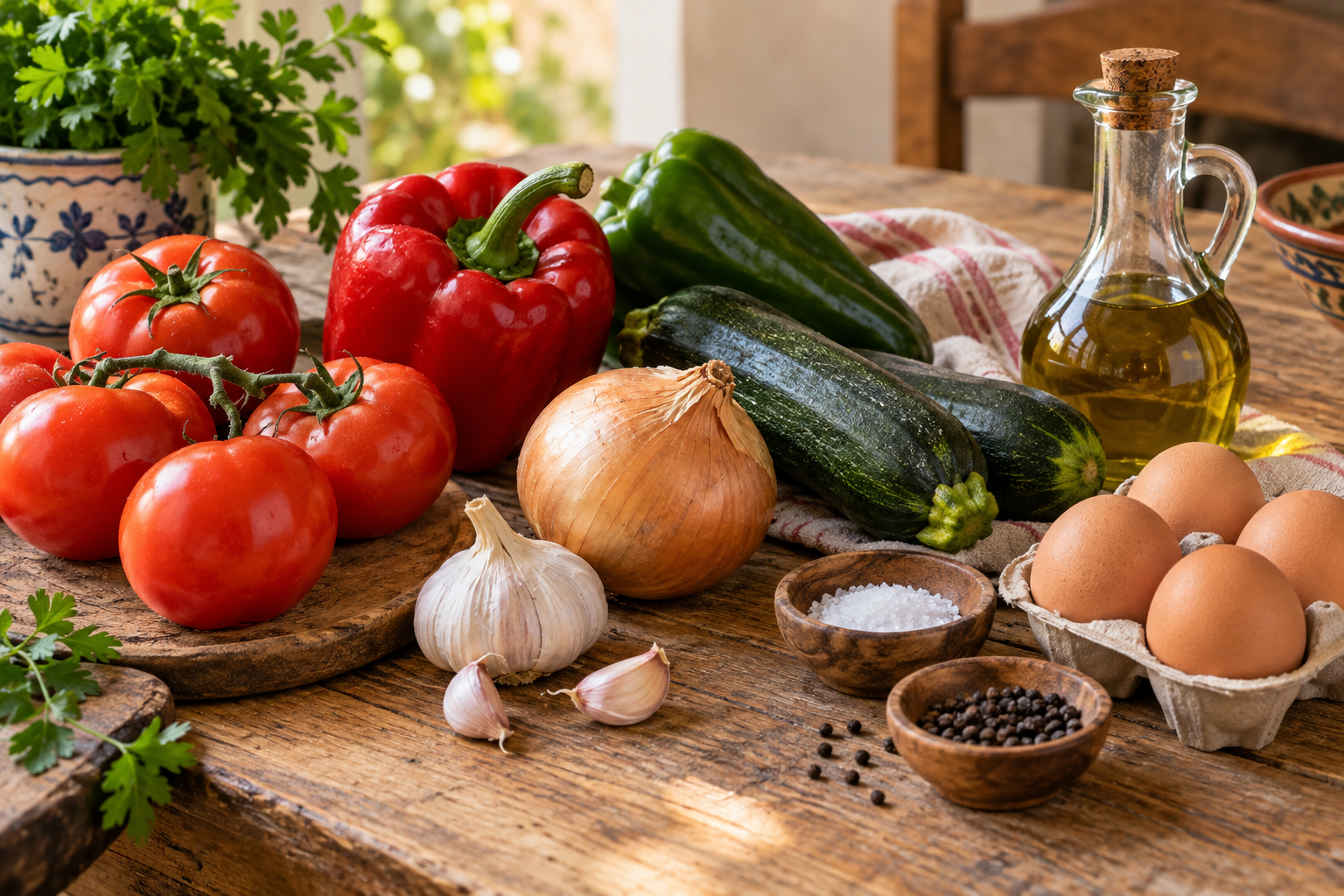
- 500 g ripe tomatoes, peeled and chopped, or good-quality crushed tomatoes
- 1 medium zucchini, cut into small cubes
- 1 red bell pepper, diced
- 1 green bell pepper, diced
- 1 large onion, finely chopped
- 2 garlic cloves, finely chopped
- 4 tablespoons extra virgin olive oil
- Salt, to taste
- Freshly ground black pepper, optional
- 1 small pinch of sugar, only if the tomatoes are very acidic
- 4 eggs, optional, for serving
- Fresh parsley, optional
Ripe tomatoes make a noticeable difference here. If they are not in season, good canned crushed tomatoes are often better than pale, watery fresh ones.
Try to cut the peppers and zucchini into pieces of similar size. They do not need to be perfect, but even pieces cook much more evenly.
👨🍳 How to Make Pisto Manchego
1️⃣ Start with the onion and peppers
Heat the olive oil in a wide frying pan or casserole over medium-low heat.
Add the chopped onion, red pepper and green pepper with a small pinch of salt.
Cook gently for around 10 minutes, stirring occasionally.
The vegetables should soften slowly rather than brown aggressively. This first stage creates the sweet base of the pisto.
2️⃣ Add the garlic
Add the chopped garlic and cook for around 30 seconds to 1 minute.
Do not let it darken.
Once it smells fragrant, move straight on to the zucchini.
3️⃣ Add the zucchini
Stir in the diced zucchini and cook for another 7 to 8 minutes.
At first it may seem like a lot of vegetables, but the zucchini will soften and reduce as it cooks.
Stir occasionally rather than constantly so the pieces keep some shape.
4️⃣ Add the tomato
Add the chopped or crushed tomatoes and mix everything together.
Season lightly with salt and black pepper.
If your tomatoes are particularly acidic, add only a tiny pinch of sugar. Taste first because good ripe tomatoes may not need it at all.
5️⃣ Cook slowly until thick
Lower the heat and cook uncovered for around 20 to 25 minutes.
Stir from time to time, especially as the mixture becomes thicker.
The vegetables should be completely tender and the tomato should reduce until there is very little watery liquid left in the pan.
Do not rush this part with high heat. Slow cooking gives the vegetables time to become sweet and allows the flavors to blend properly.
6️⃣ Check the final texture
A good pisto should be moist and glossy but not swimming in tomato liquid.
Drag a wooden spoon across the bottom of the pan. If the mixture briefly holds apart before slowly coming back together, the consistency is about right.
Taste and adjust the salt.
7️⃣ Add a fried egg if you like
Pisto can be eaten exactly as it is, but a fried egg on top turns it into a more substantial meal.
Fry the eggs separately and place one over each serving just before bringing the dish to the table.
A runny yolk mixed into the vegetables is particularly good.
👀 How to Know When Pisto Is Ready
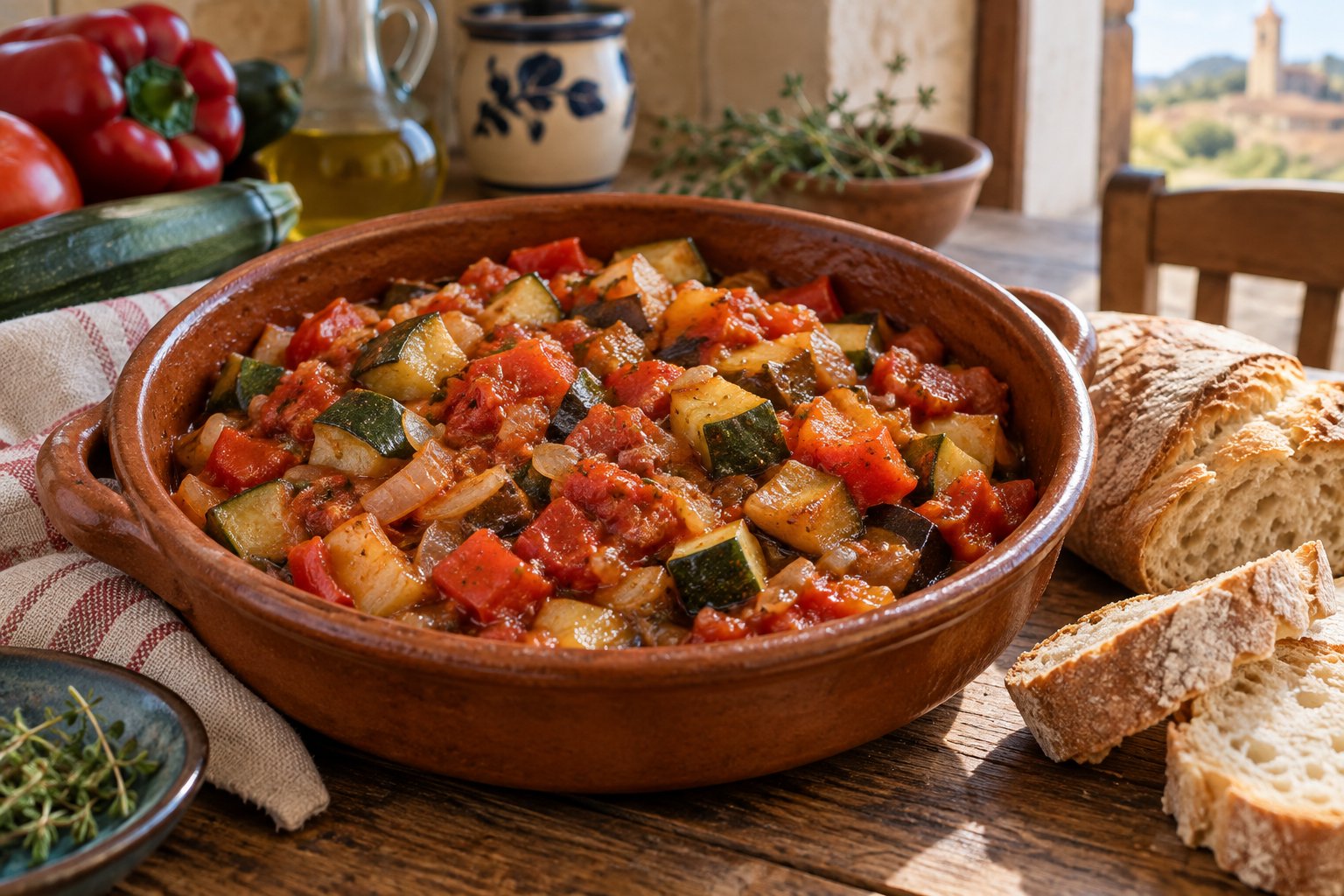
- The onion and peppers are completely tender with no raw crunch.
- The zucchini is soft but has not disappeared completely.
- The tomato tastes sweet and cooked rather than sharp and raw.
- There is no pool of watery liquid at the bottom of the pan.
- The vegetables have come together while still remaining identifiable.
🇪🇸 What Is Pisto Manchego?
Pisto manchego is a traditional vegetable dish associated with Castilla-La Mancha in central Spain.
Tomatoes and peppers form the heart of the dish, with zucchini and onion commonly added depending on the household and the season.
Spain’s official tourism site also identifies pisto manchego as one of Castilla-La Mancha’s characteristic dishes and describes traditional versions made with tomatoes, peppers and zucchini, often served with eggs.
You can see an official traditional version in the Spain.info pisto manchego recipe.
⚠️ Common Mistakes When Making Pisto
The pisto is watery
The tomatoes have not reduced enough.
Continue cooking uncovered over low to medium-low heat until the excess moisture evaporates.
The zucchini has disappeared
It may have been cut too small or cooked too aggressively.
Use medium-small cubes and add the zucchini after the onion and peppers have already softened.
The vegetables are still crunchy
Pisto is not intended to have crisp vegetables.
Give it more time over gentle heat.
The tomato tastes too acidic
First, make sure it has cooked long enough.
If it is still noticeably acidic, a very small pinch of sugar can help balance it.
The garlic tastes bitter
It was probably browned too much.
Garlic only needs a short cooking time before adding the next ingredient.
✨ Tips for Better Pisto Manchego
- Use ripe tomatoes: they give the dish natural sweetness and better flavor.
- Cook the peppers first: they need longer than zucchini to become tender.
- Do not drown it in oil: enough olive oil adds flavor, but the finished pisto should not feel greasy.
- Cook uncovered: this allows excess tomato moisture to evaporate.
- Give it time: the flavor improves as the vegetables slowly cook together.
- Let it rest: pisto is excellent warm, at room temperature or even the next day.
🌱 Is Pisto Manchego Vegetarian?
Yes, the basic vegetable version is naturally vegetarian and contains no meat.
Some traditional variations may include ham, but it is not necessary for a flavorful pisto.
Serving it with a fried egg keeps the dish vegetarian while adding protein and making it more filling.
For a fully vegan version, simply serve the vegetable pisto on its own and leave out the egg.
🍽️ What to Serve with Pisto
Crusty bread is probably the easiest accompaniment because it is perfect for scooping up the tomato and vegetable sauce.
It also works as a side dish with other Spanish recipes, or as part of a tapas-style spread.
A fried egg makes it substantial enough for a simple lunch or dinner.
🧊 Storage and Reheating
Pisto keeps very well in the refrigerator for up to 3 days in a covered container.
In fact, the flavor is often even better the following day.
Reheat it gently in a frying pan or saucepan over low heat.
You can also serve it at room temperature.
🥄 Nutritional Information
| Nutritional value | Approximate amount per serving |
|---|---|
| Calories | 185 kcal |
| Protein | 4 g |
| Fat | 11 g |
| Carbohydrates | 18 g |
| Fiber | 5 g |
| Sodium | 220 mg |
Nutritional values are approximate and do not include the optional fried egg.
❓ FAQ About Pisto Manchego
What is pisto manchego made of?
Pisto manchego is mainly made with tomatoes, peppers, zucchini, onion and olive oil.
Recipes vary from one Spanish household to another.
Is pisto the same as ratatouille?
They are similar vegetable dishes but they come from different culinary traditions.
Pisto is Spanish and is particularly associated with Castilla-La Mancha, while ratatouille is French.
Does traditional pisto contain egg?
The egg is usually an accompaniment rather than part of the vegetable mixture itself.
Pisto is frequently served with a fried egg on top.
Can I make pisto ahead of time?
Yes.
It is an excellent make-ahead dish and often tastes even better once the vegetables have rested together for several hours.
Can pisto manchego be frozen?
Yes.
Allow it to cool completely and freeze it in a suitable container. The zucchini may become slightly softer after thawing, but the flavor remains good.
Can I make pisto without zucchini?
Yes.
Traditional recipes vary, and tomato and peppers are particularly important to the character of the dish.
Can pisto be eaten cold?
Yes.
It can be served hot, warm or at room temperature, which makes it particularly useful for tapas and make-ahead meals.
🍅 Simple Spanish Vegetable Cooking at Its Best
Pisto manchego shows how a handful of ordinary vegetables can become a deeply flavorful dish when they are given enough time in the pan.
There is no complicated technique: soften the vegetables patiently, let the tomato reduce and stop cooking when the mixture is rich and tender rather than watery.
Serve it with bread, add a fried egg if you like, and you have one of Castilla-La Mancha’s simplest and most satisfying traditional dishes.
Discover more from Spanish Grandma Recipes
Subscribe to get the latest posts sent to your email.