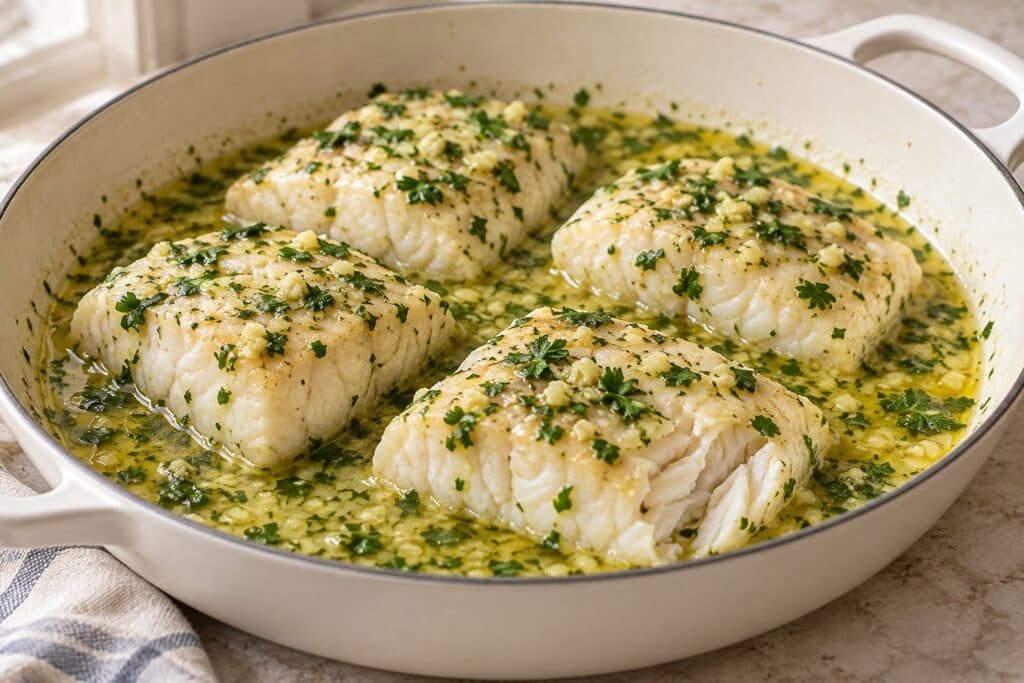
This version keeps the pan simple, with no clams, peas or asparagus. A small amount of flour gives the sauce body without turning it into a thick gravy. Prepare the parsley, stock and serving plates before the fish goes in; once the hake is cooked, dinner is ready.
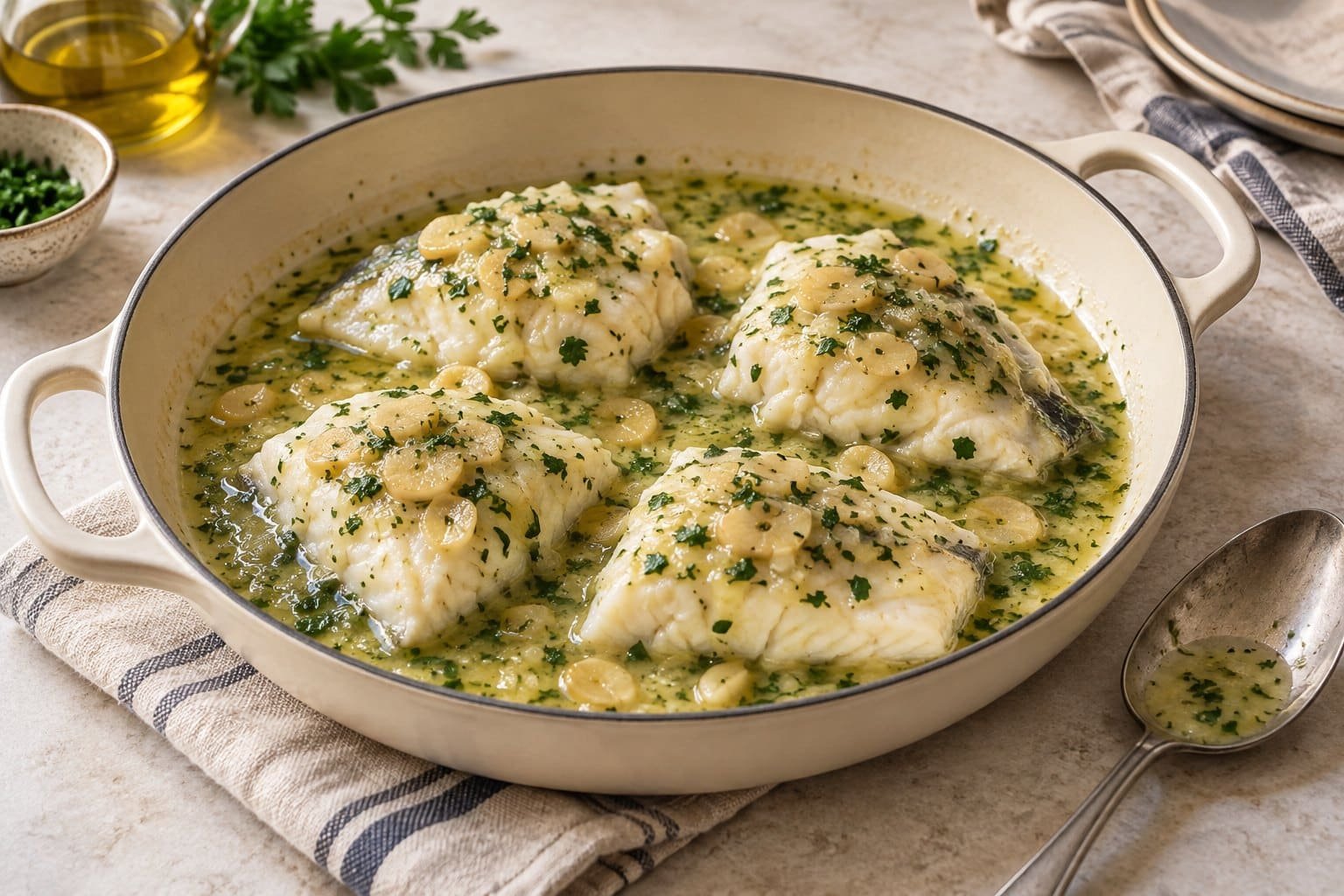
What to expect: Four portions of flaky hake in a glossy parsley-flecked sauce, ready in about 35 minutes. The sauce is pale green-gold rather than a vivid blended herb purée.
Jump to ingredients and method ↓
🌿 What Makes the Sauce Green?
The green comes from plenty of fresh parsley stirred into the sauce. Garlic is softened rather than browned, and the stock stays light enough for the fish to remain the main flavor. Spain’s tourism collection includes merluza en salsa verde among its Spanish fish recipes.
Unlike a pesto or a cold green dressing, this sauce is cooked in the same pan as the hake. Avoid blending it with a large amount of raw garlic or adding cream; both would change its character. If you enjoy garlic-led seafood, our gambas al ajillo offers a richer, oil-based alternative.
⏱️ Time and Servings
| Stage | Time |
|---|---|
| Preparation | 15 minutes |
| Cooking | 20 minutes |
| Total time | 35 minutes |
| Servings | 4 |
🍲 Equipment You Will Need
- A shallow 28 to 30 cm casserole or sauté pan with a lid
- A broad fish spatula
- A small whisk and measuring jug
- A food thermometer and clean chopping board
🛒 Ingredients for 4 Servings
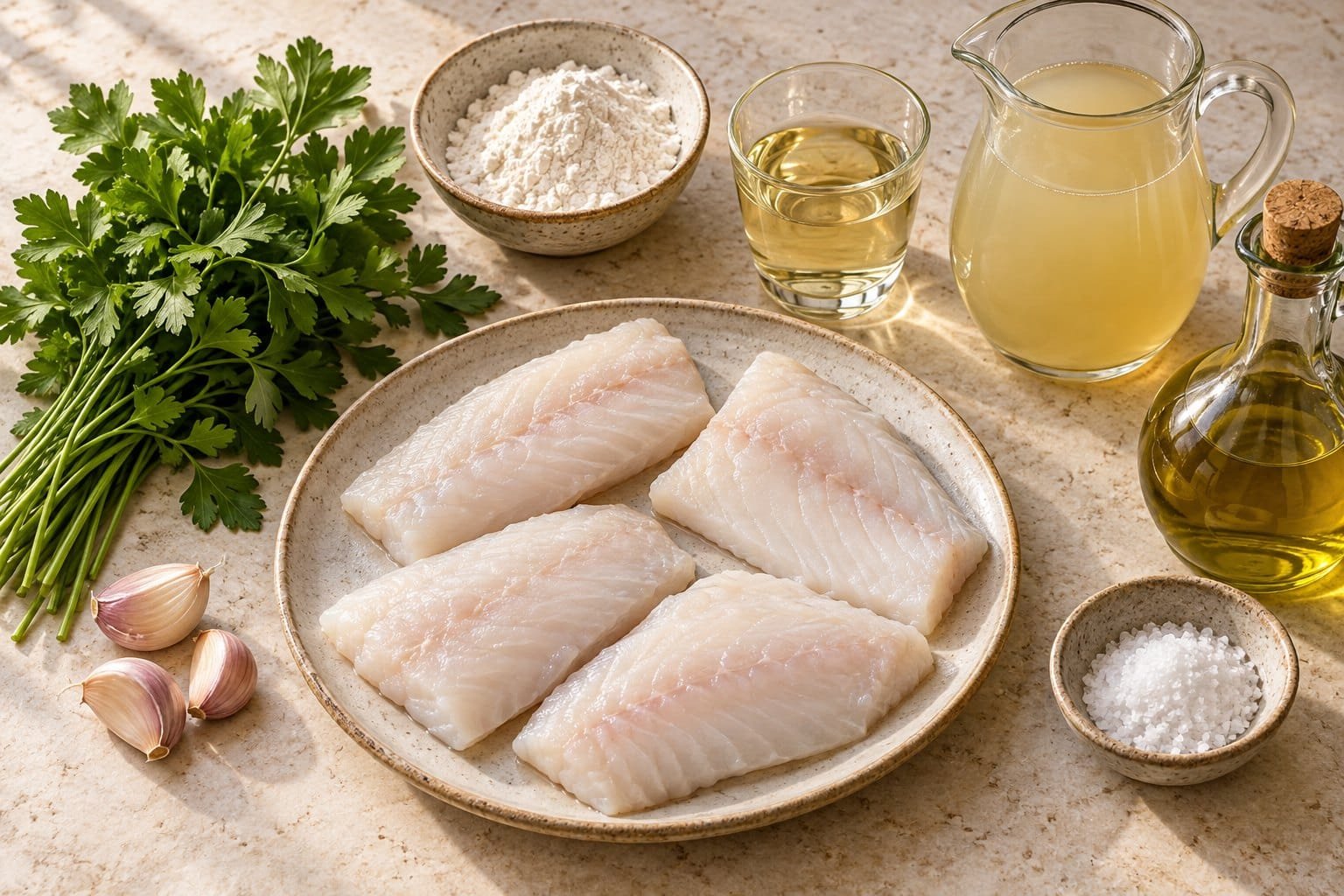
- 4 hake fillet portions, about 180 to 200 g each, skin on or off
- 3 tablespoons (45 ml) olive oil
- 3 garlic cloves, finely sliced
- 1 level tablespoon (10 g) all-purpose flour
- 75 ml dry white wine
- 300 ml light low-salt fish stock
- 20 g flat-leaf parsley, leaves finely chopped and stems discarded
- ½ teaspoon fine salt, then adjust to the stock
Hake: choose portions of similar thickness, around 2.5 to 3 cm if possible. Remove any pin bones with clean tweezers. Skin-on fish can be easier to lift, but boneless skinless pieces also work if handled carefully.
Frozen fish: thaw completely in the refrigerator and pat dry before cooking. Meltwater from partially frozen portions dilutes the sauce and makes the cooking time unpredictable.
Stock: use a light fish stock that you would enjoy on its own. A very concentrated stock cube can make this small quantity of sauce too salty. Start with less salt and taste once the fish has cooked.
Parsley: use fresh flat-leaf parsley and chop it shortly before cooking. Dried parsley will not give the same flavor or appearance. For converting the wine and stock amounts, see our millilitre and cup conversion chart.
👨🍳 How to Make Merluza en Salsa Verde
1️⃣ Prepare the fish and parsley
Check the hake for bones, pat the portions dry and sprinkle with a little of the salt. Chop the parsley leaves finely and slice the garlic. Measure the wine and stock into separate jugs. Keep the fish refrigerated until the sauce is almost ready, especially if the kitchen is warm.
2️⃣ Soften the garlic gently
Put the olive oil and sliced garlic in the shallow pan over medium-low heat. Cook for 2 to 3 minutes, stirring, until the garlic is fragrant and just softened. It should stay pale. If it begins to brown quickly, lift the pan off the heat briefly and reduce the temperature.
3️⃣ Cook the flour and add wine
Stir in the flour and cook gently for 1 minute so no dry flour remains. Gradually add the wine while stirring or whisking. Let it bubble for 2 minutes. Scrape the base gently to loosen the flour mixture, taking care not to splash yourself with the hot liquid.
4️⃣ Make the light parsley sauce
Pour in the stock a little at a time, stirring until smooth. Bring to a gentle simmer and cook for 3 minutes. Add half the parsley. The sauce should be lightly thickened, not heavy. If it already looks like a paste, add a small splash of water before the fish goes in.
5️⃣ Poach the hake
Nestle the hake portions into the sauce, skin side down if present, in a single layer. Cover and cook gently for about 6 to 10 minutes, depending on thickness. Spoon sauce over the tops once without turning the fish. Cook to 63°C / 145°F at the thickest point, with opaque flesh that separates into flakes.
6️⃣ Finish and serve carefully
Lift the fish onto warm plates with a broad spatula. Stir the remaining parsley into the sauce and taste for salt. If needed, reduce the sauce alone for a minute after removing the fish. Spoon it over the portions and serve immediately, keeping the flaky pieces intact.
🐟 Gentle Heat Is the Key to Moist Hake
The liquid should tremble and release small bubbles around the edge, rather than boil hard. A rolling boil knocks the delicate flesh apart and makes the outside dry before the center is ready. The lid keeps the upper surface moist, so flipping the fish is unnecessary.
Thickness matters more than the total weight of a portion. Check the thickest piece first and remove thinner portions as soon as they are done. A thermometer makes the endpoint easier to judge; the official fish temperature chart lists 63°C / 145°F for cooked fish.
🔄 Ingredient Swaps and Variations
- No hake: use cod or haddock portions of similar thickness. Check the center carefully because different cuts may need a few extra minutes.
- No wine: use another 75 ml fish stock and add 1 to 2 teaspoons lemon juice at the end, tasting as you go. This gives brightness without wine.
- Flour-free sauce: omit the flour. Mix 1 teaspoon cornstarch with 1 tablespoon cold water and add a little to the simmering stock before the fish, cooking until lightly thickened.
- Add peas: stir a small handful of thawed peas into the sauce before adding the hake. They should remain a supporting ingredient rather than filling the pan.
⚠️ Common Problems and Easy Fixes
- The sauce has lumps: add liquid gradually and whisk before placing the fish in the pan. Strain the sauce if large lumps remain.
- The fish falls apart: it was moved too much or boiled too hard. Keep it in one layer and lift with a wide spatula.
- The sauce tastes bitter: browned garlic is a likely cause. Begin with gentle heat and keep the slices pale.
- The sauce is thin: remove cooked fish, then simmer the sauce briefly. Do not keep boiling the hake while you thicken the liquid.
🍽️ What to Serve With It
Serve with boiled potatoes or plain white rice and spoon the sauce over both. A side of roasted peppers and eggplant adds vegetables without competing with the parsley and garlic.
For a lighter lunch, use smaller fish portions with steamed green beans and a slice of bread. Avoid pouring a strong lemon dressing over the entire plate before tasting; the sauce is deliberately delicate.
❄️ Storage and Reheating
Refrigerate leftover hake and sauce promptly in a shallow covered container and use within 2 days. Reheat gently in a covered pan with a splash of water, spooning the sauce over the fish until hot throughout.
Freshly cooked hake has the best texture. If preparing ahead, make the sauce up to a day in advance, refrigerate it, then bring it back to a simmer and cook the fish just before serving. Do not leave raw fish sitting in a warm finished sauce.
🥄 Approximate Nutrition
| Per serving: one hake portion with sauce | Estimate |
|---|---|
| Calories | 285 kcal |
| Protein | 35 g |
| Carbohydrates | 5 g |
| Fat | 13 g |
| Fiber | 1 g |
Approximate amounts per hake portion with sauce, excluding rice, potatoes or bread. Stock and fish portion size affect the result.
❓ Frequently Asked Questions
Should salsa verde be bright green?
Not in this version. Chopped parsley flecks color a light fish-stock sauce; it is not blended into a vivid green purée.
Can I use frozen hake?
Yes, once completely thawed in the refrigerator. Dry the portions well and use fish of similar thickness for even cooking.
Do I need clams?
No. Clams are a common addition in some versions, but the simple fish-and-parsley sauce works well without them.
Can I turn the fish while it cooks?
You normally do not need to. Cover the pan and spoon a little sauce over the top so the fish cooks gently without breaking.
Why add parsley twice?
The first addition flavors the sauce during cooking. The second keeps a fresher parsley note and a little more color at the end.
Recipe written for Spanish Grandma Recipes. By José María. The images are original AI-generated illustrations of the dish and ingredients.
Discover more from Spanish Grandma Recipes
Subscribe to get the latest posts sent to your email.