The practical difference between a good fish stew and a dry one is often the order of cooking. Let the potatoes become completely tender before adding the tuna. They need a long simmer; tuna cubes need only a short, gentle finish.
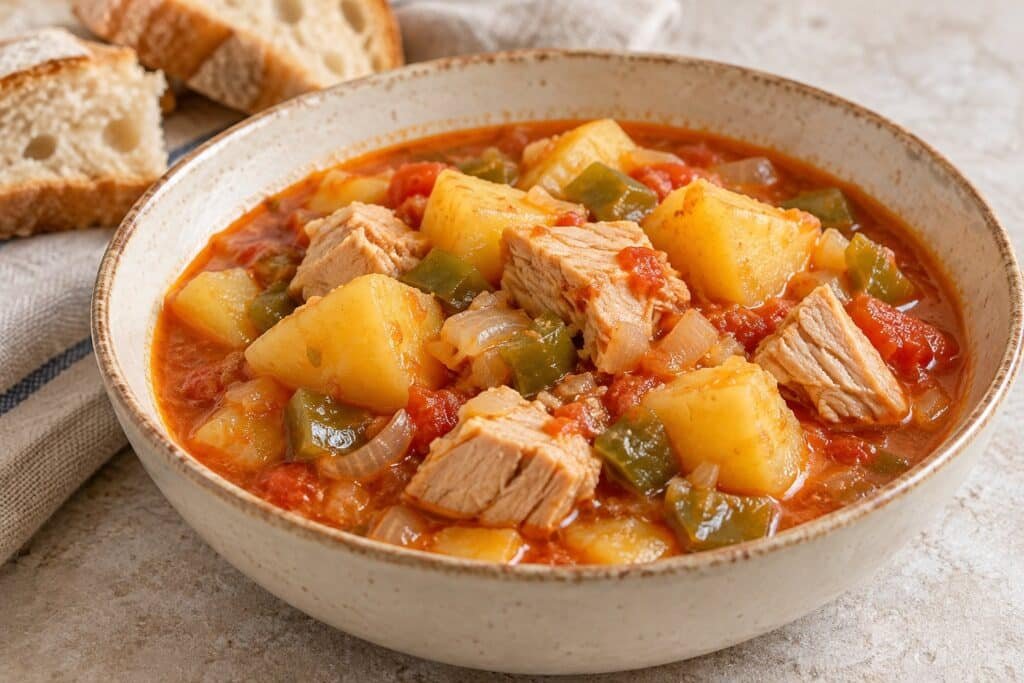
What to expect: Four main-course bowls with tender potato chunks, cooked tuna and a lightly thickened red-orange broth. Allow about 80 minutes, including a five-minute rest.
Jump to ingredients and method ↓
🥘 A Fish Stew Built Around Potatoes
Marmitako belongs to the cooking traditions of the Basque coast, where tuna and other fish feature strongly. Spain’s official tourism guide describes it among the region’s traditional Basque dishes. The version here uses fresh tuna, potatoes and choricero pepper paste for a manageable home-cooking method.
Although the broth has a warm reddish color, there is no chorizo in this recipe. For a sausage-based potato stew, choose patatas a la Riojana. In marmitako, a light fish stock and the tuna provide the savory flavor.
⏱️ Time and Servings
| Stage | Time |
|---|---|
| Preparation | 20 minutes |
| Cooking | 55 minutes |
| Resting | 5 minutes |
| Total time | 80 minutes |
| Servings | 4 |
🍲 Equipment You Will Need
- A wide heavy pot, about 4 litres, with a lid
- A potato peeler, knife and separate clean board for fish
- A wooden spoon and measuring jug
- A food thermometer
🛒 Ingredients for 4 Servings
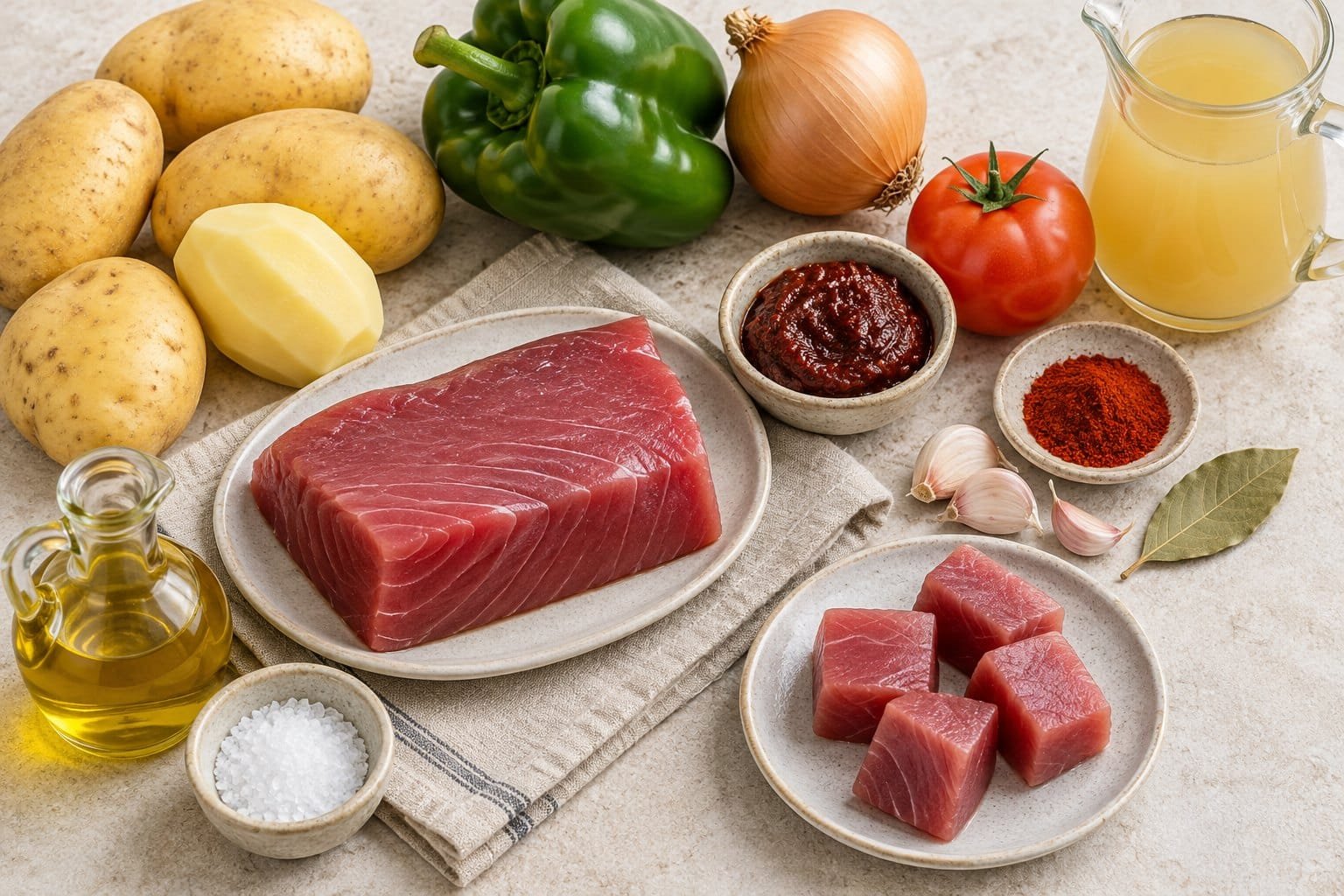
- 600 g fresh tuna loin, skin and dark bloodline removed, cut into 3 cm cubes
- 900 g all-purpose potatoes, peeled
- 1 large onion, finely chopped
- 1 green bell pepper, diced
- 3 garlic cloves, finely chopped
- 200 g ripe tomato, grated, or canned crushed tomatoes
- 2 tablespoons choricero pepper paste. If unavailable, use 2 tablespoons of blended roasted red bell pepper, well drained. The flavor will be milder and sweeter.
- ½ teaspoon sweet Spanish paprika
- 3 tablespoons (45 ml) olive oil
- 750 ml low-salt fish stock, plus a little hot water if needed
- 1 bay leaf
- ½ teaspoon fine salt, then adjust to taste
Tuna: fresh bonito del norte is a natural choice when available, but other fresh tuna loins also work. This recipe is not written for canned tuna: cooked canned flakes behave differently and will not give the same chunky texture.
Choricero paste: use the flesh of choricero peppers sold as a paste, not a hot chili condiment. It gives a sweet, earthy pepper note. Check the label because added salt varies between brands.
Potatoes: all-purpose potatoes release enough starch to give body without immediately collapsing. Keep the chunks around 3 cm. Smaller pieces can disappear before the larger ones soften.
Stock: start with 750 ml in a snug pot. The liquid should almost cover the potatoes, not drown them by several centimetres. If your pot is very wide, add hot water a little at a time.
👨🍳 How to Make Marmitako
1️⃣ Prepare the vegetables and tuna
Chop the onion, pepper and garlic. Cut the potatoes into roughly 3 cm chunks; if comfortable, use a small knife to cut partway through each piece and break off the rest with a gentle twist. Pat the tuna dry, cut into even cubes and keep covered in the refrigerator until needed.
2️⃣ Soften the onion and pepper
Heat the olive oil in the pot over medium-low heat. Cook the onion and green pepper for 10 minutes, stirring occasionally, until softened. Add the garlic and cook for 1 minute. Keep the vegetables pale rather than deeply browned; a bitter, scorched base carries through the whole stew.
3️⃣ Cook the tomato and pepper paste
Add the grated or crushed tomato and cook uncovered for 5 minutes, until less watery. Stir in the choricero paste. Take the pot briefly off the heat, stir in the paprika for about 20 seconds, then add the potato chunks and turn them gently through the mixture.
4️⃣ Simmer the potatoes until tender
Pour in the stock, add the bay leaf and a little salt, and bring to a gentle simmer. Partly cover and cook for 25 to 30 minutes, until a knife enters the potatoes easily. Shake the pot occasionally. Add a splash of hot water if the liquid drops too low.
5️⃣ Adjust the broth before the fish
Remove the bay leaf. Mash two or three cooked potato chunks against the side of the pot and stir them into the broth if it is thin. If it is too thick, add a little hot water. Taste for salt now, while you can still stir freely without breaking the tuna.
6️⃣ Cook the tuna gently and rest
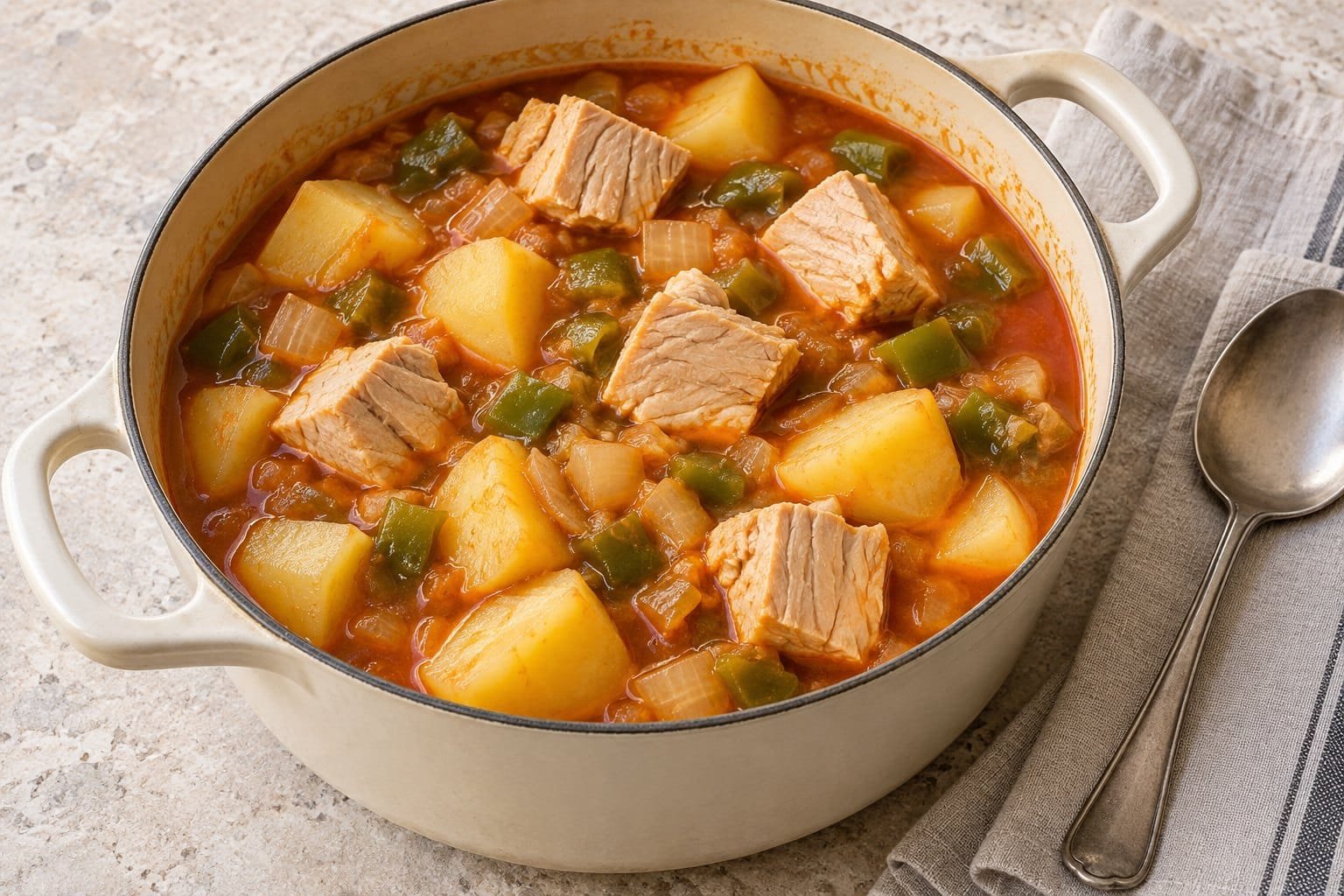
Add the tuna cubes to the gently simmering stew and cook for about 4 to 6 minutes, just until the thickest pieces reach 63°C / 145°F and are opaque through the center. Avoid a rolling boil. Turn off the heat, rest for 5 minutes and serve, lifting the fish carefully.
🐟 Why the Tuna Goes in Last
Tuna is much leaner than the potatoes and broth might suggest. A long simmer can turn the cubes dry and chalky. Cook the vegetable base fully first, then keep the final simmer gentle and check a thick cube for doneness rather than leaving the pot bubbling while you set the table.
The potato starch does the thickening work. Breaking the potatoes leaves rough edges, but neatly cut chunks also work if you mash a few once tender. Add flour only if you are intentionally changing the method; it is unnecessary in the recipe below.
🔄 Ingredient Swaps and Variations
- No choricero paste: use 1 tablespoon roasted red pepper purée and increase the sweet paprika to 1 teaspoon in total. The flavor will be different but still balanced.
- No fish stock: use water or a mild vegetable stock. Strong chicken stock can mask the fish and pepper flavors.
- A little heat: replace a small pinch of sweet paprika with hot paprika, rather than using a large spoonful of chili paste.
- Another fish: firm white fish can make a pleasant potato stew, but the result will not have tuna’s characteristic flavor. Adjust its cooking time to the cut.
⚠️ Common Problems and Easy Fixes
- Dry tuna: it cooked too long or at too high a temperature. Finish the potatoes and broth before adding the fish.
- Thin broth: mash a few tender potato chunks into the liquid before the tuna goes in.
- Hard potato centers: continue simmering without the fish. The clock is a guide, while tenderness is the decisive test.
- Broken fish: avoid repeated stirring after adding tuna. A gentle movement of the pot distributes the sauce.
🍽️ What to Serve With It
Ladle into warm bowls with crusty bread and a simple green salad. The potatoes make it a full meal. For a smaller starter, serve pan con tomate on little pieces of toast.
If you want a different warming dish for another day, Spanish lentil stew keeps the same one-pot convenience with a different set of ingredients. Avoid cooking both as large courses in the same meal.
❄️ Storage and Reheating
Cool leftovers promptly in shallow containers, refrigerate within 2 hours and use within 2 days. Reheat only the portion needed, gently, until hot throughout. Add a little water if the potatoes have absorbed most of the broth.
For make-ahead cooking, prepare the potato base the day before and refrigerate it. Bring it back to a simmer, adjust the liquid, then add fresh tuna just before serving. Cooked potatoes can become grainy after freezing, so refrigeration is the better choice for texture.
🥄 Approximate Nutrition
| Per serving: one quarter of the stew | Estimate |
|---|---|
| Calories | 475 kcal |
| Protein | 40 g |
| Carbohydrates | 48 g |
| Fat | 13 g |
| Fiber | 7 g |
Approximate amounts per bowl, using lean tuna and excluding bread. Tuna variety and the amount of oil change the estimate.
❓ Frequently Asked Questions
Can I use canned tuna?
It is already cooked and tends to break into flakes. This method is designed for fresh tuna cubes; canned tuna would need a different, very brief finishing step and gives a different stew.
Is marmitako a soup?
It sits between a soup and a thick stew. There should be enough broth to spoon around the fish and potatoes, but the liquid should have some body.
Does it need chorizo?
No. The reddish color comes from tomato and peppers. Adding chorizo would change the flavor substantially.
Can I make it without wine?
Yes. This recipe contains no wine, so there is no ingredient to replace.
Why is the stew thicker the next day?
Potatoes absorb liquid as they stand. Reheat with a small splash of water and stir gently before adding any extra salt.
Recipe written for Spanish Grandma Recipes. By José María. The images are original AI-generated illustrations of the dish and ingredients.
Discover more from Spanish Grandma Recipes
Subscribe to get the latest posts sent to your email.