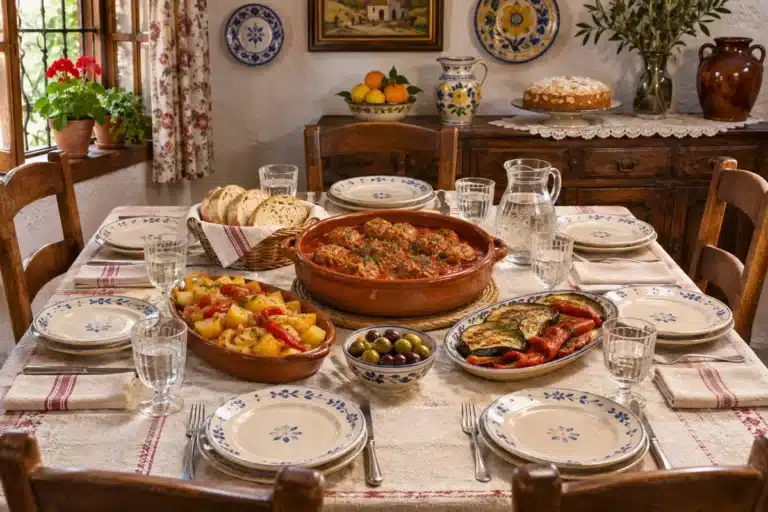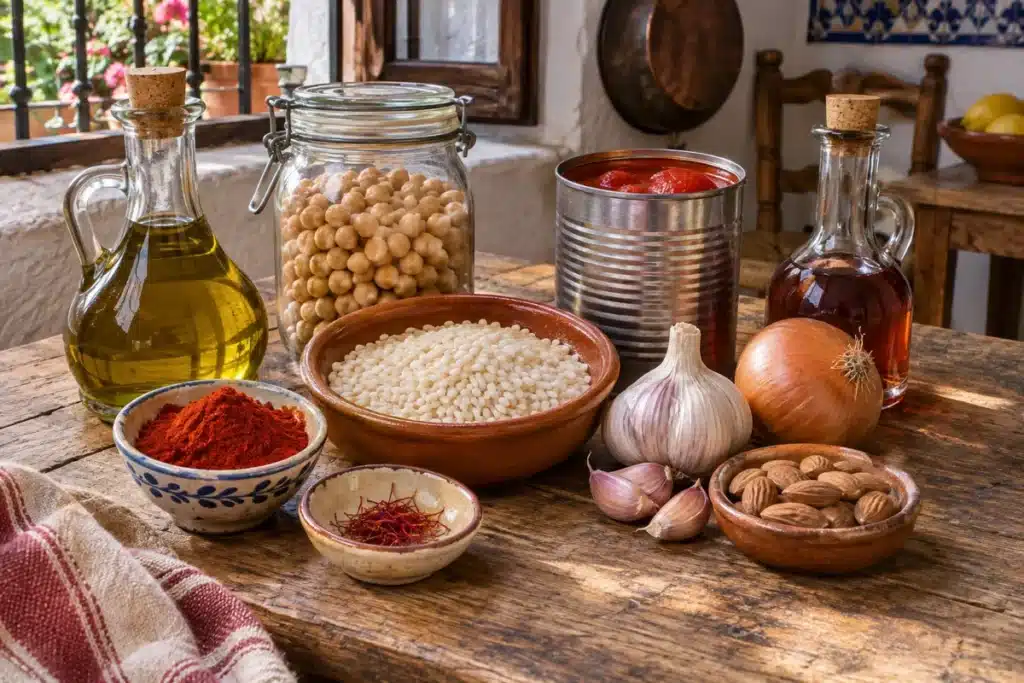
This guide is organised around how you will use each ingredient, with US and UK shopping terms and substitutions that keep the intended dish in mind.
🛒 A practical starter shopping list
| Buy first | What to look for | Where it helps |
|---|---|---|
| Olive oil | An oil you enjoy tasting; extra virgin is useful for dressings and finishing | Vegetables, salads and sofrito |
| Paprika | Sweet paprika and, if wanted, a separate smoked variety | Stews, potatoes and sauces |
| Chickpeas and white beans | Canned/tinned or jarred, with drained weight on the label | Quick stews and side dishes |
| Lentils | A variety that keeps its shape for a chunky stew | Family meals |
| Tomatoes | Plain canned/tinned tomatoes without a prepared pasta sauce | Sauces and slow-cooked bases |
| Garlic and onions | Firm, fresh bulbs | Everyday savoury cooking |
| Vinegar | Sherry vinegar if available | Dressings and balancing rich dishes |
| Bay leaves | A small pack you will use while aromatic | Lentils, beans and braises |
🫒 Olive oil: buy for the way you cook
Extra virgin olive oil is particularly useful when its flavour is noticeable, such as on toasted bread or in a dressing. You can also cook with it. Choose an oil that fits your budget and the flavour you enjoy rather than saving every good bottle for a special occasion.
Keep the bottle closed and away from direct light and heat. A small bottle that you use regularly is more practical than a large one left beside the cooker for months. For deep-frying, follow the oil and temperature guidance in the particular recipe.
🌶️ Paprika: sweet, hot and smoked are not interchangeable
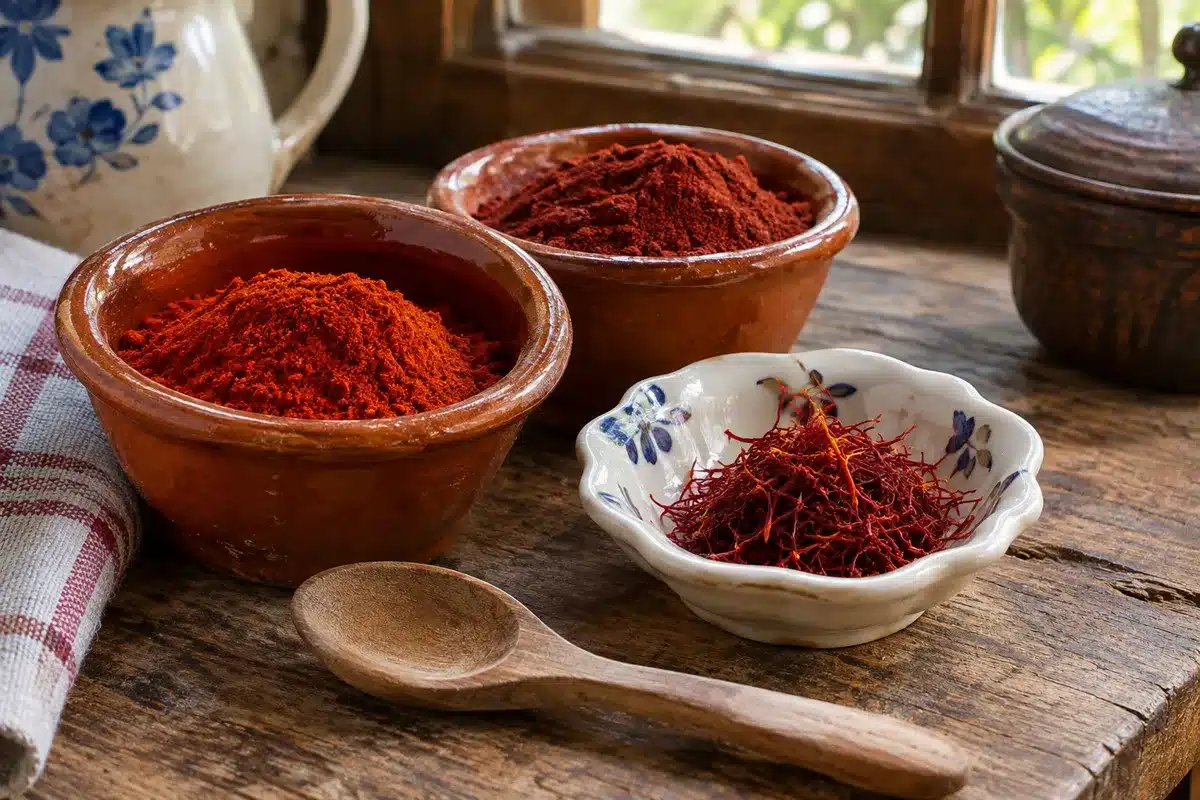
Spanish recipes may specify pimentón dulce (sweet), picante (hot) or smoked paprika. Not all Spanish paprika is smoked. If a recipe asks for sweet paprika and you only have hot paprika, replacing the full amount can change the heat dramatically.
Start with a small tin or jar of sweet paprika. Add smoked paprika if you enjoy that flavour and have recipes that use it. Stir paprika into warm oil only briefly and add the next moist ingredient promptly; burnt paprika can make the sauce bitter.
🫘 Pulses: understand drained weight
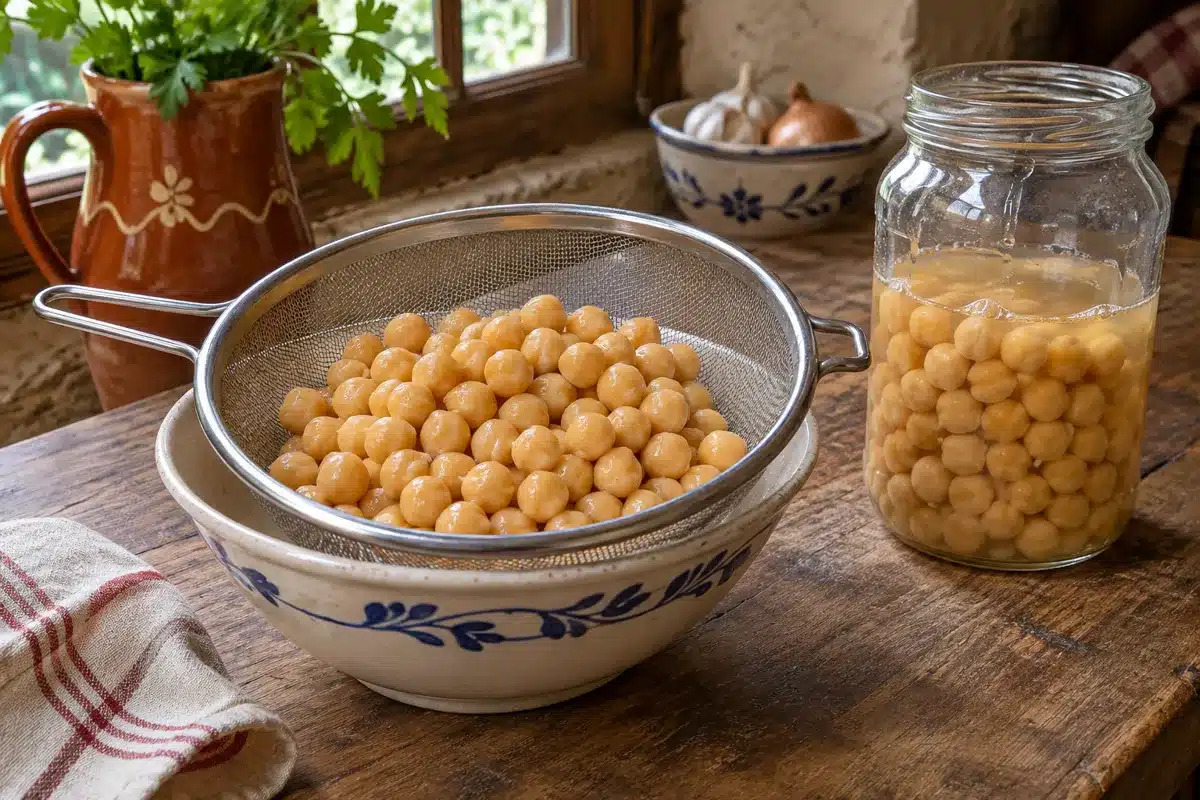
Canned chickpeas are called tinned chickpeas in many UK recipes, while garbanzo beans is another common US name. The weight printed on the front of a can includes liquid unless it explicitly says drained weight.
If a recipe needs 400 g of drained chickpeas, one 400 g can will not normally supply that amount. Check the label and buy enough cans. Drain and rinse when the recipe asks you to, and keep dried and cooked weights separate: they are not interchangeable gram for gram.
Try the pantry with spinach and chickpeas or chickpea and pumpkin stew.
🍅 Tomatoes and the sofrito base
Plain canned tomatoes, passata and fresh tomatoes all have uses, but they contain different amounts of water and have different textures. Choose the form specified in the recipe. Passata is smooth; chopped canned tomatoes usually leave more texture.
Onion, garlic and tomato can form the base of many home-cooked dishes, sometimes with peppers. Let the vegetables soften and the tomato reduce as instructed. Adding a watery tomato product without allowing reduction can leave a sauce thin even if the ingredient quantities look right.
🥘 Rice and saffron: buy for the dish
Choose the rice specified in your recipe, particularly for paella and other Spanish rice dishes. Different grains take up liquid differently. A bag labelled simply “rice” is not enough information to choose a reliable water ratio.
If you cannot find the specified rice, use a recipe written for the variety you have rather than keeping every time and liquid quantity unchanged. Saffron adds its own aroma as well as colour. Turmeric can colour rice, but it does not reproduce saffron’s flavour; describe that change as a substitution, not an equivalent.
Use our chicken paella recipe for a dish-specific ingredient list before shopping.
🔄 Useful US and UK shopping translations
| US term | UK term | Check before substituting |
|---|---|---|
| All-purpose flour | Plain flour | Do not accidentally buy self-rising/self-raising flour |
| Confectioners’ or powdered sugar | Icing sugar | Use the recipe’s weight |
| Zucchini | Courgette | Match the weight or size requested |
| Eggplant | Aubergine | Size and water content vary |
| Ground almonds or almond flour | Ground almonds | Grind and whether skins are included can affect baking |
For cups, grams and oven temperatures, keep the measurement conversion guide nearby. A cup of flour and a cup of oil do not weigh the same, so use ingredient-specific conversions.
✨ Add these only when you need them
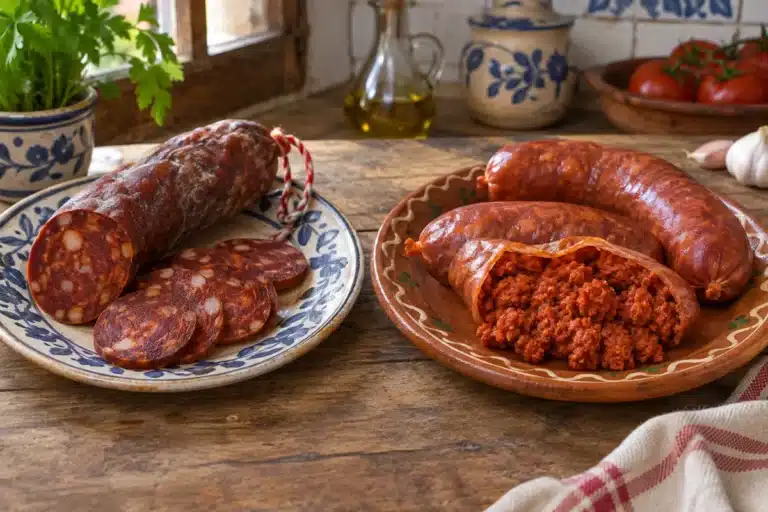
Piquillo peppers, chorizo, saffron, quality tinned fish and sherry vinegar can all be worthwhile. Buy them for a planned meal, not simply because they appear on a long pantry list. For sausage shopping, read Spanish chorizo vs Mexican chorizo.
❓ Frequently asked questions
Do I need Spanish brands for every ingredient?
No. Focus on the ingredient and its properties. Origin matters more when you want the particular flavour of a regional product.
Can I use red wine vinegar instead of sherry vinegar?
Often in an everyday dressing, but the flavour will differ. Add a little, taste and adjust rather than assuming identical acidity and character.
What should I buy for my first week?
Choose two recipes sharing ingredients, check your cupboard and buy only the missing items. Spinach with chickpeas and a tomato-based stew make more efficient use of a starter pantry than several unrelated dishes.
Image created with AI for illustration.
Discover more from Spanish Grandma Recipes
Subscribe to get the latest posts sent to your email.