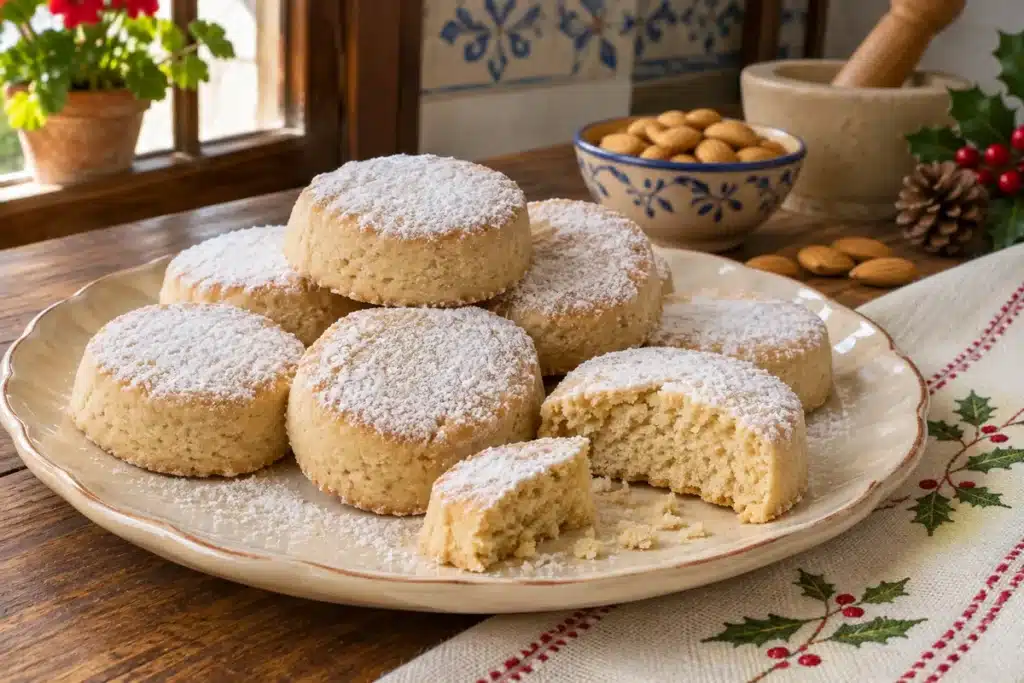
This is a butter-based home version of Spanish polvorones. Many traditional versions use pork lard. Butter gives these cookies a familiar shortbread flavour and makes the shopping straightforward for US and UK kitchens. Below you will find grams and US cup measures, along with conventional, fan and Fahrenheit oven temperatures.
What to expect — Thick, delicate almond cookies with a sandy crumb, a toasted nut aroma and a light dusting of icing sugar.
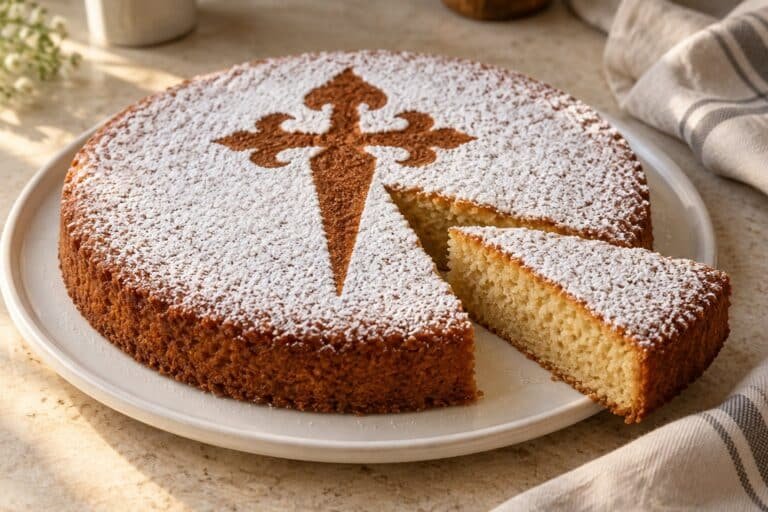
If you enjoy Spanish baking, try our Tarta de Santiago or Spanish Magdalenas.
🍲 What Are Polvorones?
Polvorones are crumbly Spanish sweets especially associated with Christmas. Ground almonds and toasted flour help create their characteristic texture. They are often served as small, thick rounds and wrapped individually. For this version, keep the dough thick and handle the finished cookies gently. The result should break into a delicate crumb when bitten.
⏱️ Time and Servings
| Stage | Time or Yield |
|---|---|
| Hands-on preparation | 20 minutes |
| Toasting and baking | About 40 minutes |
| Cooling and chilling | About 70 minutes, partly overlapping |
| Total time | About 2 hours, including cooling |
| Yield | 20 cookies |
| Difficulty | Easy |
🍲 Equipment You Will Need
- Kitchen scales and a mixing bowl
- Shallow baking tray or sheet pan and baking parchment
- Wooden spoon and rolling pin
- 5 cm / 2 inch cutter or a thin-rimmed glass
- Thin spatula and small sieve for dusting
🛒 Ingredients for 20 Cookies
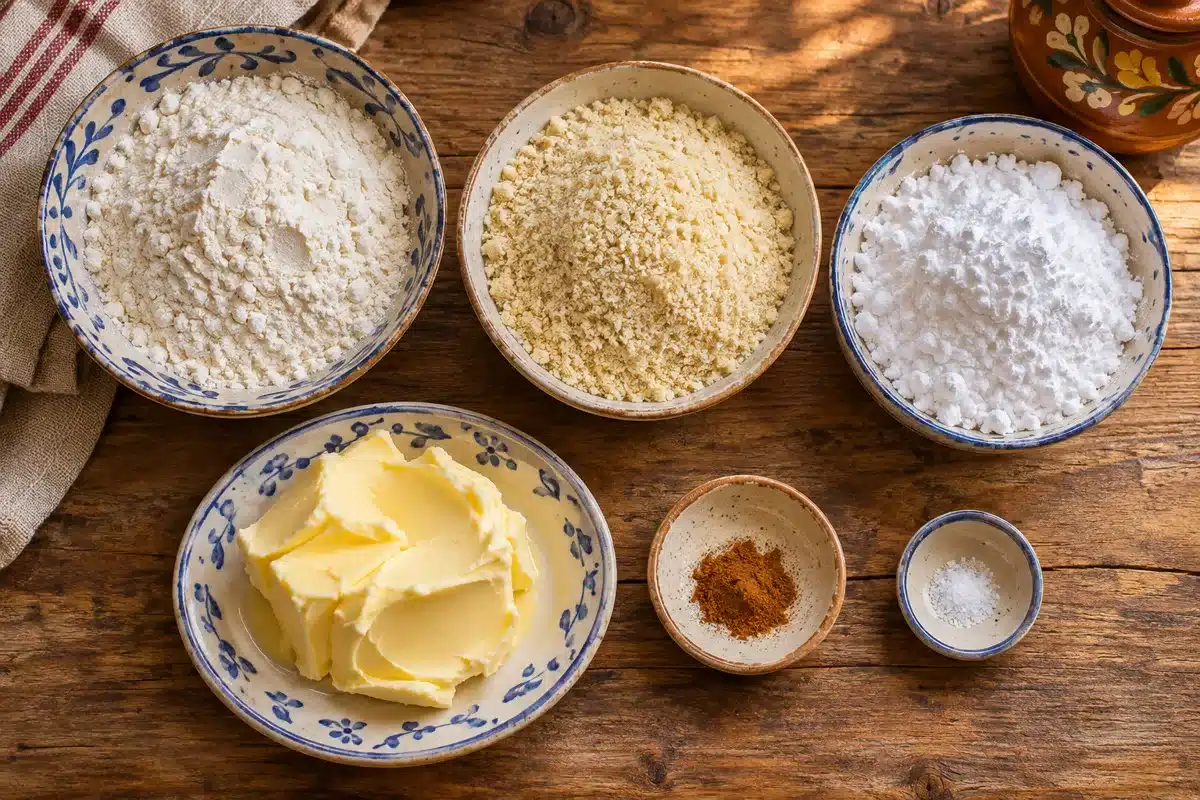
- 240 g (2 cups, spooned and levelled) plain / all-purpose flour
- 100 g (about 1 cup) ground blanched almonds / almond flour
- 150 g (10 tablespoons plus 2 teaspoons) unsalted butter, softened
- 90 g (¾ cup) icing / confectioners’ sugar, plus 1 tablespoon for dusting
- ½ teaspoon ground cinnamon
- ⅛ teaspoon fine salt
Weigh the flour and almonds before toasting. Use the entire toasted amount after cooling. Grams give the most consistent results because cup weights vary with packing. The cup measurements here use US cups. If you measure flour by volume, spoon it lightly into the cup and level it without tapping. More help is available in our cooking measurement guide.
👨🍳 How to Make Polvorones with Butter
1️⃣ Toast the flour and almonds
Heat the oven to 150°C conventional / 130°C fan / 300°F. Spread the weighed flour and ground almonds together in a shallow baking tray. Bake for 18–22 minutes, stirring every 5 minutes, until the mixture smells gently nutty and looks pale beige. Watch the edges carefully. Transfer to a wide bowl and leave to cool completely for about 25 minutes. Keep all the toasted mixture, including the fine flour left on the tray.
2️⃣ Bring the dough together
Stir the softened butter and 90 g icing sugar with a wooden spoon until smooth. Add the cinnamon, salt and cooled flour mixture. Mix, then press the crumbs together with your hands until they form a cohesive dough. It should hold when squeezed, with small cracks at the edges. Spend a minute pressing it together before judging it too dry. Warm flour would melt the butter and make the dough greasy.
3️⃣ Shape and chill
Press the dough between two sheets of baking parchment to about 1.5 cm / ⅝ inch thick. Cut rounds with a 5 cm / 2 inch cutter and transfer them with a thin spatula to a lined tray, leaving 2 cm between them. Gather and gently press the scraps together. Aim for 20 cookies of similar thickness. Chill the tray for 15 minutes while increasing the oven to 175°C conventional / 155°C fan / 350°F.
4️⃣ Bake until lightly coloured
Bake on the middle shelf for 15–18 minutes. The edges should just begin to turn golden and the tops should remain pale, with fine cracks. Avoid waiting for a dark brown crust, which makes the crumb dry and can turn the almonds bitter. If the oven colours unevenly, rotate the tray once near the end. The cookies will still be fragile when they come out.
5️⃣ Cool before moving
Leave the cookies on their tray for at least 30 minutes, until fully cool and firm enough to lift. Dust lightly with the remaining icing sugar through a small sieve. Move with a flat spatula and serve with coffee or tea. Their delicate, sandy crumb is part of their character, so pack them snugly rather than piling them loosely in a bag.
👀 How to Know When They Are Ready
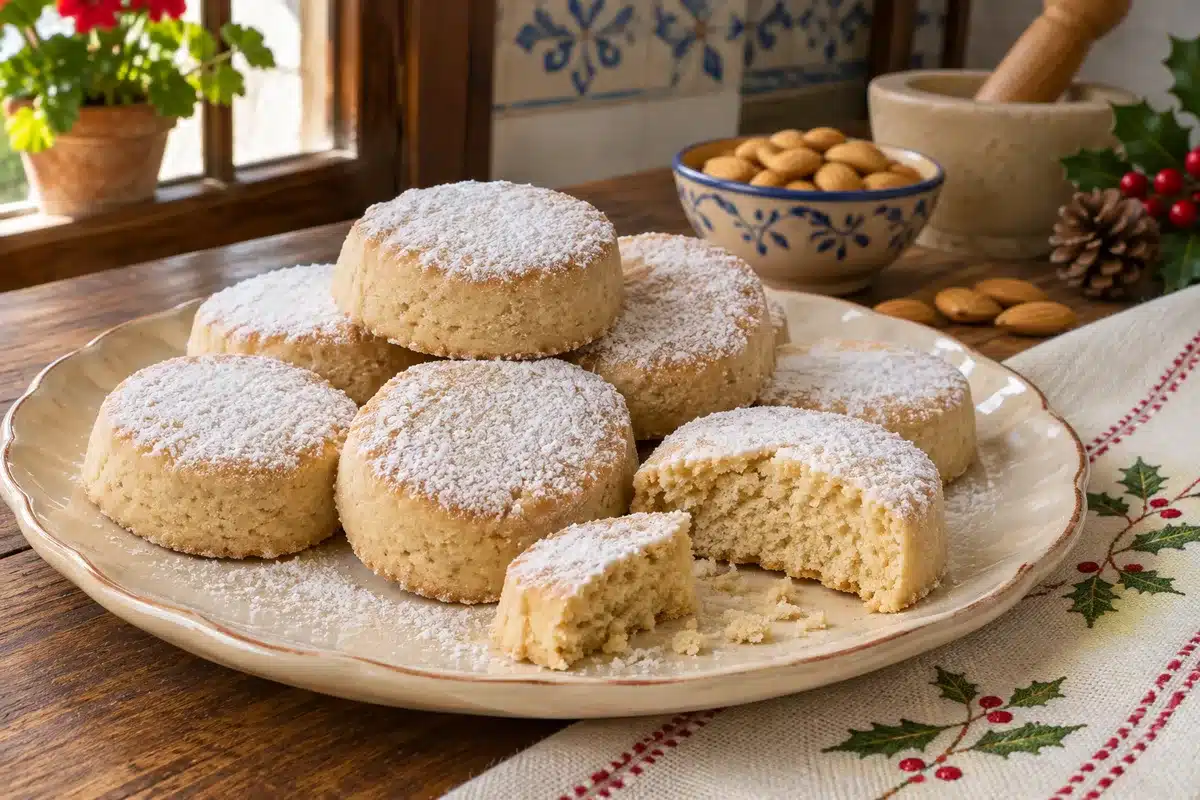
Look for lightly golden edges, pale tops and fine cracks. The cookies will be fragile when warm and firm up as they cool. Let them cool completely on the tray before lifting them.
✨ Tips for Better Polvorones
- Cool the toasted ingredients completely. Warm flour can melt the butter.
- Weigh before toasting. Use all the cooled flour and almonds.
- Press the dough gently. It should hold when squeezed.
- Keep the thickness even. Aim for 1.5 cm / ⅝ inch so the cookies bake evenly.
- Cool on the tray. Use a thin spatula to lift the finished cookies.
🔄 Ingredient Notes and Swaps
Flour. Choose plain flour in the UK or all-purpose flour in the US. Self-raising or self-rising flour contains raising agents and changes the result. This dough does not need baking powder.
Almonds. Finely ground blanched almonds give a pale, even crumb. In the US, a bag labelled blanched almond flour is suitable. Coarse almond meal with skins will make a darker, more textured cookie. Avoid defatted almond flour, which absorbs differently.
Sugar and butter. Icing sugar and confectioners’ or powdered sugar are the names to look for. Softened butter should give slightly when pressed but still hold its shape. Spreadable butter blends and reduced-fat spreads contain different amounts of water and are less predictable in this dough.
⚠️ Common Problems and Easy Fixes
The dough will not hold together. First squeeze a small handful. A loose-looking mixture can still form a good dough after pressing. If it falls apart completely, check that the butter is soft and that the flour was measured correctly. Work in 1 teaspoon of softened butter at a time, only until the dough holds.
The cookies spread. The butter may have been melted, or the toasted ingredients were still warm. Chill the shaped cookies and bake on a cool tray. Keep the rounds thick enough to retain their shape.
They break when lifted. Warm polvorones are extremely fragile. Let them cool fully on the tray and slide a spatula underneath. Small cracks are expected, but moving them straight from the oven can make them collapse.
🍽️ What to Serve With Them
Serve two small cookies with coffee or tea, or add them to a Spanish Christmas sweets plate. For another almond bake, try our Tarta de Santiago. Our Spanish magdalenas make a softer breakfast option, while natillas caseras offer a creamy dessert alongside a small cookie.
❄️ Make Ahead and Storage
Once completely cool, store in an airtight tin in a cool, dry place and enjoy within 5 days for the best texture. Separate layers with parchment. Freeze cooled cookies in a rigid container for up to 1 month, then thaw in the closed container and dust before serving. For gifts, wrap each cookie separately and cushion the box to protect the crumbly edges.
🥄 Approximate Nutrition
| Nutritional Value | Approximate Amount per Cookie |
|---|---|
| Calories | 145 kcal |
| Protein | 2 g |
| Fat | 9 g |
| Carbohydrates | 16 g |
Ingredient-based estimates for 20 cookies, including the dusting sugar. Values vary with brands and cookie size. Contains wheat, almonds and dairy.
❓ Frequently Asked Questions
Can I make polvorones without lard?
Yes. This recipe uses unsalted butter throughout. It gives a buttery flavour while retaining the toasted flour and almond texture.
Why do I toast the flour first?
Toasting gives the flour a nutty aroma and helps develop the dry, sandy crumb. Stir it frequently and stop at pale beige. A dark roast can taste bitter.
Are these cookies gluten-free?
This version contains wheat flour. For a flourless Spanish almond dessert, see the Tarta de Santiago recipe linked above and check the ingredients you use.
Can I make them without a cutter?
Yes. Press the dough to an even thickness and cut small squares with a knife. Match the thickness of the rounds and start checking at 15 minutes.
Can I prepare the dough the day before?
Yes. Wrap it closely and refrigerate overnight. Let it soften enough to press without shattering, then shape and bake as directed.
Should they be crunchy when they leave the oven?
They firm as they cool. Look for lightly golden edges and a pale set surface, then allow a full cooling period before testing the texture.
Recipe written for Spanish Grandma Recipes. Images are AI-generated food illustrations.
Discover more from Spanish Grandma Recipes
Subscribe to get the latest posts sent to your email.