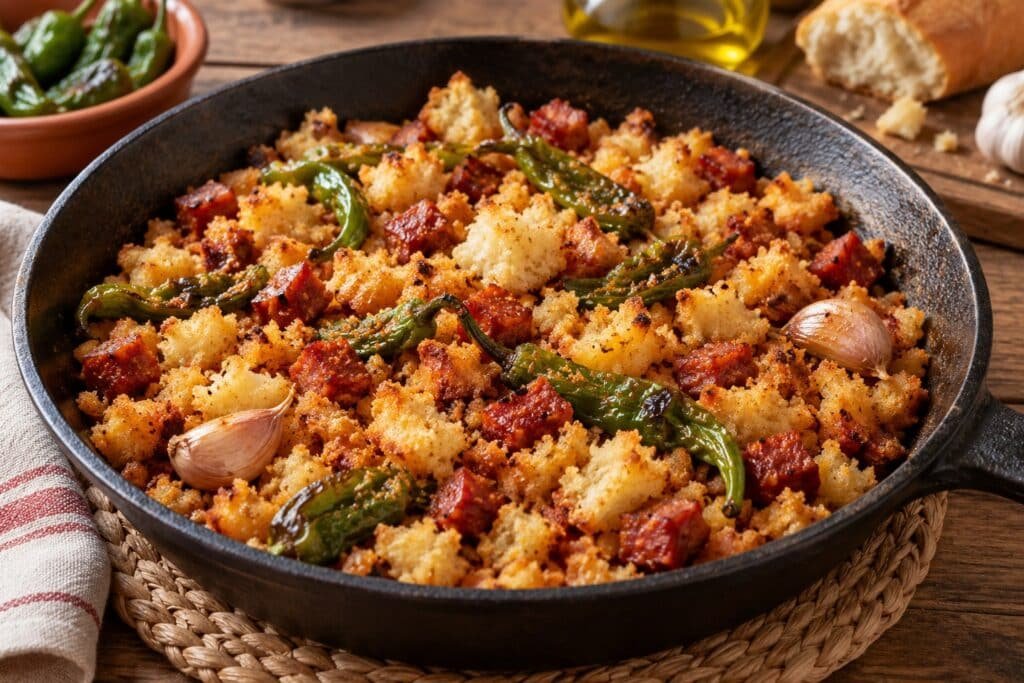
Spanish migas turn yesterday’s bread into a warm pan of toasted crumbs with garlic, chorizo and green pepper. The bread should have crisp edges and a tender middle, with separate little pieces rather than a dense lump.
The unusual part is moistening stale bread before frying it. A controlled splash of water softens the hard crumb, then patient stirring in flavored oil dries and toasts it again. Add the water gradually: different loaves absorb very different amounts.
What to expect: Four modest portions of savory, loosely separated bread crumbs. The recipe uses bread, rather than the flour or semolina used in some regional versions of migas.
Jump to ingredients and method ↓
🍞 Start with Firm, Day-Old Bread
Choose a plain rustic white loaf with a fairly close crumb. Bread that is a day or two old is easier to break up than a fresh soft loaf. Avoid sweet sandwich bread and very airy loaves with huge holes, which give a less even texture.
Migas are a useful way to use sound stale bread, but never bread with mold. Another way to use a dry loaf is Spanish garlic soup, where the bread softens into broth instead of being fried dry.
⏱️ Time and Servings
| Stage | Time |
|---|---|
| Preparation | 15 minutes |
| Cooking | 30 minutes |
| Bread resting | 30 minutes |
| Total time | 75 minutes |
| Servings | 4 |
🍲 Equipment You Will Need
- A wide 30 cm / 12 inch heavy skillet
- A large mixing bowl and clean cloth
- A sturdy wooden spatula
- A knife or food processor with a pulse setting
🛒 Ingredients for 4 Servings
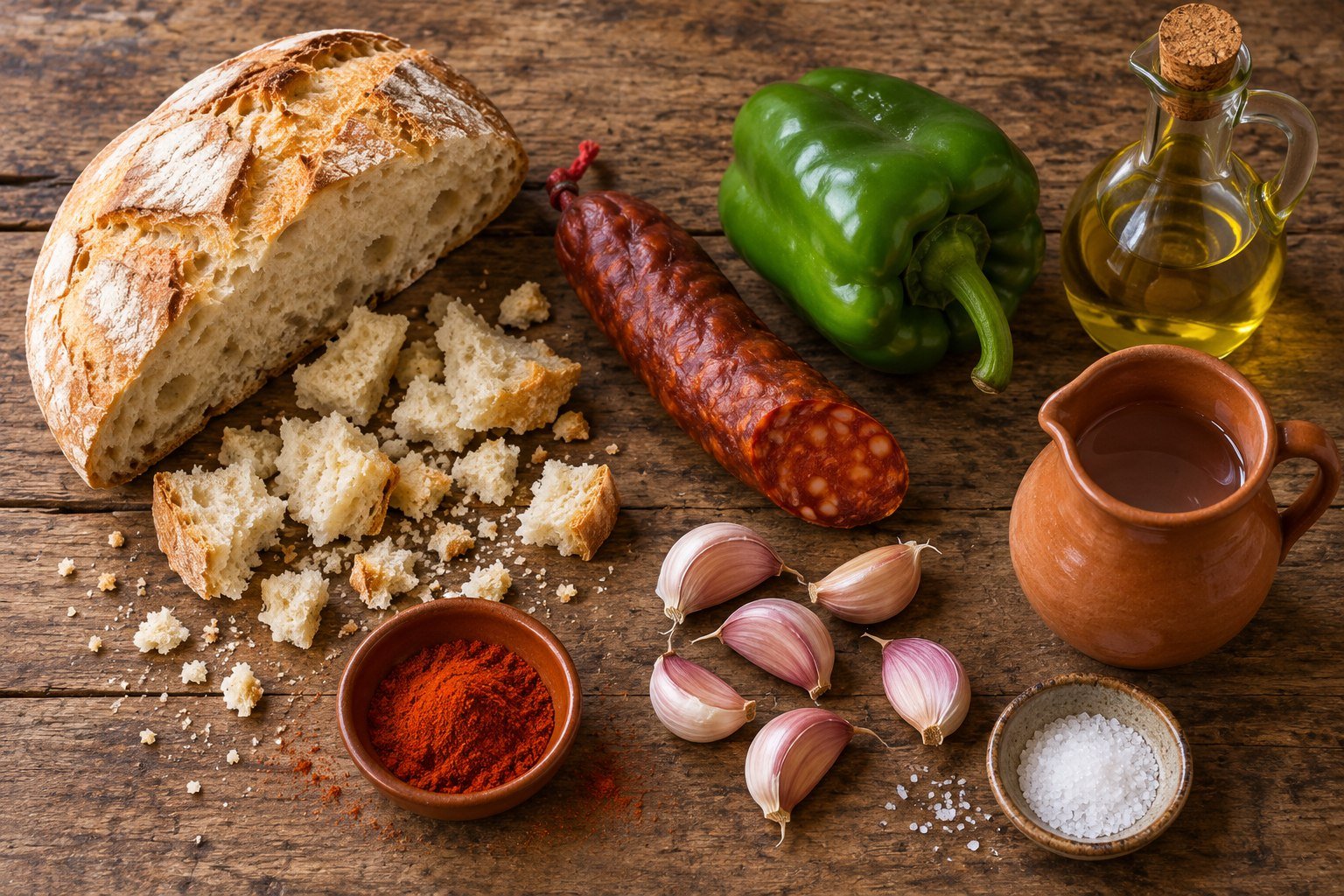
- 300 g stale rustic white bread, including the crust
- About 120 ml water in total. Start with 90 ml and add more only if the bread needs it.
- 90 g firm cured Spanish chorizo, diced
- 1 green bell pepper, about 150 g, cut into strips
- 6 garlic cloves, unpeeled and lightly crushed
- 45 ml (3 tablespoons) olive oil
- ½ teaspoon sweet paprika
- Salt only if needed, after tasting
Bread size: aim for uneven coarse crumbs and small pieces about 5 to 10 mm across. Do not grind everything into fine breadcrumbs or leave large crouton-sized cubes.
Chorizo: use firm cured Spanish chorizo, not raw Mexican-style sausage. Check whether the casing needs peeling.
Water: 120 ml is a starting guide for quite stale bread. A softer loaf needs less; very hard bread may need a little more after resting.
👨🍳 How to Make Spanish Migas
1️⃣ Break up and moisten the bread
Cut or crumble the bread into small uneven pieces. Sprinkle over 90 ml of the water while tossing with your fingers. The crumbs should feel damp but not soaked. Cover with a clean cloth and leave for 30 minutes. After resting, add the remaining water a tablespoon at a time only if the center of the pieces is still hard.
2️⃣ Flavor the oil with garlic
Heat the oil over medium-low heat in the wide skillet. Add the lightly crushed unpeeled garlic and cook for 4 to 5 minutes, turning, until golden and fragrant. Lift out and set aside. The skins protect the cloves but should not be eaten.
3️⃣ Cook the pepper and chorizo
Add the pepper strips and cook for about 6 minutes until softened. Add the diced chorizo and cook for 2 minutes so some of its fat colors the oil. Lift the pepper and chorizo out with a slotted spoon, leaving the flavored oil behind.
4️⃣ Add paprika and bread
Reduce the heat to low. Stir the paprika into the oil for a few seconds, then immediately add the damp bread. Toss well to distribute the colored oil. Break up clumps with the edge of the spatula rather than pressing the bread into a solid layer.
5️⃣ Dry and toast the crumbs
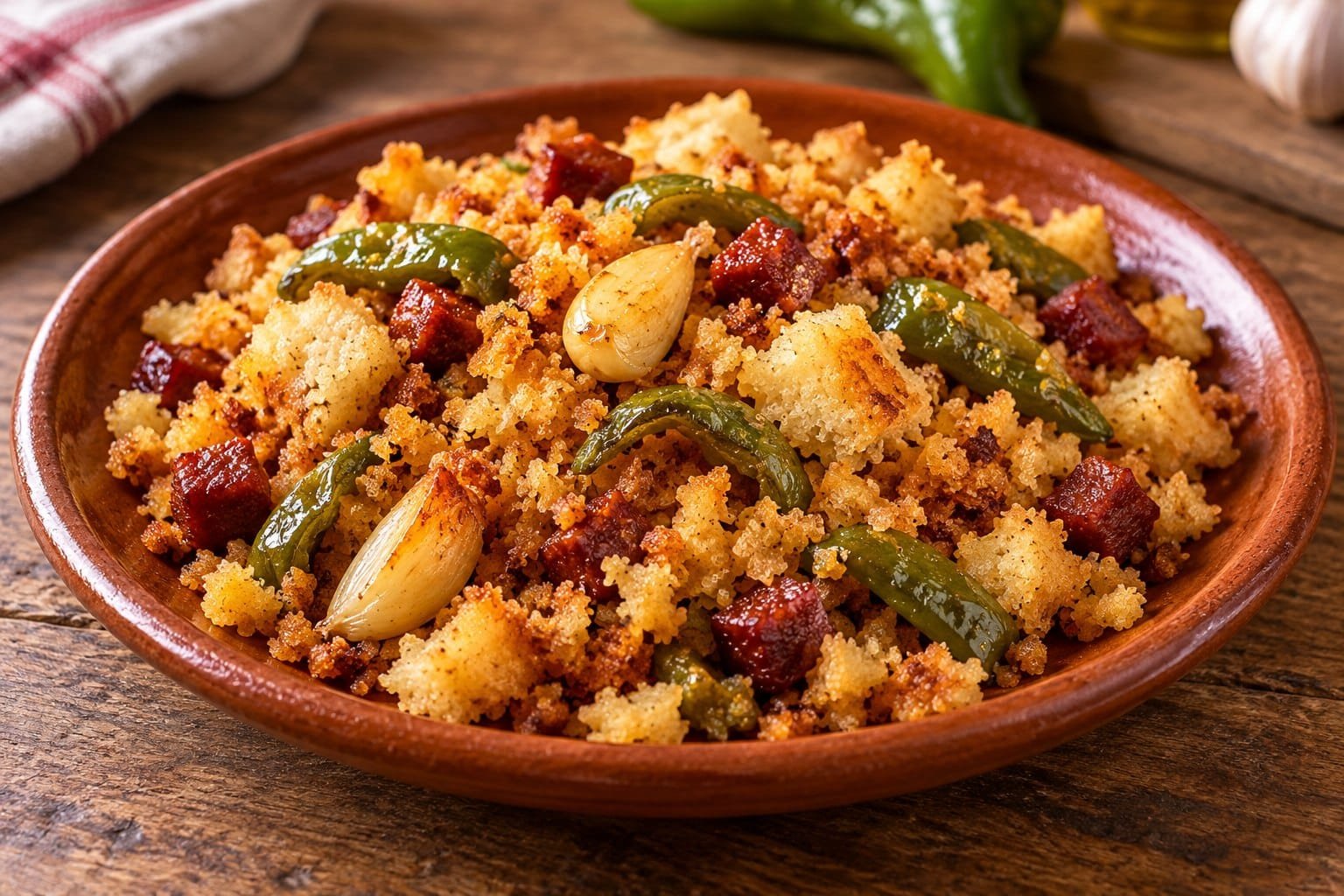
Cook over medium-low heat for 12 to 18 minutes, turning and breaking up the crumbs frequently. They should become loose, lightly golden and crisp in places while remaining tender inside. If the pan is smoking or the smallest crumbs darken rapidly, lower the heat.
6️⃣ Return the additions and serve
Fold in the pepper, chorizo and garlic, and warm for 2 minutes. Taste before adding salt because bread and chorizo already contain it. Serve hot in shallow bowls, reminding diners to squeeze out or peel the garlic and discard the skins.
💧 Finding the Right Moisture Level
Squeeze a small handful of rested bread gently: it should briefly hold together, then fall apart when you loosen your grip. If water drips out, it is too wet. Spread it out for a while before cooking rather than adding a soaked mass to the skillet.
If the crumbs remain hard and dry inside during cooking, sprinkle over a tablespoon of water, toss and cook a little longer. Add tiny amounts; pouring in a cup turns the mixture into paste. A wide pan lets moisture escape while you stir.
🔄 Ingredient Swaps and Variations
- Without chorizo: add sautéed mushrooms for a meat-free adaptation and check the seasoning at the end.
- Red pepper: it can replace green pepper, giving a sweeter result.
- Less oil: start with 2 tablespoons if the chorizo is particularly fatty, then add a little more only if the bread needs it.
- Extra toppings: serve with separately cooked eggs or grapes if desired; neither is included in the base recipe.
⚠️ Common Problems and Easy Fixes
- Dense, sticky clumps: the bread was too wet. Break them apart and continue over gentle heat in a wide pan.
- Hard crumbs: the bread needed more moisture or resting time before frying.
- Burnt paprika: add the bread immediately after the paprika, with the heat lowered.
- Greasy migas: chorizo fat varies. If the pan has a large pool after cooking it, spoon out some before adding bread.
🍽️ What to Serve With It
Serve with a fresh tomato and cucumber salad or a small glass of gazpacho. The bread is substantial, so extra bread on the side is rarely needed.
For a larger meal, add an egg cooked to your preferred safe doneness. For tapas, offer smaller bowls beside blistered Padrón peppers.
❄️ Storage and Reheating
Refrigerate leftovers promptly in a shallow covered container and use within 3 days. Reheat in a skillet until thoroughly hot, stirring to loosen the crumbs. A teaspoon or two of water can help if they have become very dry.
The texture is best on the day of cooking. You can crumble and moisten the bread the evening before, but refrigerate it covered and let the cold crumbs cook a little longer the next day.
🥄 Approximate Nutrition
| Per serving: one quarter of the migas | Estimate |
|---|---|
| Calories | 405 kcal |
| Protein | 13 g |
| Carbohydrates | 45 g |
| Fat | 19 g |
| Fiber | 3 g |
Approximate values exclude optional eggs or grapes. Bread type and chorizo fat content change the result.
❓ Frequently Asked Questions
Are these the same as Mexican migas?
No. This Spanish bread-based dish differs from dishes of eggs and tortilla pieces that also use the name migas.
Can I use fresh bread?
It is harder to moisten evenly. Let the pieces dry first, then use less water and check the feel after resting.
Can I use packaged breadcrumbs?
Fine packaged crumbs produce a sandy texture. Coarse pieces from a loaf are much better for this method.
Should every crumb be crisp?
No. A good pan has a mixture of toasted edges and tender centers. Cooking until every piece is hard removes that contrast.
How do I cook a double batch?
Use two skillets or work in separate batches. A deep heap in one pan traps moisture and is difficult to stir evenly.
Recipe written for Spanish Grandma Recipes. By José María. The images are original AI-generated illustrations of the dish and ingredients.
Discover more from Spanish Grandma Recipes
Subscribe to get the latest posts sent to your email.