Pimientos de Padrón recipe is one of the simplest and most beloved tapas in Spain. These small green peppers are quickly fried until blistered, then finished with a generous sprinkle of flaky sea salt.
The dish comes from Galicia, especially the area around the town of Padrón. It is famous for its playful surprise: most peppers are mild and sweet, but every now and then one has a gentle spicy kick.
What makes pimientos de Padrón so special is how little they need. With good peppers, hot oil, and proper salt, you get a tapa that is smoky, tender, slightly bitter, and wonderfully addictive.
If you enjoy classic Spanish tapas, you may also like our Patatas Bravas Recipe, Croquetas recipe or Pan con Tomate Recipe.
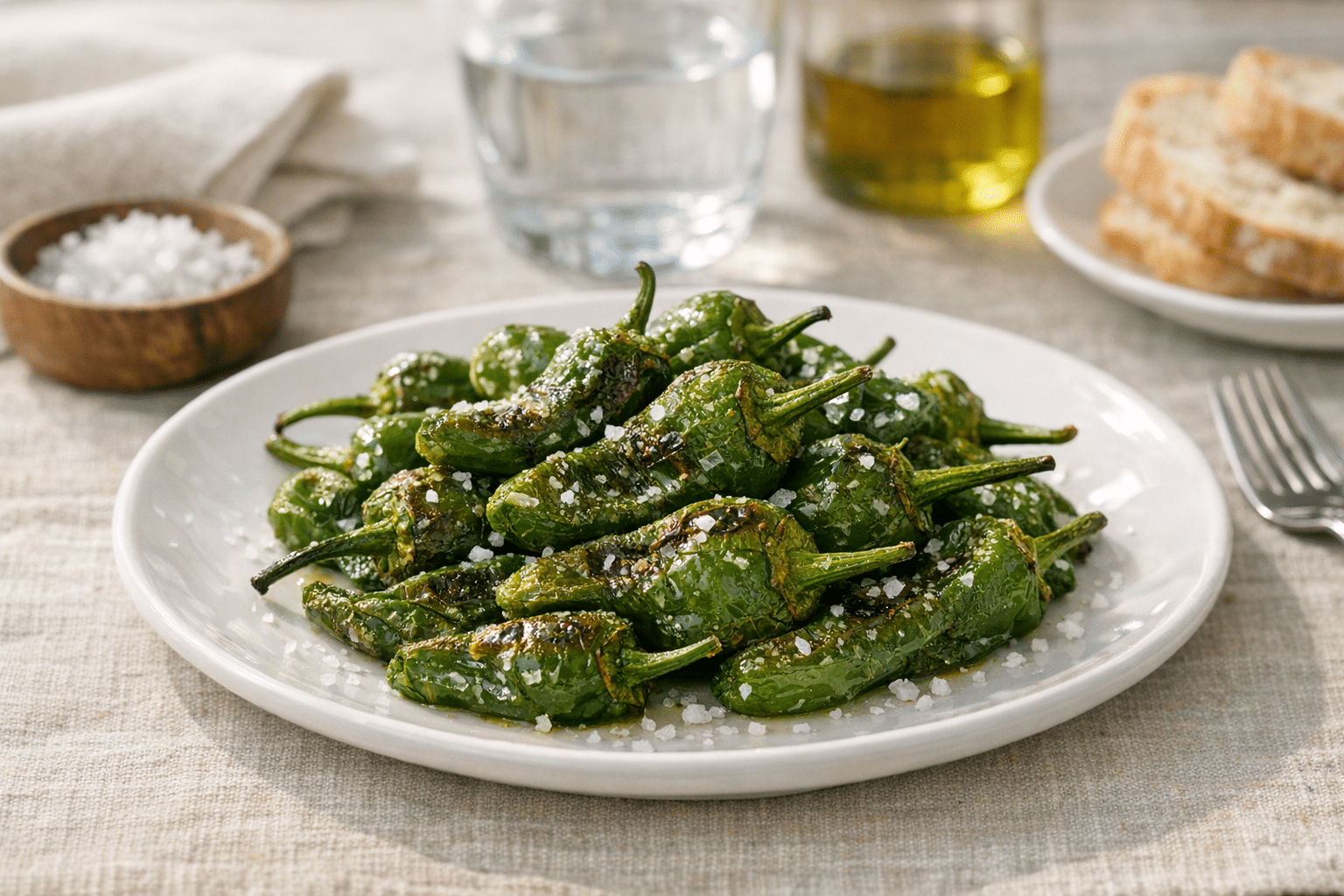
What to expect: Blistered pepper skins, tender flesh and a light coating of olive oil and sea salt.
Jump to ingredients and method ↓
⏱️ Time and Servings
| Stage | Time |
|---|---|
| Preparation | 5 minutes |
| Cooking | 5-7 minutes |
| Resting time | 1 minute |
| Total time | 11-13 minutes |
| Servings | 4 servings |
Times are estimates. For planning, allow the longer end of each time range and check the texture described in the method before serving.
🍲 Equipment You Will Need
- Wide frying pan
- Tongs or a slotted spoon
- Kitchen towel for drying the peppers
- Heatproof serving plate
🛒 Ingredients for 4 servings
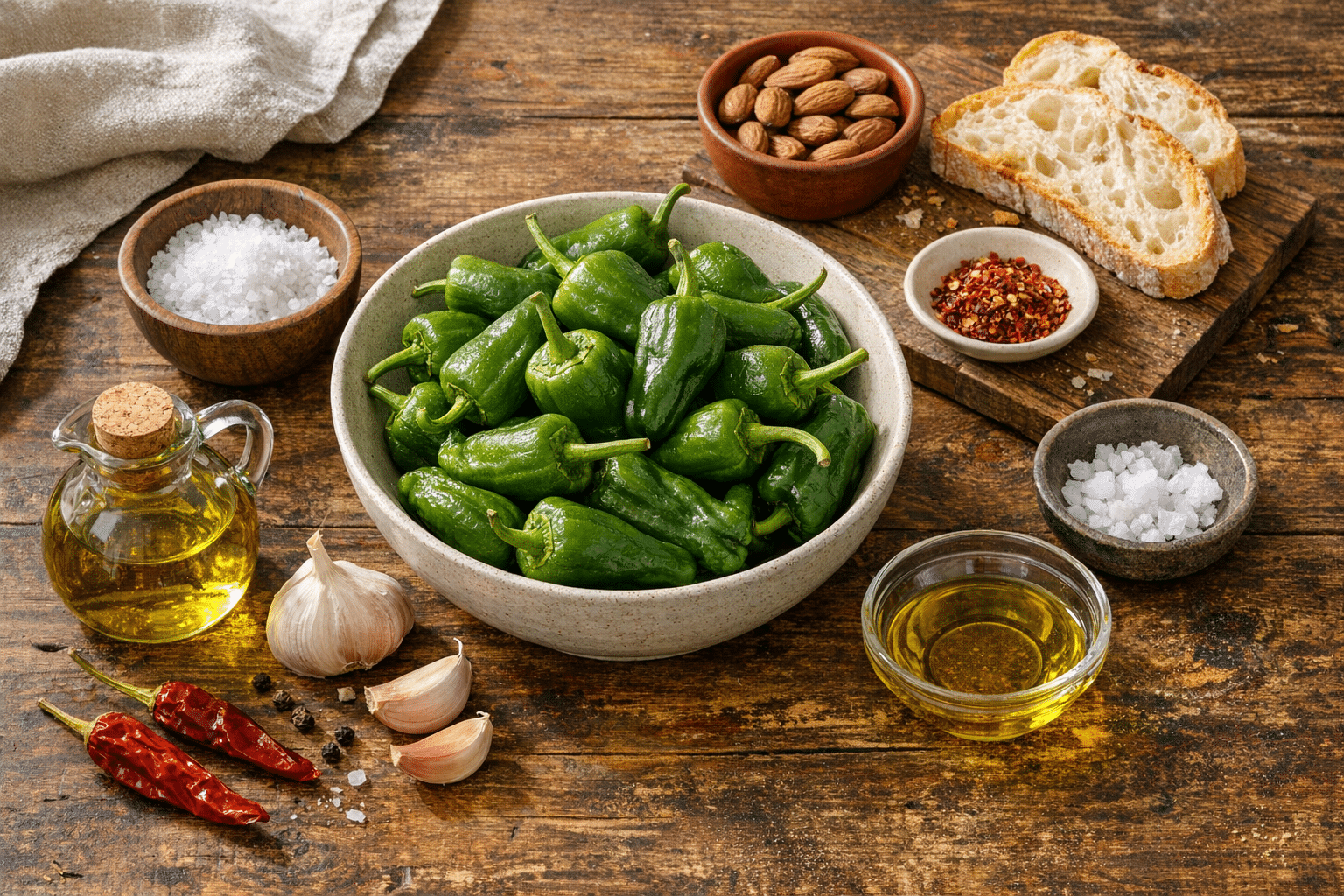
- 400 g fresh Padrón peppers
- 45 ml extra virgin olive oil
- 6 g flaky sea salt, or to taste
- 1 g coarse salt, optional, for extra crunch
If you need to convert grams or other kitchen measures, you can use our kitchen measurement conversion chart.
👨🍳 How to Make Pimientos de Padrón
1️⃣ Choose the peppers
Look for small, bright green Padrón peppers with firm skins and fresh stems. They should feel crisp, not wrinkled or soft.
Try to choose peppers of a similar size so they cook evenly. Very large ones can be more fibrous and may sometimes be hotter.
2️⃣ Wash and dry them well
Rinse the peppers under cold water to remove any dirt. Keep the stems attached, as they make the peppers easy to pick up and eat.
Dry them very thoroughly with a clean kitchen towel. Any extra water can make the hot oil splatter and prevent the skins from blistering properly.
3️⃣ Heat the oil
Place a wide frying pan over medium-high heat and add the olive oil. Let it get hot enough to shimmer, but do not let it smoke heavily.
A wide pan is best because the peppers need space. If they are crowded, they will steam instead of fry.
4️⃣ Fry the peppers
Add the peppers in a single layer and let them sizzle. Stir or toss them every few moments so the skins blister on all sides.
Cook for about 4 to 6 minutes, depending on their size. They should soften, wrinkle slightly, and develop dark blistered spots.
5️⃣ Control the heat
If the peppers brown too quickly before softening, lower the heat slightly. The goal is blistered skins and tender flesh, not burned peppers.
If the pan seems too cool and the peppers are just sitting in oil, raise the heat a little. You want a lively sizzle from beginning to end.
6️⃣ Drain briefly
Transfer the fried peppers to a plate lined with kitchen paper. Let them sit for about 30 seconds to remove excess oil.
Do not leave them too long, as they are best when served hot. A little shine from the olive oil is part of their charm.
7️⃣ Season generously
Sprinkle the peppers with flaky sea salt while they are still hot. The salt should cling to the blistered skins and give each bite a bright finish.
Taste one pepper and adjust if needed. Pimientos de Padrón should be simple, salty, and full of roasted green pepper flavor.
8️⃣ Serve immediately
Pile the peppers onto a warm plate or small tapas dish. Serve them whole, with the stems left on for easy eating.
Eat them with your fingers, holding the stem and biting the pepper just below it. This is the most traditional and enjoyable way to serve them.
🎲 The Famous Padrón Surprise
There is a well-known saying in Spain: Os pementos de Padrón, uns pican e outros non. It means that some Padrón peppers are spicy and others are not.
That little surprise is part of the fun. Most are mild, grassy, and sweet, but an occasional pepper brings a warm bite that wakes up the whole plate.
🔥 High Heat and Blistered Skins
The secret to good pimientos de Padrón is heat. The pan should be hot enough to blister the skins quickly while keeping the inside soft and juicy.
If the heat is too low, the peppers turn limp and oily. If it is too high, they can burn before becoming tender, so watch them closely and keep them moving.
🌿 A Galician Tapas Classic
Although they are enjoyed all over Spain, pimientos de Padrón are deeply connected to Galicia. They are especially popular in summer, when the peppers are at their best.
You will often see them served in simple ceramic dishes at bars and family tables. Like many great Spanish recipes, they prove that good ingredients need very little decoration.
👀 How to Know When Pimientos de Padrón Is Ready
- Blistered skins: The peppers should have dark, wrinkled spots on several sides.
- Tender texture: They should feel soft when pressed but not collapsed or mushy.
- Bright green color: The peppers should remain mostly green, with toasted patches rather than a fully black surface.
- Glossy finish: A light coating of olive oil should make them shine without looking greasy.
The easiest test is to taste one straight from the pan after salting. It should be tender, savory, slightly smoky, and pleasantly salty.
✨ Tips for a Better Pimientos de Padrón
- Dry them completely: This is the most important step for safe frying and good blistering.
- Use a wide pan: More surface area helps the peppers fry instead of steam.
- Cook in batches: If your pan is small, fry the peppers in two rounds for better texture.
- Salt while hot: Flaky salt sticks best when the peppers have just come out of the pan.
- Serve with bread: A little crusty bread is perfect for soaking up the olive oil and salt left on the plate.
- Keep the stems on: They make the peppers easier to eat and give the dish its traditional look.
🔄 Ingredient Notes and Swaps
Shishito peppers can be cooked by the same method when Padrón peppers are unavailable, although their flavor and heat differ.
⚠️ Common Problems and Easy Fixes
- Not drying the peppers: Wet peppers cause splattering and stop the skins from blistering well.
- Using a crowded pan: Too many peppers at once will steam instead of fry.
- Cooking over low heat: Gentle heat makes the peppers oily and limp rather than blistered and lively.
- Burning the oil: Olive oil should be hot, but if it smokes heavily, the flavor can turn bitter.
- Underseasoning: Flaky sea salt is essential because the peppers themselves are mild.
- Serving them cold: They lose much of their charm once they sit too long.
🍽️ What to Serve With It
Serve straight from the pan as a tapa, with bread and other small dishes.
❄️ Storage and Reheating
Pimientos de Padrón are best served immediately, while the skins are blistered and the peppers are still hot. Their texture softens as they cool, so try to cook only what you plan to eat.
If you have leftovers, store them in an airtight container in the fridge for up to 2 days. They will still taste good, but they will be softer and less crisp than freshly fried peppers.
To reheat, use a hot pan for 1 to 2 minutes with a tiny splash of olive oil. Avoid microwaving if possible, because it makes the peppers limp and watery.
🥄 Approximate Nutrition
| Nutritional value | Approximate amount per serving |
|---|---|
| Calories | 95 kcal |
| Protein | 1 g |
| Fat | 8 g |
| Carbohydrates | 5 g |
| Fiber | 2 g |
| Sodium | 590 mg |
Nutritional values are approximate and will vary depending on the ingredients used.
❓ Frequently Asked Questions
Are Padrón peppers spicy?
Most Padrón peppers are mild, but some can be spicy. That unpredictable bite is part of what makes the dish so popular.
Can I use shishito peppers instead?
Yes, shishito peppers are a good substitute if you cannot find Padrón peppers. The flavor is not exactly the same, but the cooking method works well.
Do I need to remove the seeds?
No, Padrón peppers are cooked and served whole. Just hold the stem and eat the pepper, leaving the stem behind.
Can I make them in an air fryer?
You can, though the result is a little different. Toss them with olive oil and cook at high heat until blistered, then salt them immediately.
What oil is best for Pimientos de Padrón?
Extra virgin olive oil gives the best Spanish flavor. Use enough to coat the pan well, but the peppers do not need to be deep-fried.
What should I serve with Pimientos de Padrón?
They are perfect as a tapa with bread, olives, cheese, croquetas, patatas bravas, or a cold drink. They also make a lovely side for grilled fish or meat.
Pimientos de Padrón show how memorable a dish can be with only a few ingredients. Hot oil, fresh green peppers, and flaky sea salt create a tapa that is rustic, quick, and full of character.
The key is to cook them fast, salt them well, and bring them to the table right away. Serve them warm, share them with friends, and enjoy the little surprise of each pepper.
Recipe prepared for Spanish Grandma Recipes.
Discover more from Spanish Grandma Recipes
Subscribe to get the latest posts sent to your email.