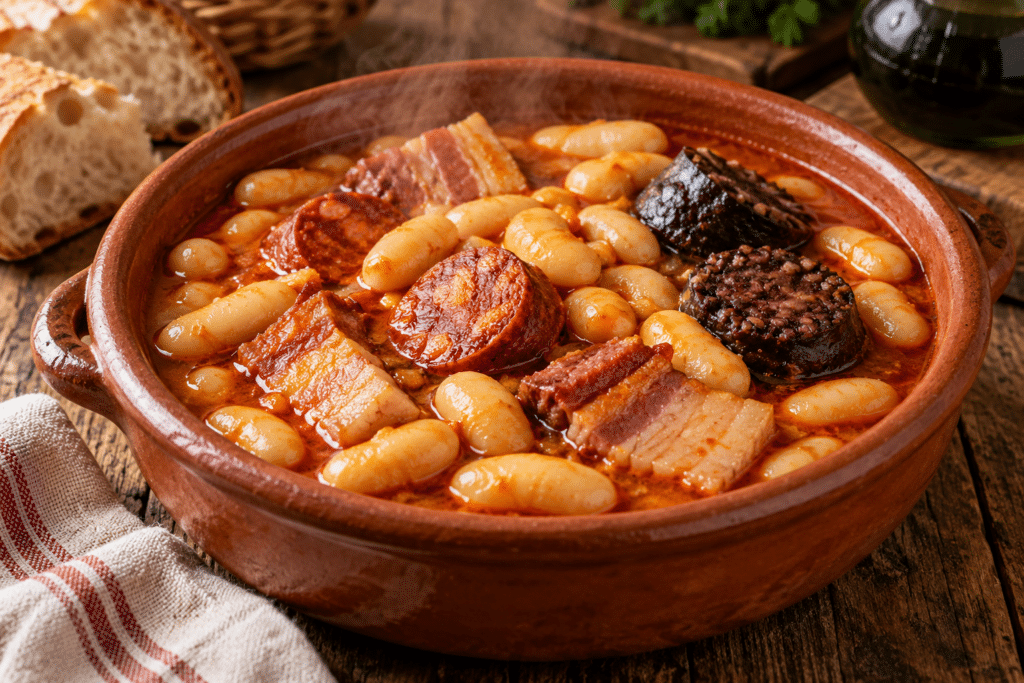
Fabada Asturiana is one of those Spanish dishes that feels made for cold days, slow lunches and a table full of people. Creamy white beans cook gently with chorizo, morcilla and pork until the broth becomes rich, smoky and full of flavor.
This traditional stew comes from Asturias, in northern Spain, where it is one of the region’s most famous dishes. It is simple food at heart, but it depends on good ingredients and slow cooking rather than complicated techniques.
What makes fabada special is the way the beans absorb the flavor from the meats while still keeping their shape. The broth should be thick and silky, but the beans should never turn into a puree.
If you enjoy comforting Spanish recipes, you may also like our Spanish Lentil Stew, Spanish Beef Stew or Spanish Garlic Soup.
What to expect: Soft beans that remain whole, a lightly thickened broth and the flavor of the cured meats.
Jump to ingredients and method ↓
🌭 What Is the Compango?
The combination of meats used in fabada is traditionally called compango.
It usually includes chorizo, morcilla and cured pork. These ingredients slowly release their fat and seasoning into the beans, creating the characteristic deep flavor of the stew.
⏱️ Time and Servings
| Stage | Time |
|---|---|
| Preparation | 15 minutes |
| Cooking | 2–2½ hours |
| Soaking time | 8–12 hours |
| Resting time | 20 to 30 minutes |
| Total time (excluding soaking) | About 3 hours 15 minutes |
| Servings | 6 people |
The total shown excludes the overnight soak. Start soaking the dried legumes the evening before cooking.
Times are estimates. For planning, allow the longer end of each time range and check the texture described in the method before serving.
🍲 Equipment You Will Need
- Heavy pot with a lid
- Colander for the soaked beans
- Skimmer and ladle
- Knife and chopping board
🛒 Ingredients for 6 servings
- 500 g dried large white beans, preferably fabes
- 2 Spanish chorizos (about 150–200 g total)
- 2 Spanish morcillas (about 150–200 g total)
- 200 g pork belly or pancetta
- 1 piece of cured pork shoulder or ham, about 200 g
- 1 small onion, peeled
- 2 garlic cloves
- 1 bay leaf
- 1 teaspoon sweet Spanish paprika
- A few saffron threads, optional
- Cold water, as needed
- Salt, only if needed
If you need to convert grams, cups or other kitchen measurements, you can use our cooking measurement conversion chart.

👨🍳 How to Make Fabada Asturiana
1️⃣ Soak the beans overnight
Place the dried beans in a large bowl and cover them generously with cold water.
Leave them to soak for 8 to 12 hours. The beans will expand considerably, so make sure there is plenty of water.
Soaking helps them cook more evenly and reduces the overall cooking time.
2️⃣ Start the stew with cold water
Drain the soaked beans and place them in a large heavy pot.
Add the onion, garlic, bay leaf, chorizo, morcilla, pork belly and cured pork.
Cover everything with cold water by about 2 to 3 cm.
Starting with cold water allows the beans to cook gently and helps the flavors develop gradually.
3️⃣ Bring to a gentle simmer
Place the pot over medium heat and slowly bring it to a simmer.
As foam appears on the surface, remove it carefully with a spoon.
Once simmering, reduce the heat. Fabada should cook very gently; a hard boil can break the beans and make the broth cloudy.
4️⃣ “Scare” the beans with cold water
During the first hour of cooking, add a small splash of cold water two or three times whenever the stew begins to simmer too strongly.
This traditional technique is known in Spain as asustar las fabes, or “scaring the beans.” It helps control the cooking and encourages the beans to stay whole.
5️⃣ Add paprika and saffron
After about 1 hour, add the sweet paprika and saffron, if using.
Stir the pot very gently by moving it from side to side rather than using a spoon. This helps avoid breaking the beans.
6️⃣ Continue cooking slowly
Cook for another 1 to 1½ hours, depending on the beans.
Check occasionally and add a little hot water if necessary. The beans should always remain just covered with liquid.
The fabada is ready when the beans are completely tender and creamy inside but still hold their shape.
7️⃣ Check the salt at the end
Do not add much salt at the beginning because the chorizo, morcilla and cured pork already contain plenty.
Taste only near the end of cooking and adjust if necessary.
8️⃣ Rest before serving
Turn off the heat and let the fabada rest for 20 to 30 minutes.
This rest is important because the broth thickens naturally and the flavors become more balanced.

🫘 What Beans Are Best for Fabada?
Traditional Fabada Asturiana is made with fabes de la Granja, large white beans from Asturias with a very creamy interior and delicate skin.
If you cannot find authentic fabes, use good-quality large white beans. Avoid very small beans because the final texture will be quite different.
👀 How to Know When Fabada Is Ready
- The beans are completely tender but have not fallen apart.
- The broth looks creamy without needing flour or other thickeners.
- The meat is tender and has flavored the broth.
- The liquid coats the spoon lightly instead of looking watery.
If the beans are soft but the broth still seems thin, let the stew rest before doing anything else. It thickens noticeably as it sits.
✨ Tips for a Better Fabada
- Use good beans: they are the heart of the dish.
- Cook slowly: gentle heat gives the best texture.
- Do not stir aggressively: move the pot gently instead.
- Salt at the end: the cured meats already add plenty of seasoning.
- Let it rest: 20 to 30 minutes makes a noticeable difference.
- Make it ahead: fabada is excellent the following day.
🔄 Ingredient Notes and Swaps
Large dried white beans can replace fabes if necessary, but their cooking time may differ. Morcilla can be omitted.
⚠️ Common Problems and Easy Fixes
- Boiling too aggressively: this can break the beans.
- Stirring with a spoon too often: shake the pot gently instead.
- Adding too much salt early: the cured meats may make the stew salty enough on their own.
- Letting the beans dry out: keep them lightly covered with liquid during cooking.
- Rushing the cooking time: fabada needs slow heat to develop its texture.
- Serving immediately: resting improves both the broth and flavor.
🍽️ What to Serve With It
Serve in warm bowls after the resting period, with bread and a small salad alongside.
❄️ Storage and Reheating
Fabada keeps very well in the refrigerator for up to 3 days.
In fact, like many Spanish stews, it often tastes even better the next day because the flavors have had more time to develop.
Reheat gently over low heat and add a small splash of water if the broth has become too thick.
🥄 Approximate Nutrition
| Nutritional value | Approximate amount per serving |
|---|---|
| Calories | 620 kcal |
| Protein | 32 g |
| Fat | 34 g |
| Carbohydrates | 48 g |
| Fiber | 13 g |
| Sodium | 890 mg |
Nutritional values are approximate and will vary depending on the meats and beans used.
❓ Frequently Asked Questions
What is Fabada Asturiana?
Fabada Asturiana is a traditional Spanish bean stew from Asturias made with large white beans, chorizo, morcilla and cured pork.
Do I have to soak the beans?
Yes, dried beans should normally be soaked overnight so they cook evenly and become tender.
Can I use canned beans?
You can make a quicker bean stew with canned beans, but the texture and flavor will not be the same as traditional fabada cooked slowly from dried beans.
Why did my beans break apart?
The stew may have boiled too strongly or been stirred too aggressively. Keep the heat low and shake the pot gently instead of stirring frequently.
Can I make fabada the day before?
Yes. It is actually one of the best dishes to prepare ahead because the flavor becomes even richer after resting overnight.
What should I serve with fabada?
Fabada is very filling on its own. Serve it with rustic bread and keep the rest of the meal simple.
Fabada Asturiana is a perfect example of traditional Spanish home cooking: simple ingredients, patient cooking and a result that feels generous and comforting.
Give the beans enough time, keep the heat gentle and let the stew rest before serving. The result is a rich, creamy bean stew that tastes like it has been simmering in a Spanish family kitchen all afternoon.
Recipe prepared for Spanish Grandma Recipes.
Discover more from Spanish Grandma Recipes
Subscribe to get the latest posts sent to your email.